
Introduction:
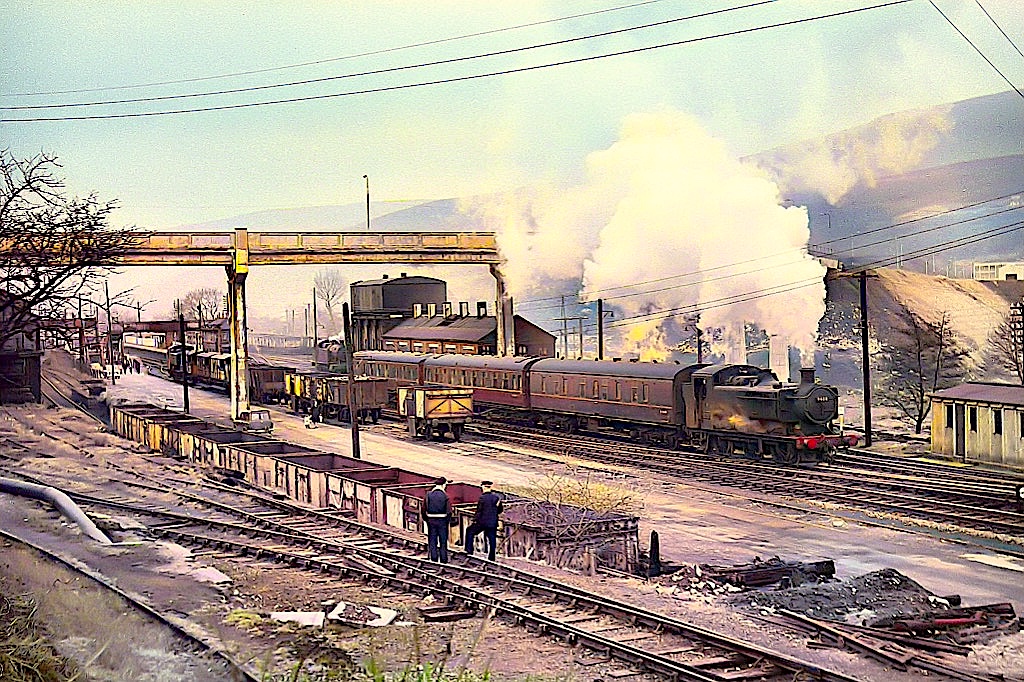
Up until 1851 when the Vale of Neath Railway line was built, the main way of transporting goods from the top end of the valley to the ports at Briton Ferry and Swansea was by canal. Unfortunately for the Canal a more efficient way of transporting goods, especially coal, had been developed.
If we recognise that the coming of the canal was the kick start of the industrialisation and development of the village, then the building of the Vale of Neath Railway line was instrumental in the exponential growth of local industry and in consequence the village. In fact the whole of the top end of the valley would become one big integrated production line with the canals, tramways and eventually the railways working in tandem to create a very efficient production system for transporting goods.
The radical changes to the valleys of South Wales in the late 18th and 19th century due to the industrial revolution, was by far greater than for most other parts of Britain. Before the coming of the canals, the railways and industry the valleys were thinly populated and Welsh speaking, this was all to change due to the industrial revolution.
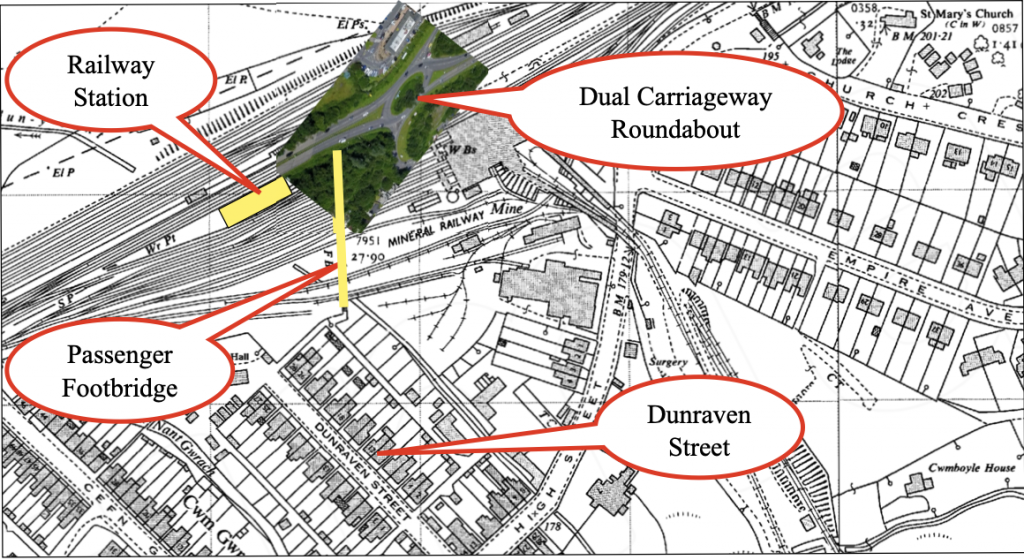
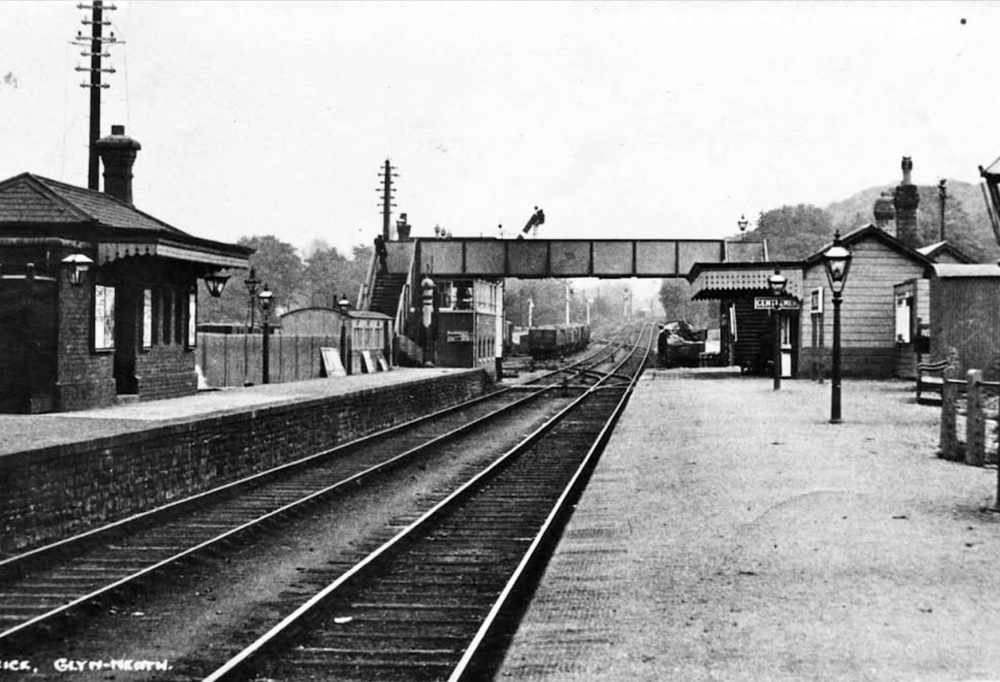
You may wonder why the Glynneath Railway station is so named when it is obviously situated in Cwmgwrach. The answer is that Glynneath was a larger village than Cwmgwrach, and therefore the position of the station was the closest it could be built to Glynneath due to the geography of the valley. This led to the station being named Glynneath Railway Station and not Cwmgwrach Railway Station.
(Ed note: It may be well worth mentioning that the majority of the people living in the village now may not have known the village had a train station or where it was situated even. I have included a small map below to show the location of the station in relationship to the village and the dual carriageway.)
Concerns raised by the inhabitants of the valley due to the coming of the railway: [1]
We have to understand that the people of the valley were from a very rural community and had never seen or heard of a Railway line before and therefore didn’t know what to expect. Some of the older inhabitants of the valley viewed the coming of the railway with fear and trepidation.
An older man-servant from Ynysygerwyn prophesied that, “the cows would withhold their milk and the calves would die.”
The landlord of the Plough Inn in Abertwrch (Tonna) though that, “the smoke of the locomotives passing so close to his house would destroy the horses in the stable.”
Sian Glover living in a cottage in Pontwalby feared that, “the puff of the engine would sour the contents of the milk pails from Llanfaglan (Baglan) to Pencaedrain.”
The first section of this article will look at the overall construction of the Vale of Neath Railway line, then from 1873 it will take a more focussed look at the railway line between Neath and Rhigos, as that is most relevant to the people of the village.
Section 1: The timeline of the Vale of Neath Railway line (VoNR) : [2]
1845: It all started with the Town Clerk of Neath a Mr. H. S. Coke promoting the idea of a railway track to be built following the River between Merthyr and Neath. On the 21st May 1845 he presented his ideas to the provisional directors of the South Wales Railway who supported his proposal, providing the railway was built on the broad gauge system.
The reason for the building of the railway line was to transport coal from Aberdare and steel products from Merthyr Tydfil to the ports at Swansea and Briton Ferry.
1846: The Bill for the line was discussed in the 1846 session of Parliament with Isambad Kingdom Brunel, the project engineer, giving his evidence to the committee about the suitability of the line for the transport of minerals on such a lengthy gradient as the Rhigos Bank which had a gradient of between 1/47 and 1/51 for a distance of 5 1/2 miles (9 km). His persuasive evidence carried the day and the Vale of Neath Railway was authorised by an Act of Parliament on the 3rd of August 1846, with a share capital set at £550,000.
Shares did not sell well and by September £127,00 of shares remained unissued. These shares were bought out by South Wales Railway who agreed to take the unallocated shares, which was ratified by an Act of Parliament called the Vale of Neath Railway Amendment Act 1847. [3]
1847: The route of the line was surveyed by none other than Alfred Russel Wallace who was to become famous for his work on the book `Origins of Species` which was jointly published with Charles Darwin.
In 1847 Wallace was employed by the VoNR to survey the Neath valley and recommended laying the line on the East side of the Valley which was then presented to Parliament and accepted. He said of his time surveying the Neath Valley for the route of the railway:
“I enjoyed myself immensely. It took me up the south east side of the valley…along pleasant lanes and paths, through woods and by stream and up one of the wildest and most picturesque little glens I have ever explored. Here we had to climb over huge rocks as big as houses, ascend cascades, and take cross levels up steep banks and precipices all densely wooded.” [4]
July 1847: Work started in 1847 with construction contracts being awarded. The original plan was to construct the line from Neath to Merthyr Tydfil, but exceptional difficulties on the Merthyr Tunnel meant that work was postponed on the tunnel until the following year. The plan was then changed to take the line to Aberdare instead.
The trunk line or Main line from Neath to Aberdare consisted of six main stations, namely Neath General, Aberdulais, Resolven, Glynneath (in Cwmgwrach), Hirwaun and Aberdare.
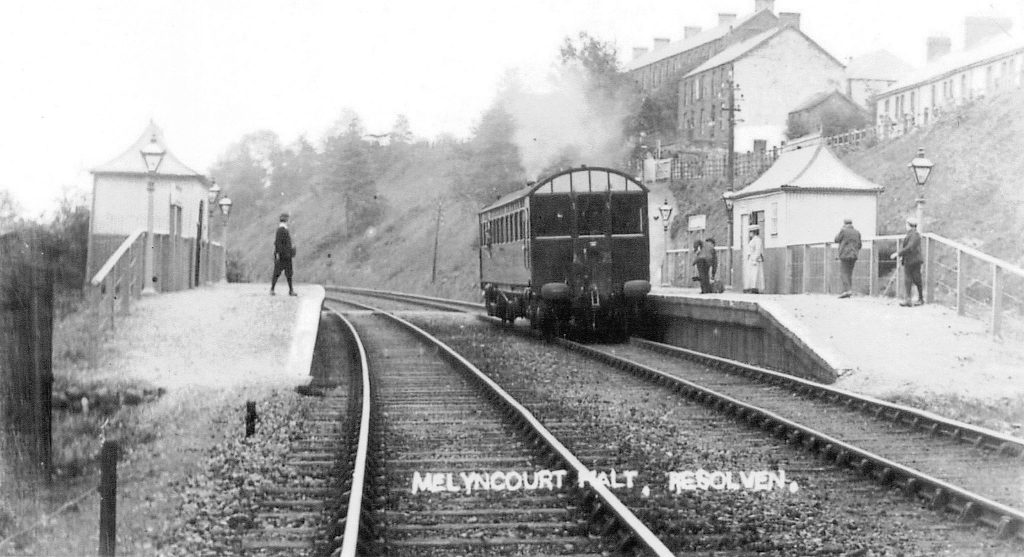
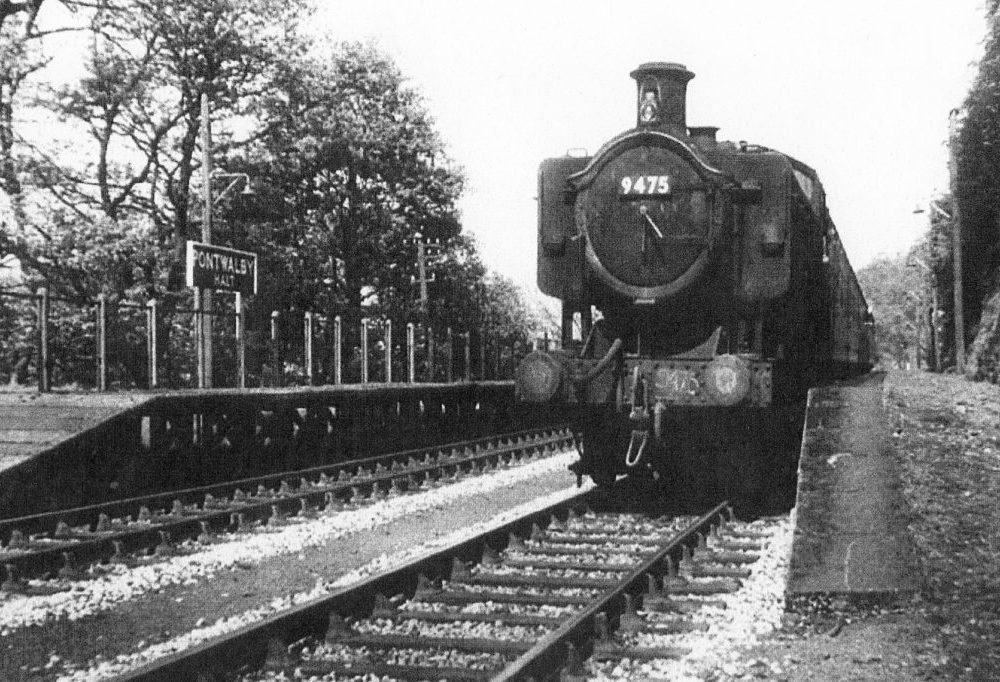
On the line between Neath and Rhigos four halts were added to the line, one at Clyne (1905); Melincourt (1905), Pontwalby (1911) and Rhigos (1911).
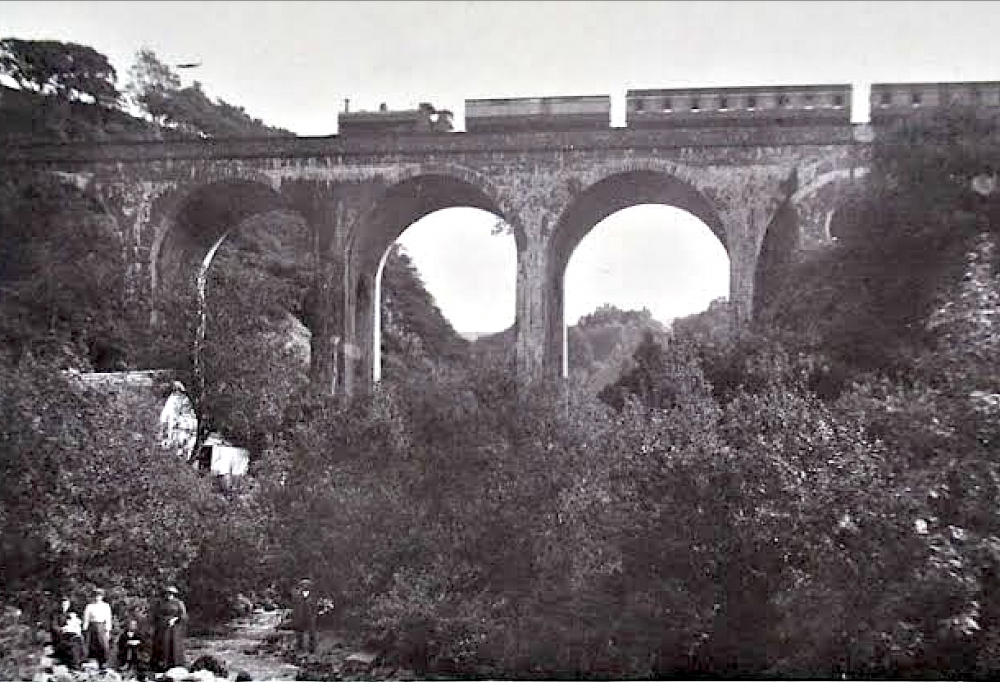
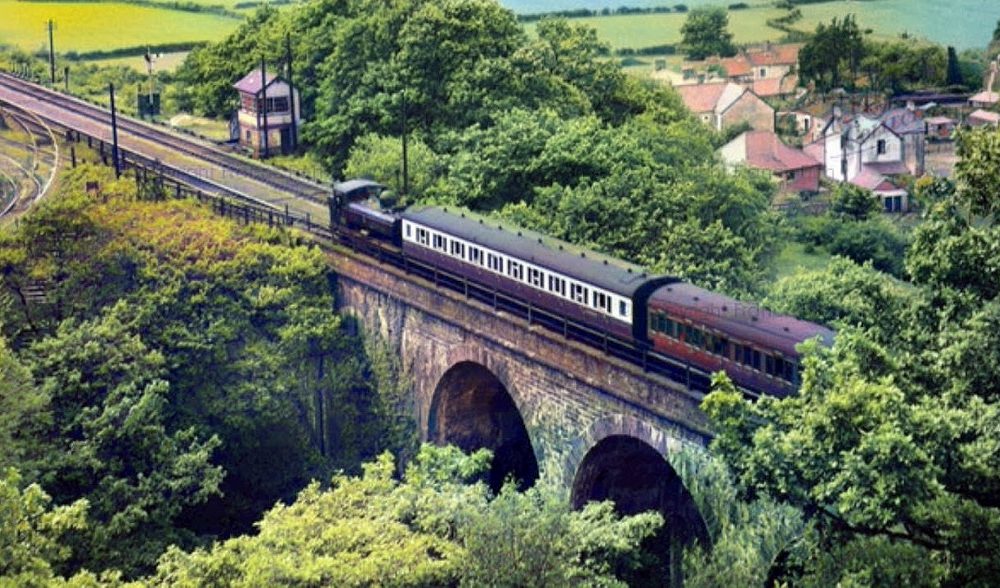
There was a five rounded arched viaduct at Pontwalby designed by the legendary engineer Isambard Kingdom Brunel and it is now a Grade II listed building. The viaduct is constructed from locally quarried sandstone with red brick soffits. The viaduct stands at 60 foot (18 metres) in height with a span of 80 yards and crosses the Nant Gwerlych stream.
(Ed note: During the Second World War the viaduct was part of the Pontwalby stop line, a series of defensive structures intended to be destroyed to stop an invasion from the West.)
The double track was laid to the wider gauge of 7 foot 0¼inch, which over time would cause some problems as most of the rest of the country were using the narrow gauge of 4 foot 8½ inch.
As you can imagine this was a major construction project the largest the valley had ever seen. The line from Neath to Glynneath was relatively flat and did not cause any problems but the Rhigos Bank with its steep incline required the building of the Pontwalby viaduct and Pencaedrain tunnel which took longer to construct than expected which led to friction in a board meeting in 1850. These difficulties were further escalated by site difficulties during the following winter.
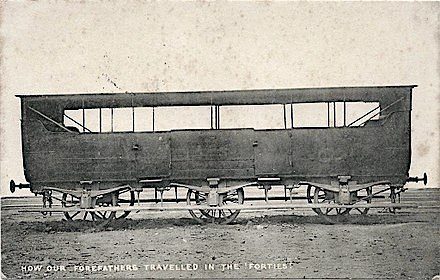
Brunel now predicted an opening date of June 1951, therefore it was time to order the rolling stock . Six locomotives were ordered from Robert Stephenson, and orders for 25 passenger coaches along with an order for 72 wagons were also placed. The majority of the coal wagons would be of the flat bottom type with coal being transported in bottom opening iron boxes.
Wooden viaducts:
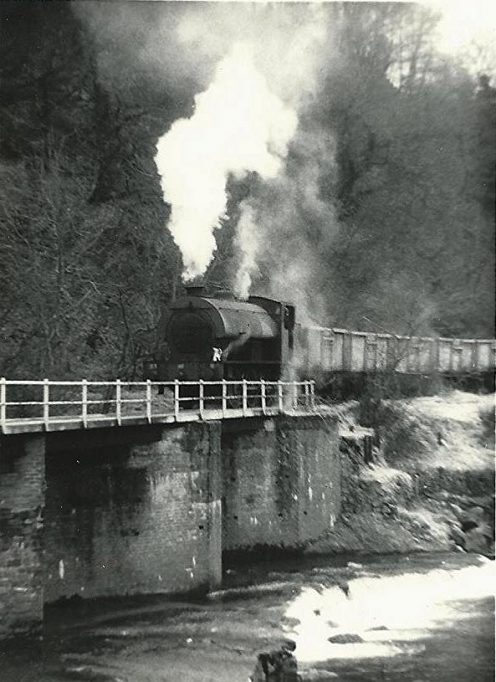
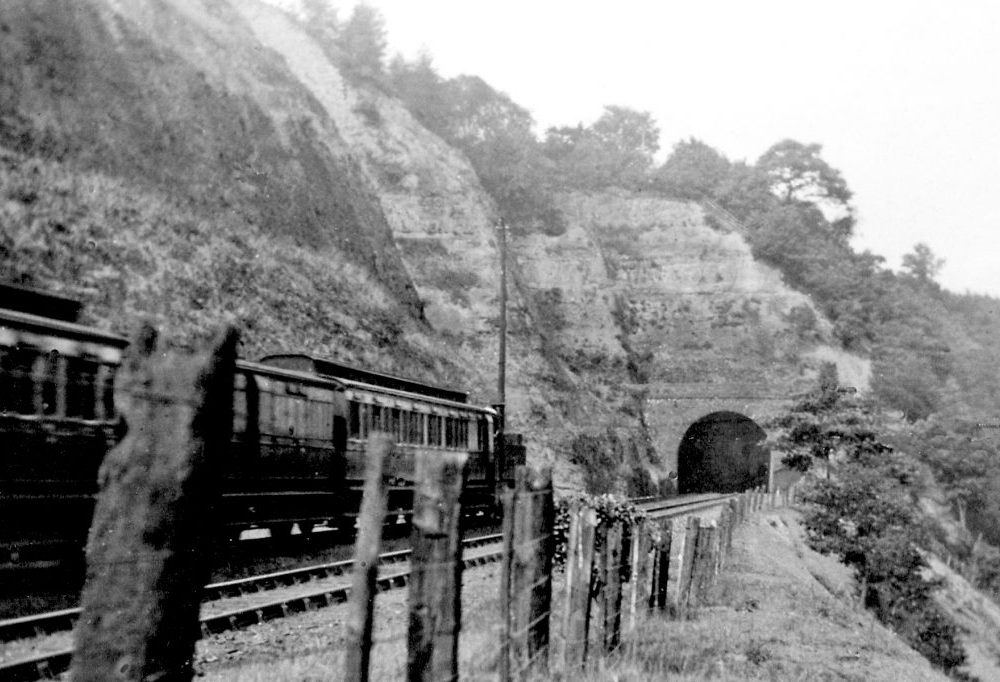
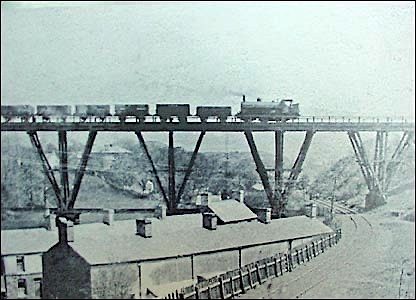
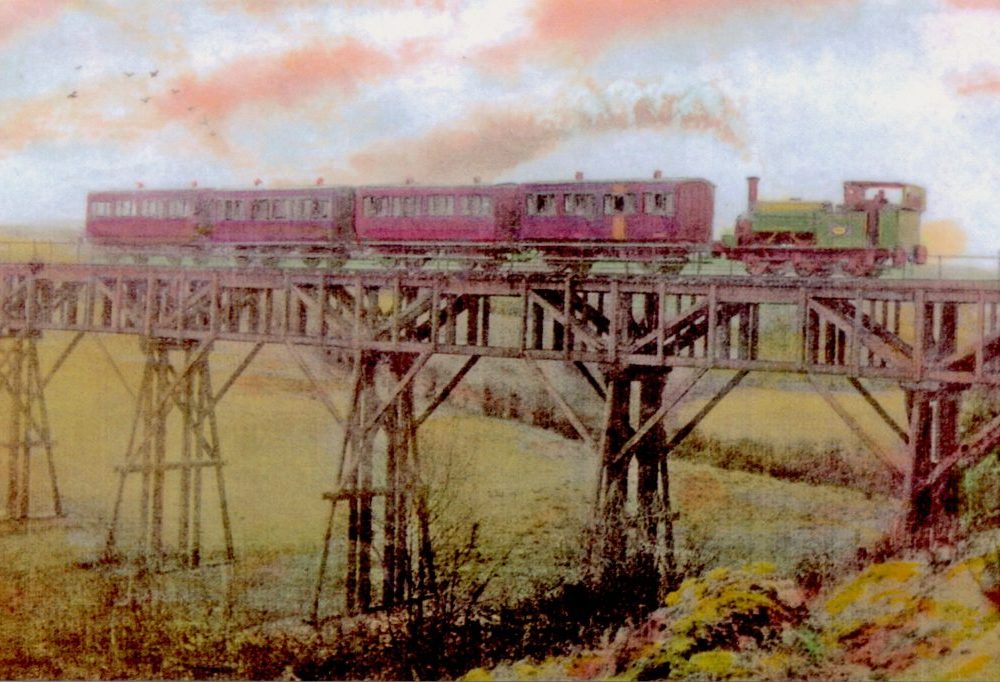
There were several Isambad Kingdom Brunel designed timber viaducts on the Vale of Neath Railway. The ones closest to the village were at Pencaedrain tunnel between Glynneath and Hirwaun, it had eight spans on a 600 m radius.
On the Merthyr leg of the line there were three viaducts, one at Abernant, and two at Merthyr, these viaducts were replaced in the 1870’s.
On the Dare branch from Gelli Tara junction there were two viaducts, the Gamlyn Viaduct and the Dare Viaduct. The Dare branch of the line was to close in 1939 but the viaduct remained in place until 1947, the last Brunel viaducts to survive. Both viaducts were dismantled in 1946 / 47, there is a 13 minute video of the Dare Viaduct being dismantled, I have included a link here.
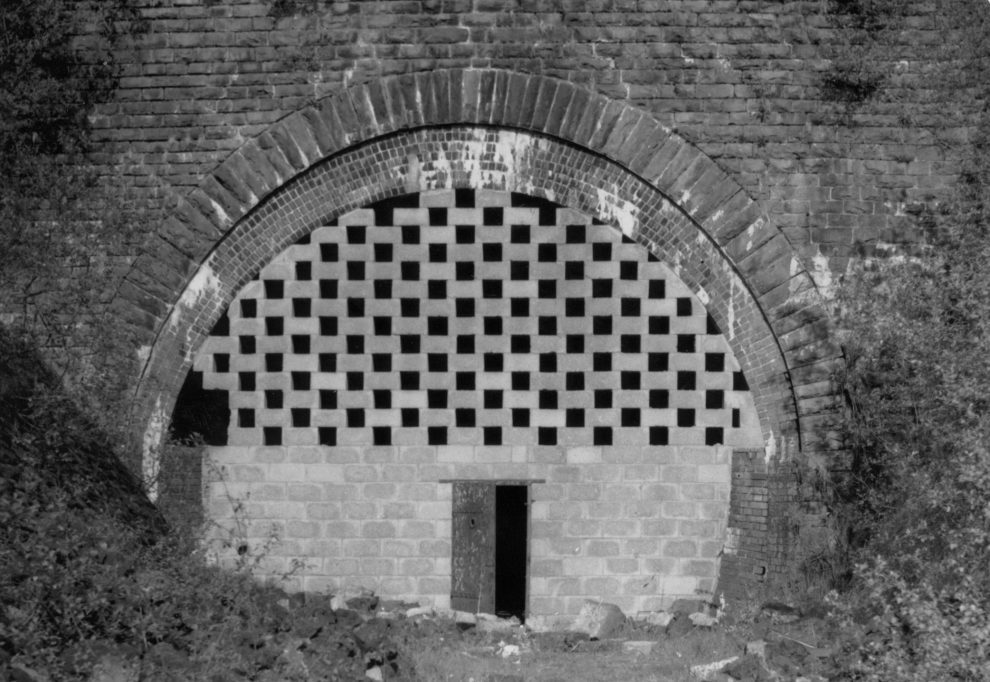
Pencaedrain Tunnel:
At Pencaedrain there is a tunnel 526 yards (481 meters) long , and two further wooden viaducts on the lead in to Aberdare. A year later the Merthyr station was opened making a total of seven station on the line.
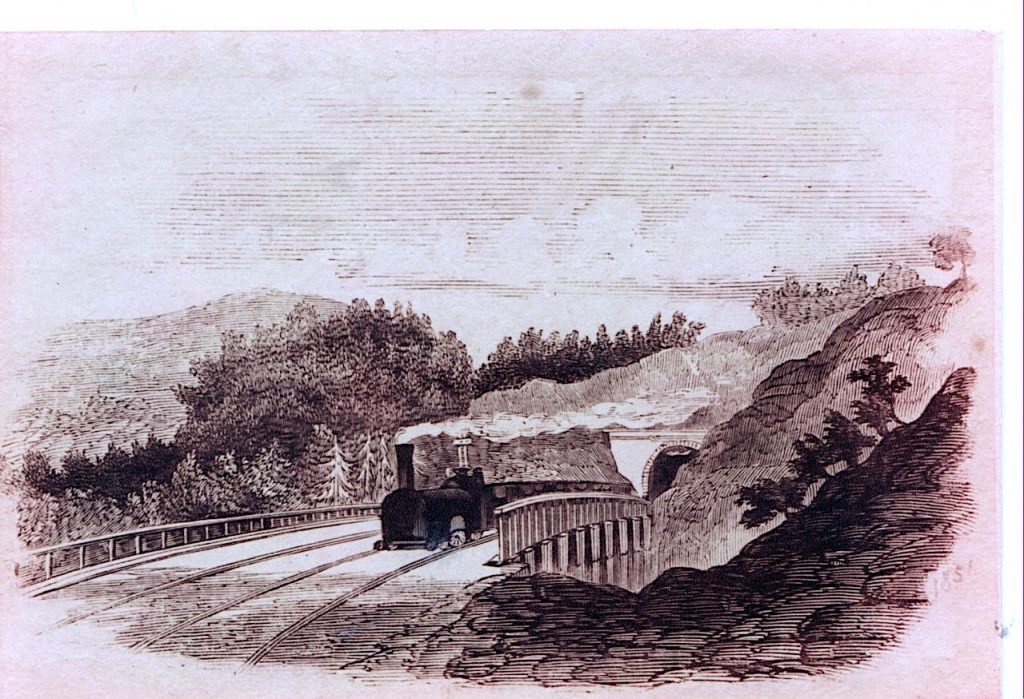
On the left: One of the original six locomotives bought from Robert Stephenson and Company, coming out of the Pencaedrain tunnel and crossing over what looks like a wooden viaduct. The locomotive is a broad gauge 4-4-0 0ST saddle tank steam locomotive.
The 4-4-0, in the Whyte notation, denotes a steam locomotive with a wheel arrangement of four leading wheels on two axles (usually in a leading (bogie), four powered and coupled driving wheels on two axles, and no trailing wheels. The OST denotes a Saddle Tank locomotive.
1850: It has been recorded in the History of the Vale of Neath book by D Rhys Philips (page 16) that on the 28th April 1850 a group of Irish navvies working on the construction of the Vale of Neath Railway has dislodged the Pyrddin Rocking Stone situated above Scwd Gladys. They had hoped to find buried treasure under the stone, but their quest proved fruitless.
Alfred Russell Wallace had visited the site of the stone in 1946 and had said, [5]
“a large boulder of millstone-grit resting on a nearly level surface, but which by a succession of pushes with one hand can be made to rock considerably.”
An Elijah Waring of Neath, writing in the Cambrian newspaper said,
“the vandals should be compelled to repoise the stone, as had been done after a similar outrage in Cornwall.”
He added,
“I do not imagine there can be any insufferable difficulty in a similar restoration of the picturesque vibrating rock at Scwd Wladis, the balance of which was so nicely adjusted, that I have cracked nuts between it and the subjacent rock, merely by a push of my hand.”
(Ed. Note: I wonder if at some point in the future this rock will be put back in its rightful place, wouldn’t that be fantastic.)
1851: The actual opening date of the Vale of Neath Railway line turned out to be Tuesday the 23rd of September 1851 when a ceremonial train of directors and their friends travelled from Neath to Aberdare with the Chairman (Lord Villiers) at the head. At Aberdare they were treated to lunch and a public address. On the return journey they were joined by Mr. Crawshay’s Band who were picked up at Hirwaun and played music all the way to Neath.
(Ed note: For a full account of the proceedings see The Cambrian newspaper for September 26th 1851).
The following day the 24th of September 1851 the first passenger train ran, with three trains running each way daily and two on Sundays, the journey time between Neath and Aberdare and vice versa was 70 minutes. [1]
1853: Construction of the Merthyr tunnel had been resumed in February 1851, and on the 2nd of November 1853 the Merthyr section was opened. Passengers to Aberdare now had to change trains at Hirwaun. The Aberdare and Merthyr lines separated at Gelli Tarw Junction with the line from Neath to Gelli Tarw being a double track. The plan had been for the Merthyr line to be double tracked as well but the majority of the Merthyr tunnel had been constructed as a single track.
As mentioned above passengers travelling to Aberdare had to change at Hirwaun but this situation was reversed when the Neath to Aberdare line became the primary route, leading to the passengers to Merthyr having to change at Hirwaun.
1853: The Cwmgwrach Police Station was built on the 1st April, 1853, it was one of the first manned police stations to be opened in Glamorgan. The need for the police station was identified as the population of the village was increasing, due to the coming of the canal and the building of the railway, which had led to an increase in crime and drunkenness in the surrounding area.
1857: The first years of the VONR saw business grow steadily and profitable, but from 1857 this situation changed. A coal strike and a general depression of trade along with the heavy maintenance costs saw reduced profits, and no dividend was declared in August 1857.
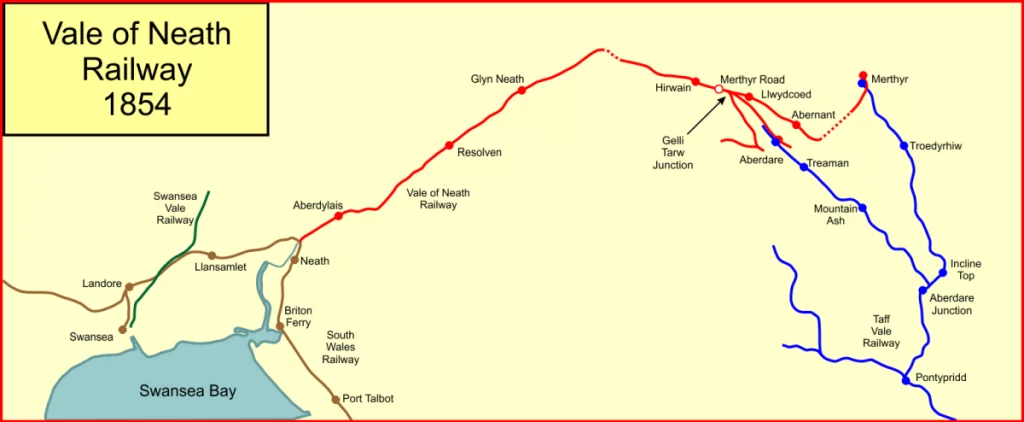
In the same year the Pontypool Road station linked to the Vale of Neath Railway (VoNR) at Merthyr Tydfil/Quakers Yard creating a vital coal route across the South Wales valleys. The key Crumlin Viaduct on the line opened in May 1857, thereby completing the direct connection between Pontypool and the Neath valley. (see map above)
1863: To overcome the problem of using the Broad Gauge system a third rail was added to the track to accommodate the narrow gauge locomotives, (with the Narrow gauge eventually becoming the standard option.) This included the majority of the Vale of Neath network and enabled the GWR standard narrow gauge trains to run from Hereford through to Swansea over a connection at Middle Duffryn.
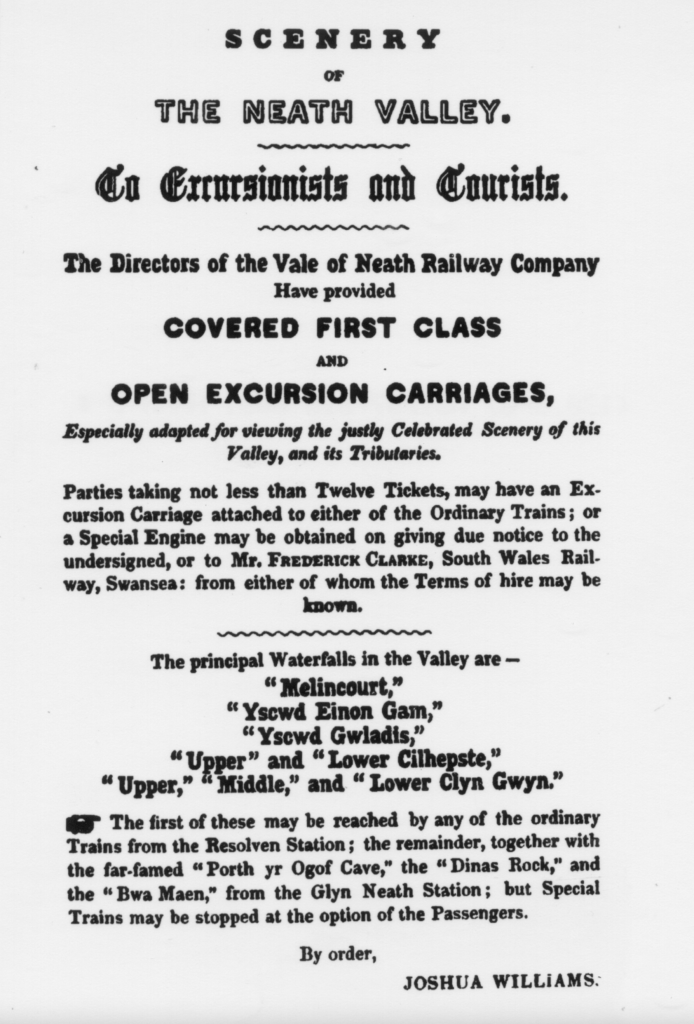
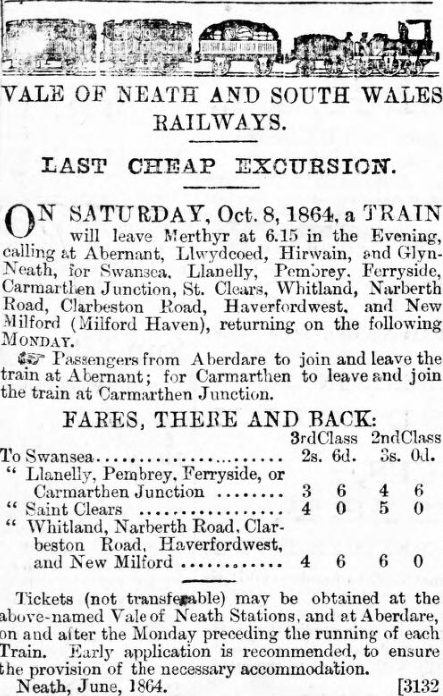
1864: Excursion trips were running to various places from the stations of the VoNR, with many coming to Melincourt and Glynneath station to visit the water falls. (see posters attached below.)
1865: The Vale of Neath Railway (VoNR) was bought out by the Great Western Railway (GWR) on the 1st of February 1865 and was subsequently authorised by an Act of Parliament called The Great Western Railway (Vale of Neath Amalgamation) Act 1866.
1872: The broad gauge rail was removed from the system after the South Wales Railway line was converted to the standard gauge on the 11th of May 1872.
1871 – 1873 The battle of the rail gauges:
The change from a broad gauge railway to the narrow (standard) gauge was completed over a number of years. Firstly the Dare Valley section was converted in 1872, closely followd in the same year by the entire main line from Swansea to Middle Duffryn being converted; a double track was laid from Gelli Tarw Junction to Middle Duffryn in1872; then in 1873 the Merthyr branch was also converted. These changes were part of a wider initiative by GWR in 1872 to convert all main line broad gauge tracks in South Wales to the narrow (standard) gauge tracks.
Section 2: Local information on the VoNR.
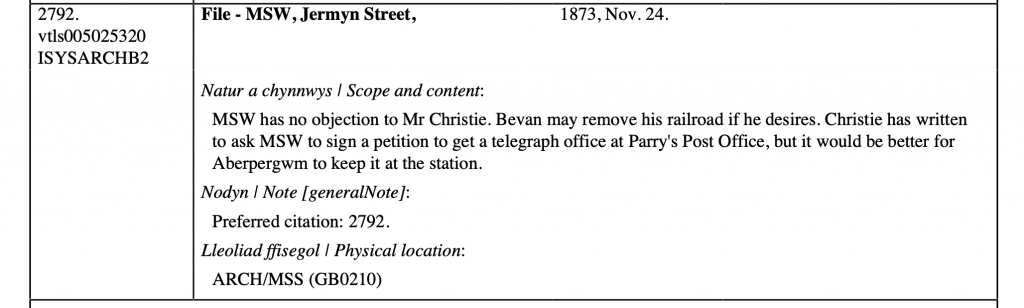
1873: The first post office in Blaengwrach was adjacent to the railway station. Morgan Stuart Williams, head of the Williams family, replied to a letter from Mr. Christie Bevan on the 24th November, 1873, that he had no objections for Bevan to remove his railroad (tramway) if he so desired. Bevan had also written to Williams to ask him to sign a petition to get a telegraph office at Parry’s Post Office, but Williams replied to say he would prefer to keep it at the station. (See below image)
Halts, Bridges and Branch Lines:
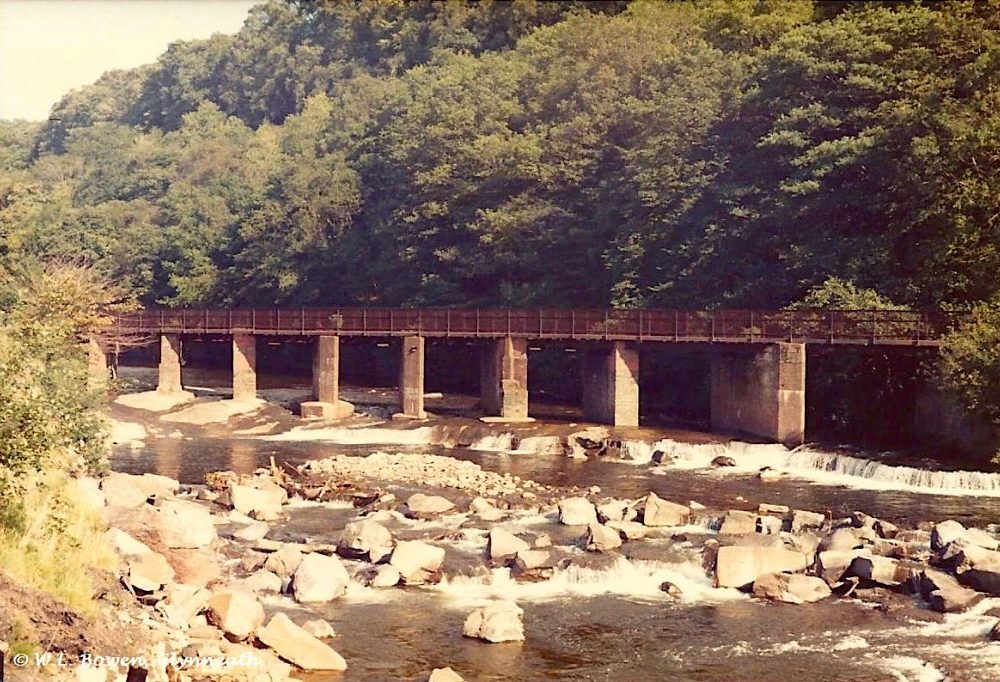
1877: The Abernant Dinas Silica Company sitting on the West side of the river Neath depended on the canal to transport its products, as the VoNR railway skirted the base of the hill on the East side of the river. To enable them to use the railway they built a bridge over the river and a branch line to Glynneath station, the bridge we now know as the Langy Bridge. [6]
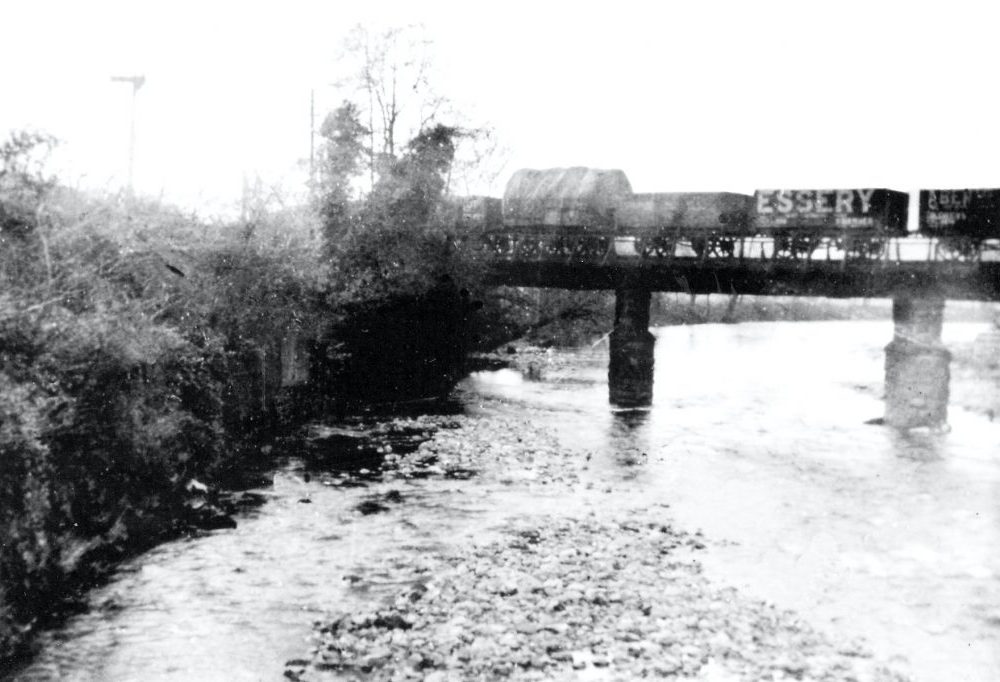
1904 / 05: Mr. Morgan S. Williams of Aberpergwm Manor House built a bridge over the river Neath, 100 metres downstream from the old road bridge into the village. This bridge carried the branch line from the Aberpergwm and Pyllfa’r-on Colliery sidings in a curve over the River Neath and on to Glynneath Railway Station. This was the first time the Canal Co. had failed to stop a bridge being built over the canal and river. This in turn led to the demise of the coal traffic on the Neath Canal, as it was cheaper to transport coal on the Railway other than the Canal. [6]
By the mid 1820/2 the peak tonnage of coal carried on the Neath Canal was 200,000 tons, the comparable figure carried on the Vale of Neath line and other amalgamated lines was nearly 20 million tons of coal annually.
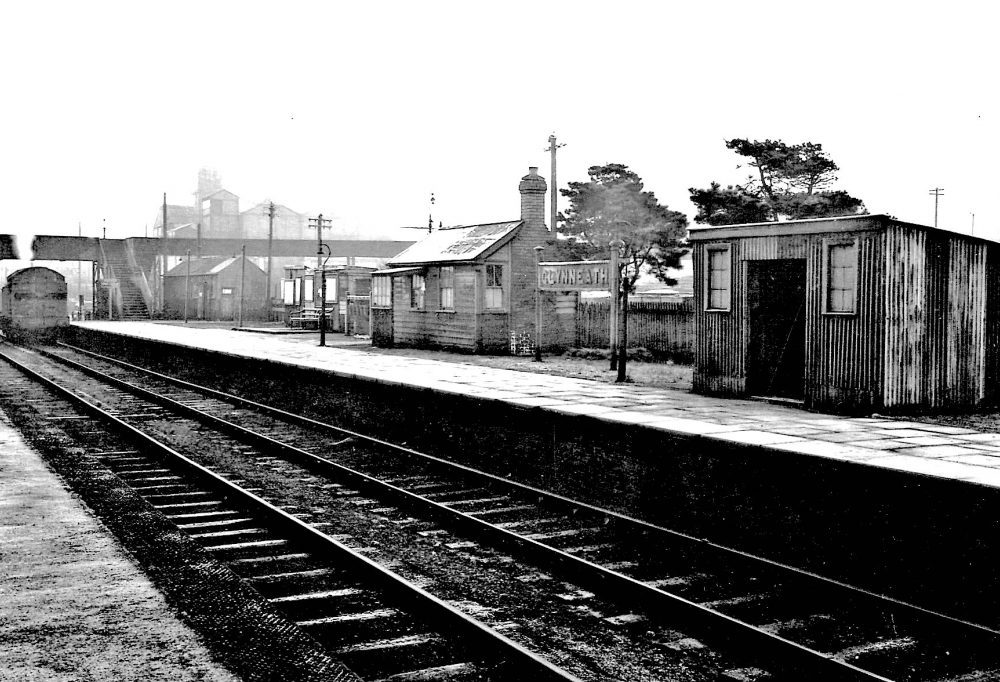
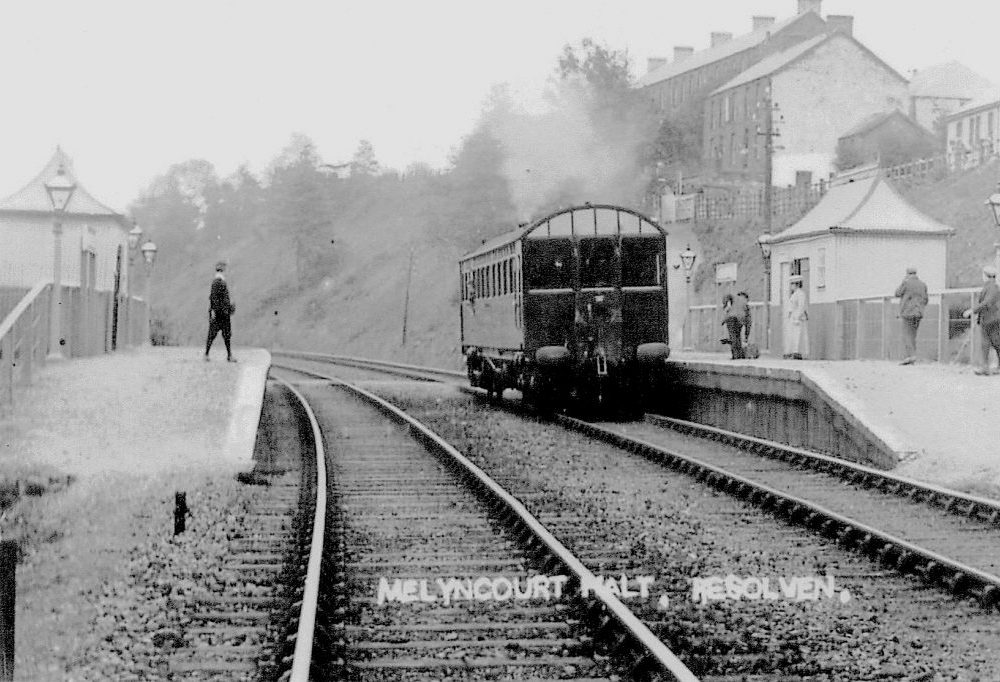
1905: Two additional halts were opened by GWR in 1905, one at Melincourt and the other at Clyne. The facilities were very basic, with standard GWR ‘pagoda stye’ corrugated iron waiting shelters on both the up and down platforms. [1]
1906: The British Rhondda Halt was opened on the 27th August 1906. It only run for four and a half years before it was replaced in 1911 by Pontwalby Halt. It served the miners at an adjacent mine of the same name.
1911: Pontwalby Halt was opened on the 1st May 1911 and was closed on the 15th June 1964, after the last passenger train had run through the valley.
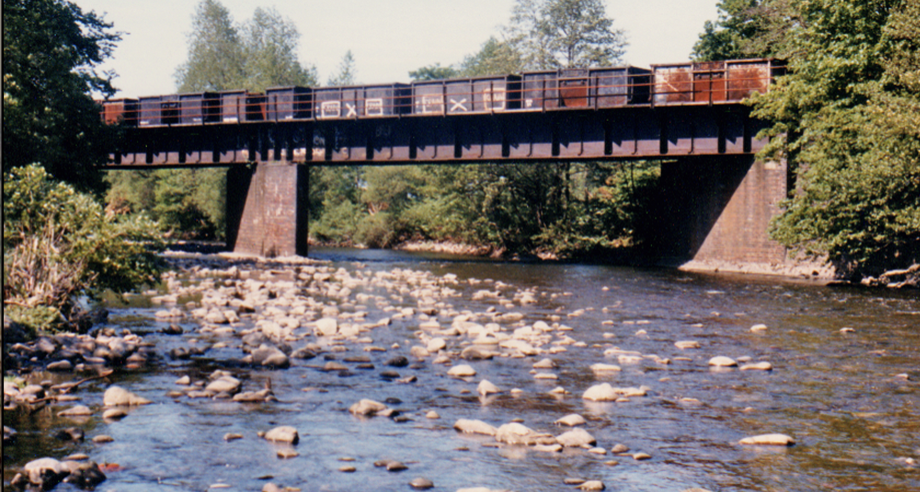
1922 / 23: The `Red Bridge` was constructed circa 1922/23. The bridge over the River Neath connected the Aberpergwm Colliery washery (Coal Preparation Plant) via the Red Bridge to the Vale of Neath railway line just below the village. In order to construct the Red Bridge, Cwmgwrach RFC had to give up their use of their pitch called `Pebble Beach` in the 1921/22 season, leaving them without a pitch until 1929. [6]
1923: The Railways Act of 1921 dictated that the approximately 120 separate railways companies of Great Britain should be amalgamated into four large companies that would be called the `Big Four.` Namely Great Western Railway (GWR); London, Midland and Scottish Railway (LMS), London and North Eastern Railway (LNER) and Southern railway (SR). This reorganisation of the railway companies came into effect on January 1st, 1923, with the Great Western Railway (GWR) keeping its name and taken over all the railway companies running in South Wales.
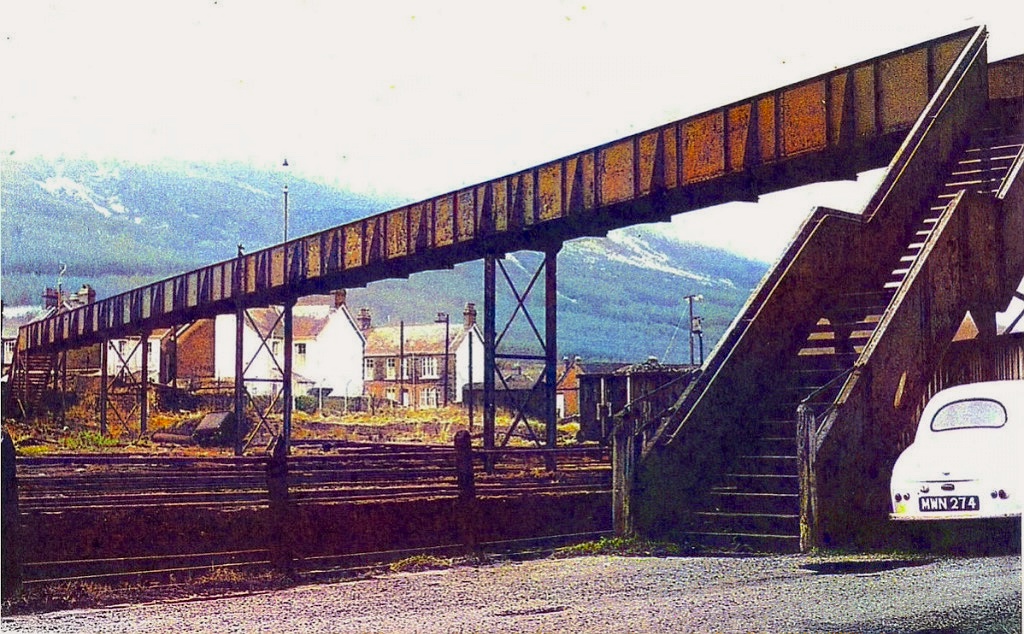
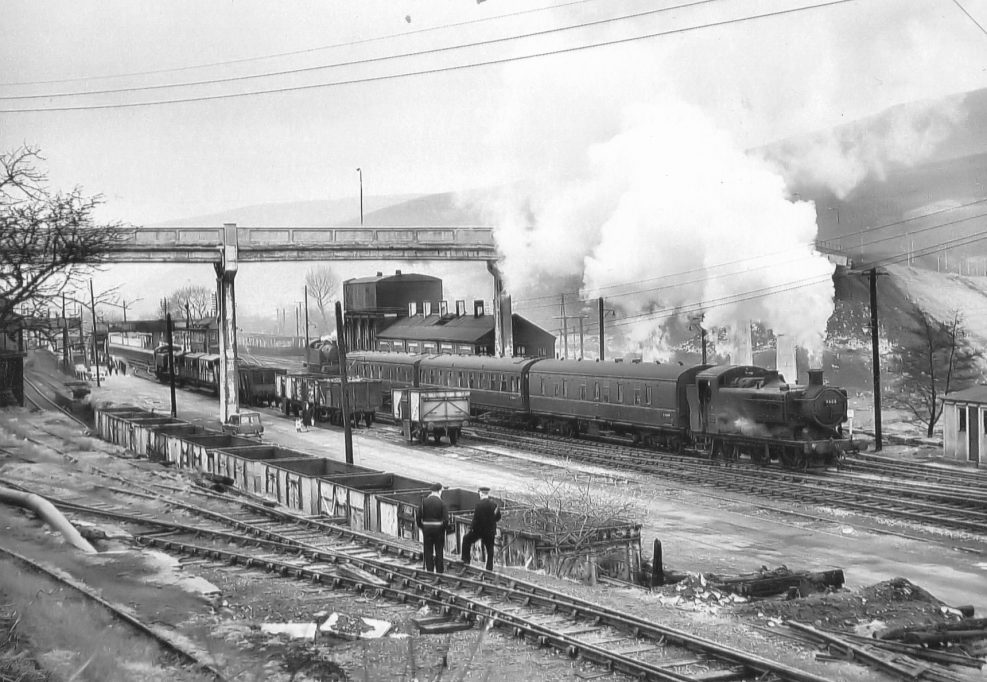
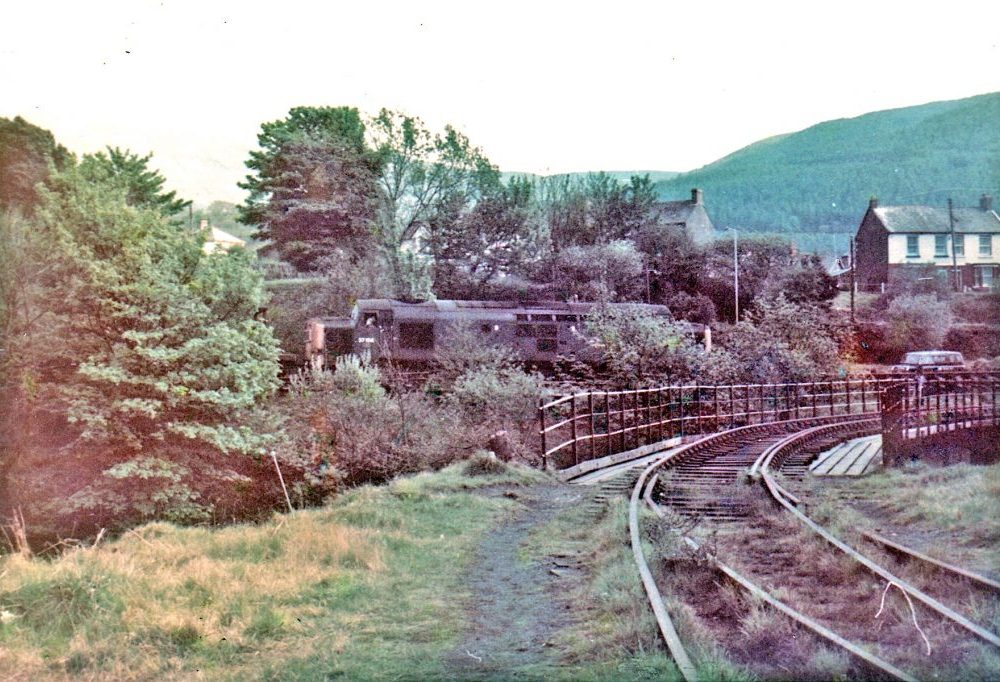
1925: A footbridge was constructed from the bottom of Dunraven Terrace (as it was called then) over the Empire Colliery sidings to Glynneath railway station. It was built to provide better access to the station for the inhabitants of the village, as otherwise they had to walk out to the two bridges, turn left between the bridges then travel up Station Road to gain access to the station a distance of about 1/4 of a mile. The cost of the bridge was estimated at £1,000 and it was to serve the community for many years.
The story can be read in the Aberdare Leader published on the 16th May, 1925.
(Photograph by W.E. Bowen, whose car can be seen in the photograph, it was an Austin A30, Reg. no. MWN 274.)
1935: Cwmrhyd-y-Gau Halt was opened on the 14th January 1935 and closed in 1945, the Halt served the Abernant Brick and Tile Works.
1937: Due to the excessive incline of the Rhigos Bank a number of `banking engines` were required to be fully steamed up ready to support heavy loads travelling up the Rhigos Bank. Therefore the station was also designated as a depot for banking engines. These banking engines needed an engine and coaling shed to keep the engines fuelled with coal and water at all times. The original engine shed was 40 foot long and sat about 300 yards up the line from the station.
In 1937 this engine shed was extended to 120 ft. with a new water tank mounted over the original engine brick built shed. The tank was supported by cast iron columns set close to the walls. The new rear extension was brick built with a corrugated roof.
The water for the tank was supplied from two man made water ponds. One of the ponds was on the Parish Road near the entrance to the ash tip, whilst the water from the other pond came from a small concrete dam on the brook alongside Ynys Las stables. (Peter Rickets Memories click here) [7]
At the same time as the above mentioned extension a new siding was added with a better coaling facility constructed. The coaling plant was a timber construction with a canopy and apron cantilevered over. There was also an ash disposal area.
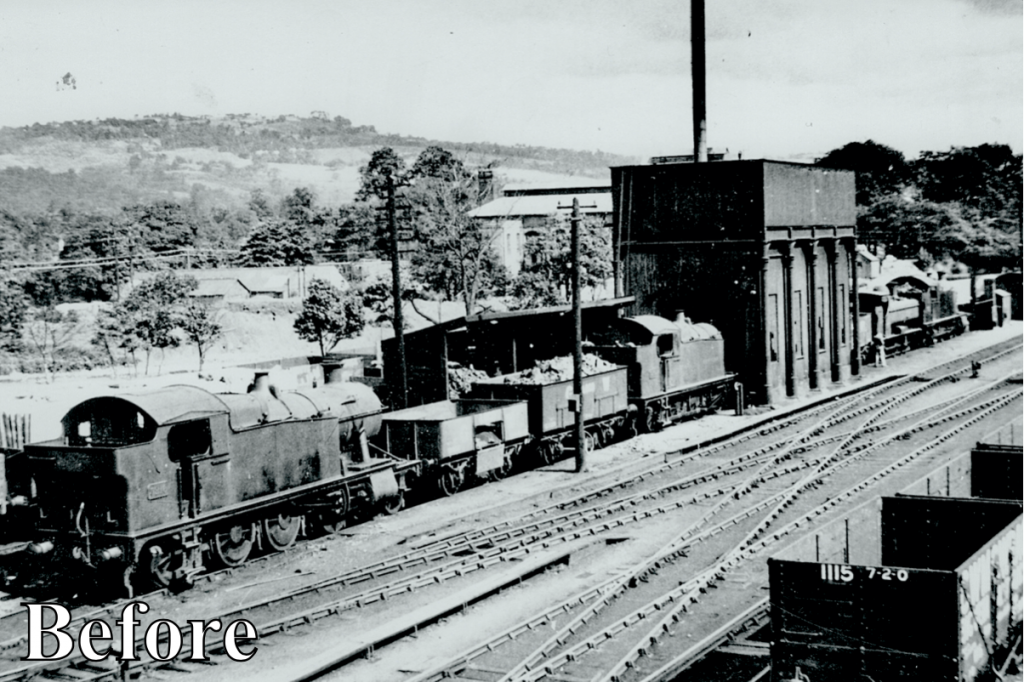
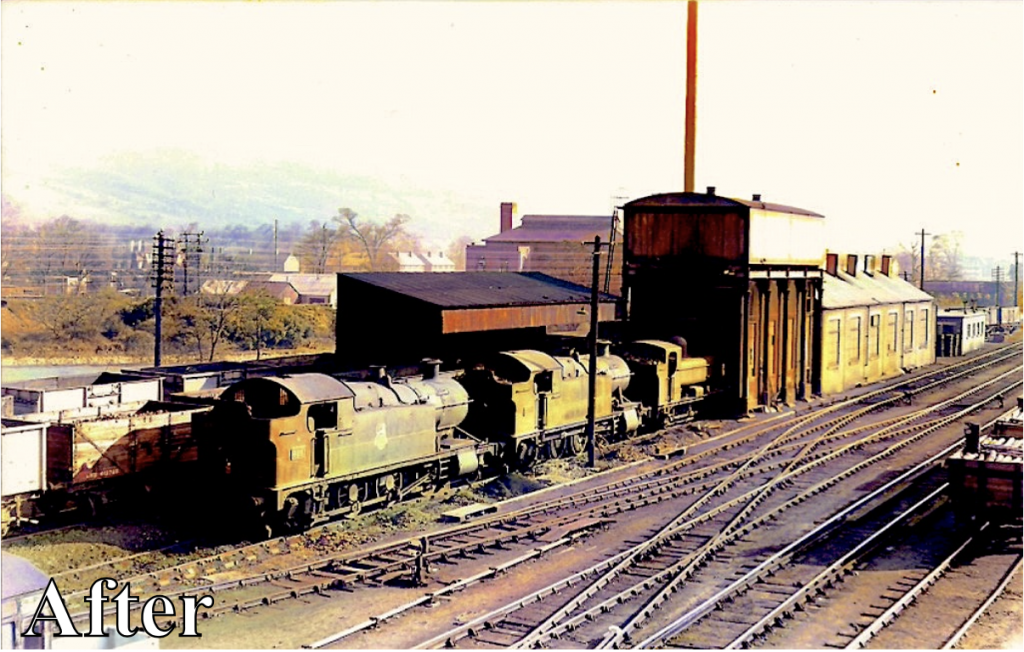
Glynneath station was designated as a sub shed to the Cwrt Sart depot (desigated under GWR as NEA and under British Rail as 87A). Locomotive were returned to the Cwrt Sart depot for a monthly boiler washout, examinations and any necessary repairs. [8] Dick Jones memories
The seven locomotives allocated on the 31st December, 1947 were:
2-8-OT: 4221. 4272, 4279, 4293
0-6-OPT: 7737, 7769, 9756
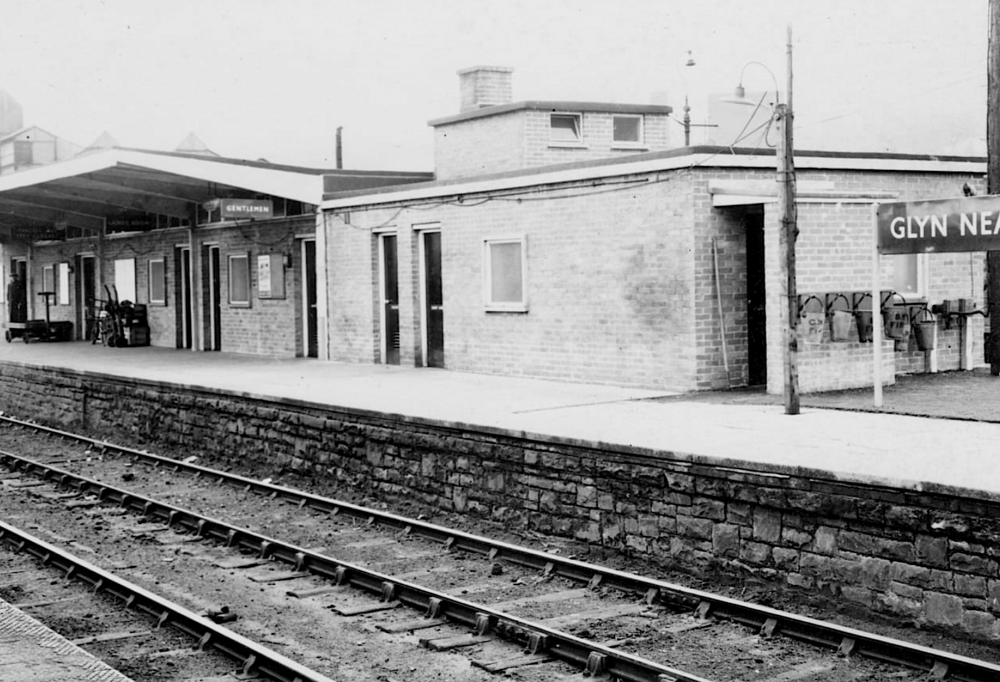
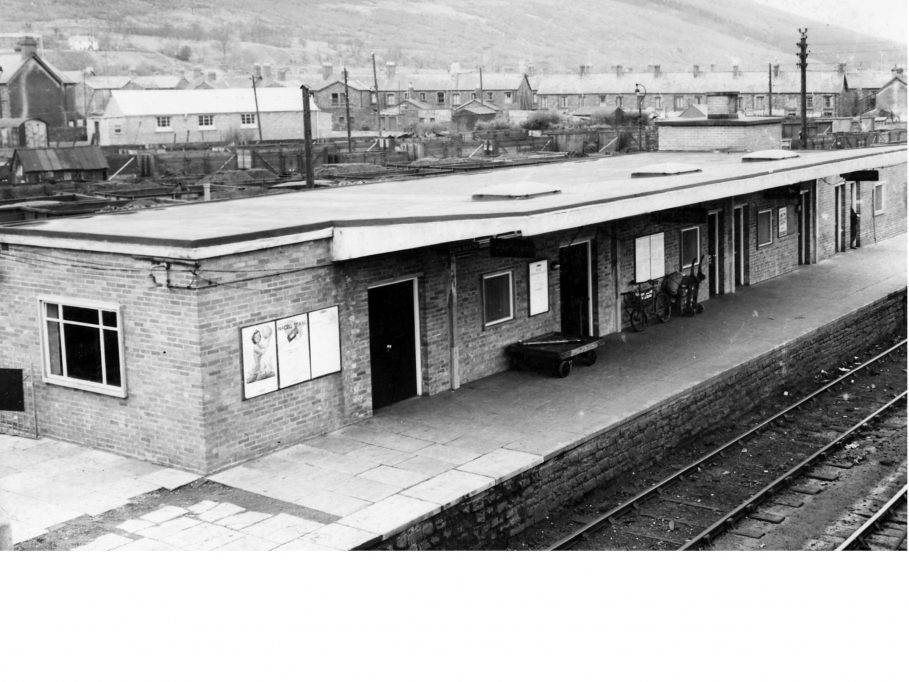
1946: On Wednesday the 20th of March, 1946, a large fire took hold of the railway station. The fire was to completely destroy the waiting-room, the booking office, and the parcel office, leaving only the clerk’s office, along with some railway tickets to be saved from the fire. The Neath Guardian reported on the 29th March that the fire was to believed to have started by a stove in the booking office setting fire to the roof.
Contrary to the Neath Guardian report, Peter Ricketts was to witness the fire first hand whilst catching the train to the Grammar School in the morning. He said, “I saw smoke coming from the rear of the station above the outside gents toilet.” On his return in the afternoon he was told that the fire was started by sparks from an engine standing at the rear of the station in the Empire Colliery screens sidings. The engine had emitted red hot cinders onto the station roof, which in turn set fire to the station’s eaves. (Peter Rickets Memories click here) [7]
1948: The Great Western Railway (GWR) was Nationalised by British Railways (later British Rail) on the 1st of January, 1948, following the Transport Act of 1947. It was known as the Western Region of British Rail and so ending its status as a private company. The name was revived in the 1990’s following the re-privitisation of British Rail.
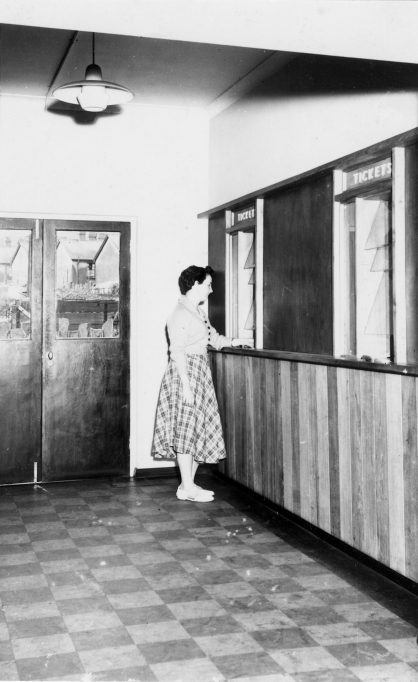
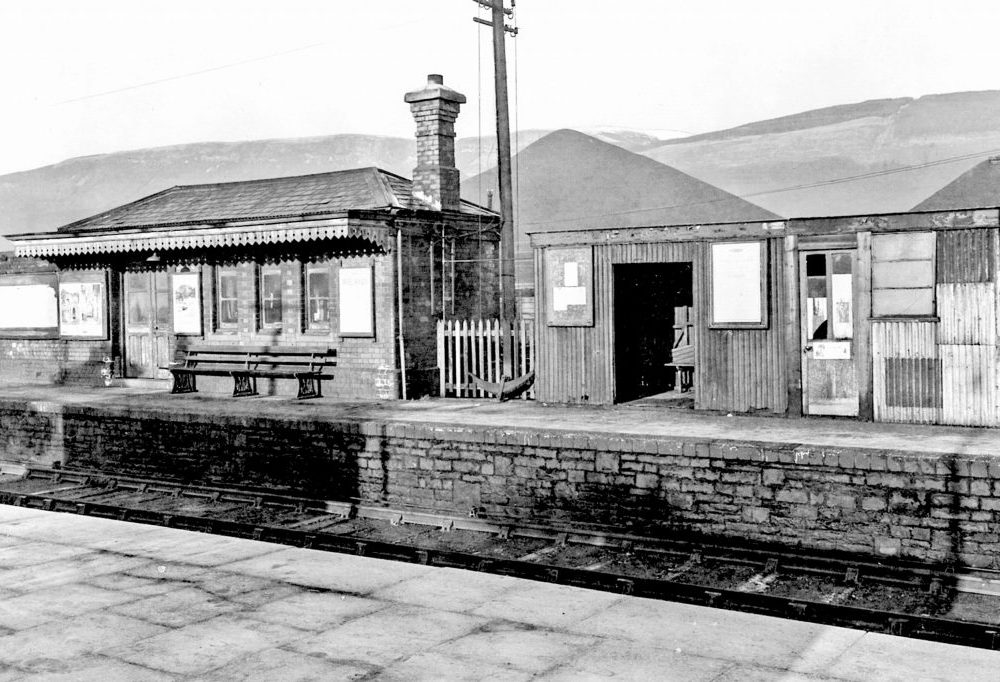
1954: Circa 1954 a new modern brick built station had been built to replace the building destroyed in the 1946 fire. The new station now incorporated a goods and parcel handling and distribution facility. The station was to remain open as a goods depot after the end of passenger services until 1972 when it was finally demolished.
The decline of the Vale of Neath Railway:
The decline of the railways in my view can be contributed to two major factors. The first is the increased use of roads to transport goods and the increase of people driving cars. The second fact that effected the profitability of the railway network was the decline of the coal industry, with coal for fuel being replaced by natural gas, nuclear energy and more recently renewable energy sources such as wind, solar, hydro, geothermal, biomass and tidal energy. (Please see graphs below of the demand for coal over time below which shows the reduction of our reliance on fossil fuels and the drop off in passenger numbers.)
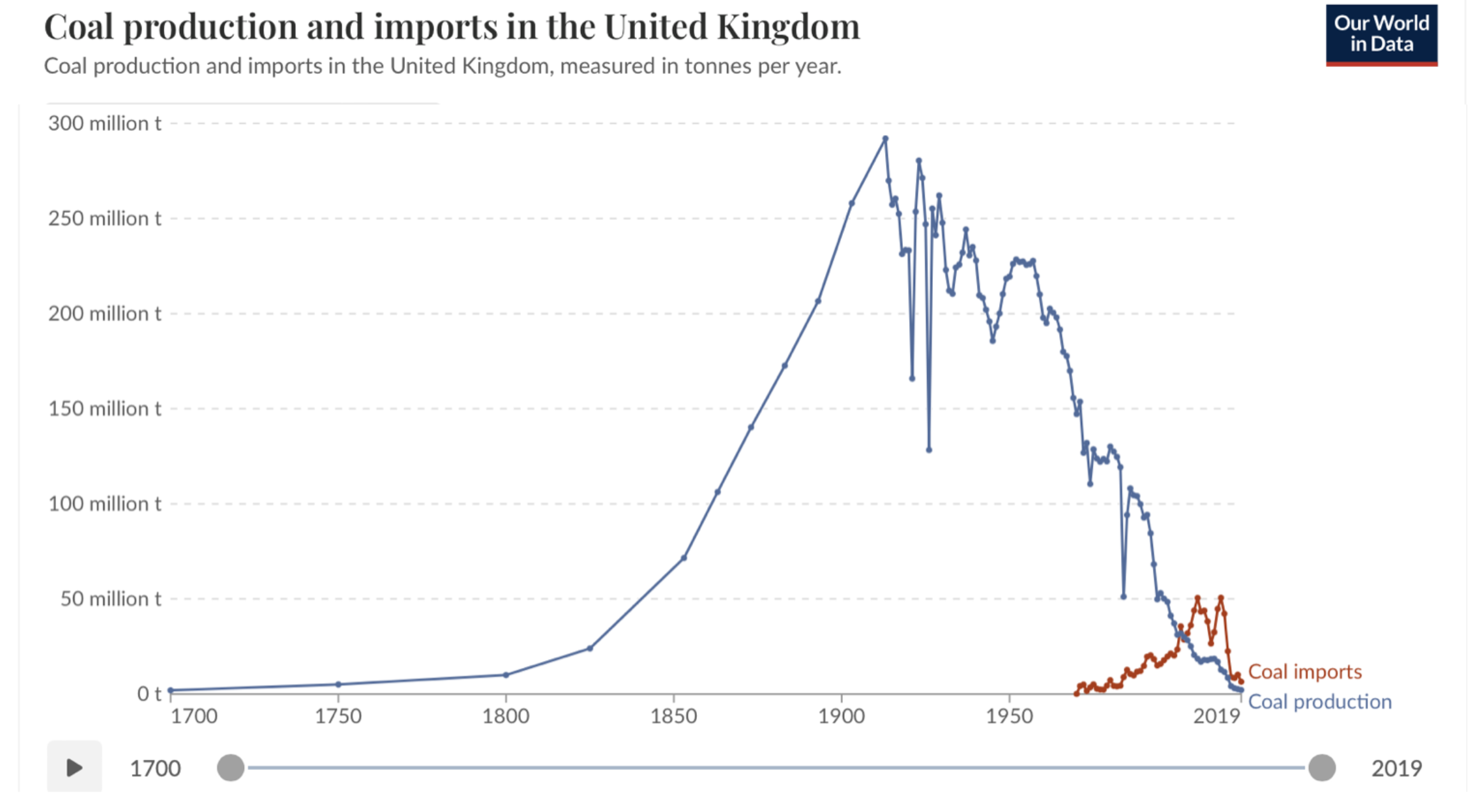
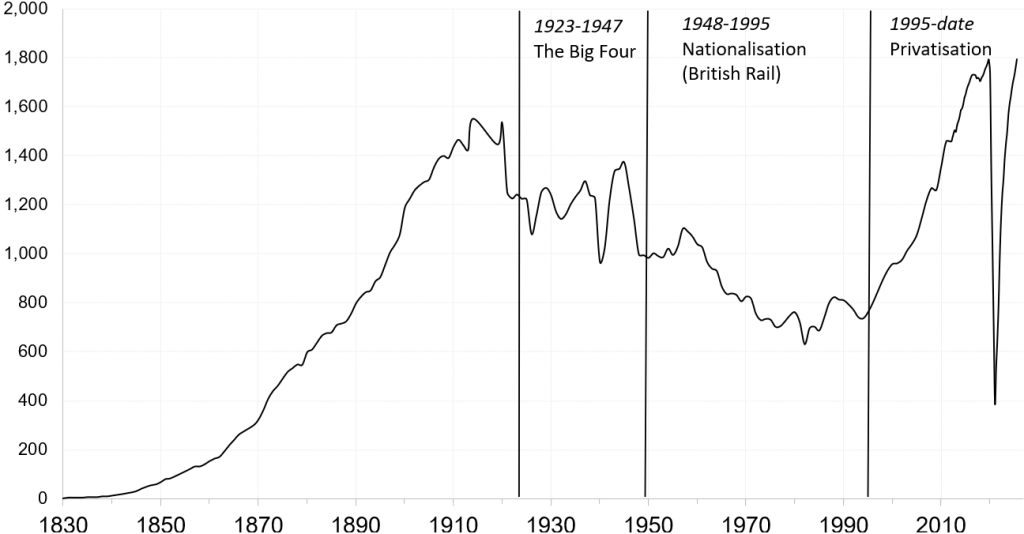
Data source: UK Department for Energy and Climate Change (DECC) Drop in Passenger Numbers
1963: Dr. Richard Beeching, then chair of of the British Railway board, was tasked with “The Reshaping of British Railways”. His report concluded that all non-profitable lines up and down the country were to be closed. The report published on the 23rd March 1963 was to identify 2,363 stations (190 in Wales) and 5,000 miles (8,000 km) of railway lines for closure. This amounted to 55% of stations and 30% of route miles and the loss of 67,700 British Rail jobs. [8]
(Ed note: The Vale of Neath line was NOT one of the many lines condemned by the Beeching report, as the line had already been considered for closure before the report was published.) [9]
1964: The last passenger train came through Glynneath station on the 15th of June 1964. I was lucky enough to witness this historical event which would end 113 years of passenger transport on the Vale of Neath Railway. Goods traffic would continue for a few more years. If you would like to read my memories of this day please click on the link here: [10]
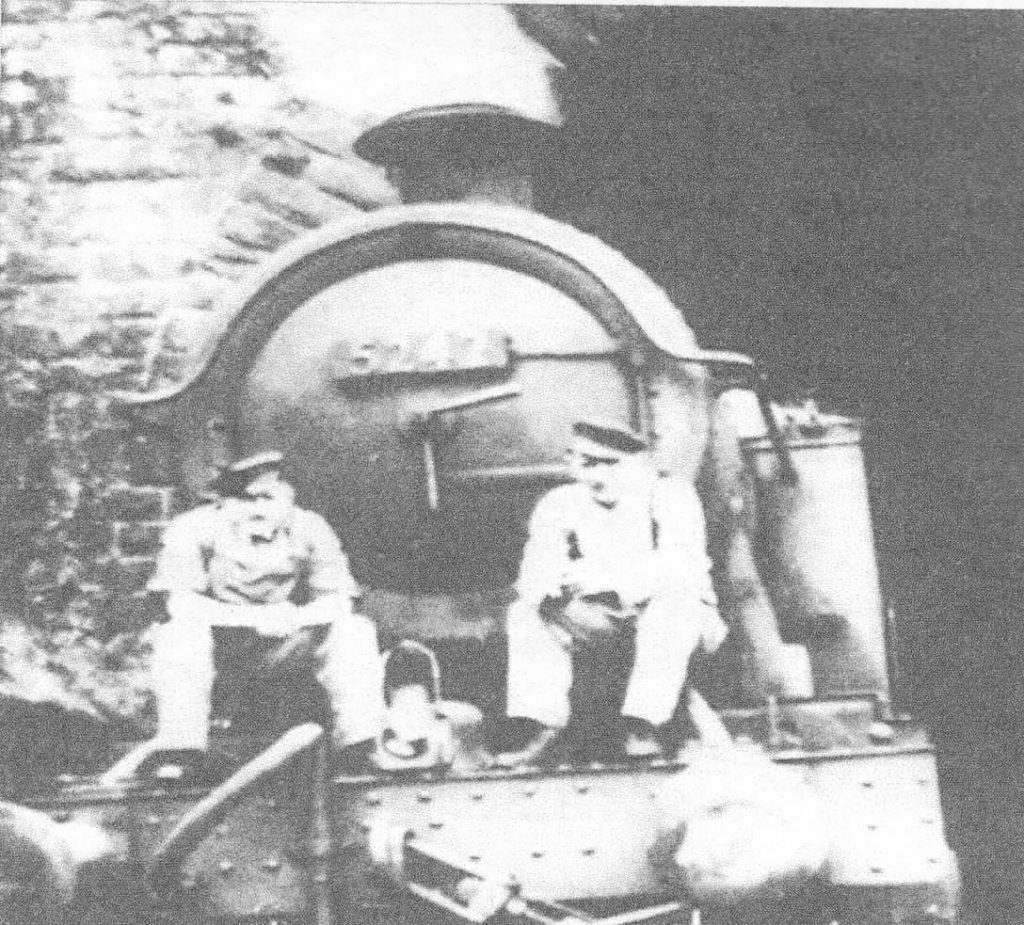
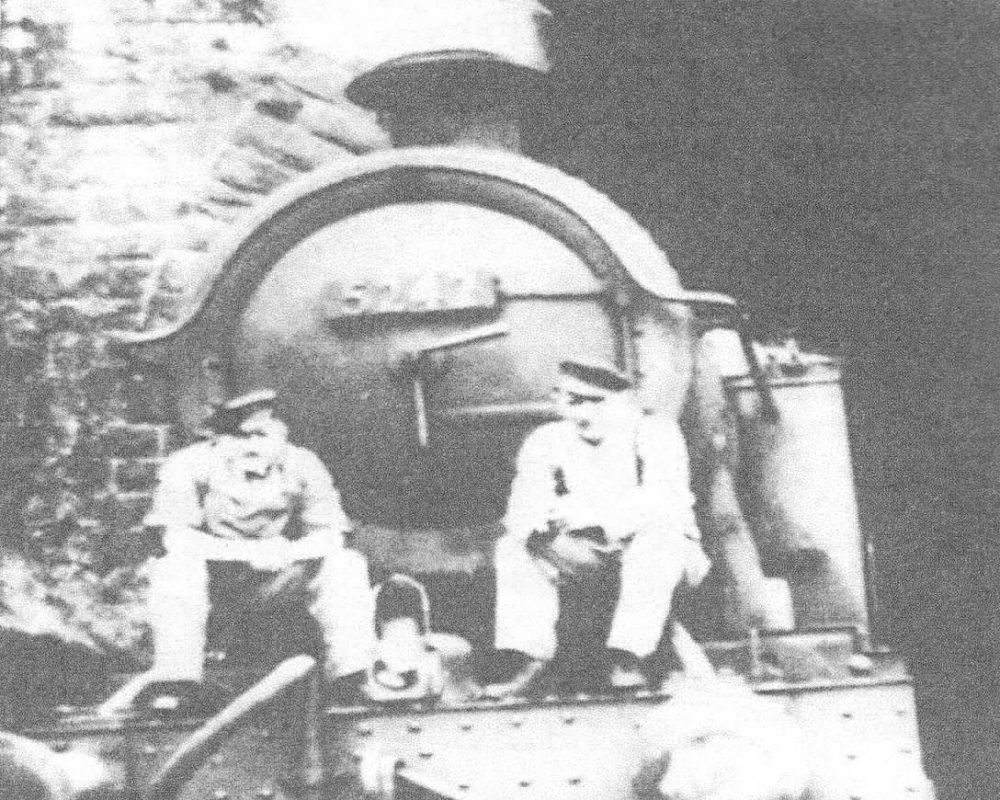
1965: In the June of 1965 driver Richard “Dick” Jones and fireman Hywel Williams had the honour of taking the last steam engine out of the Neath area. They were photographed sitting on the front of ex GWR 5242 at the entrance to Pencaedrain tunnel. They are looking back down the line as the track is being singled. [8]
1967: The line between Neath and Hirwaun was to close completely on the 2nd October 1967.
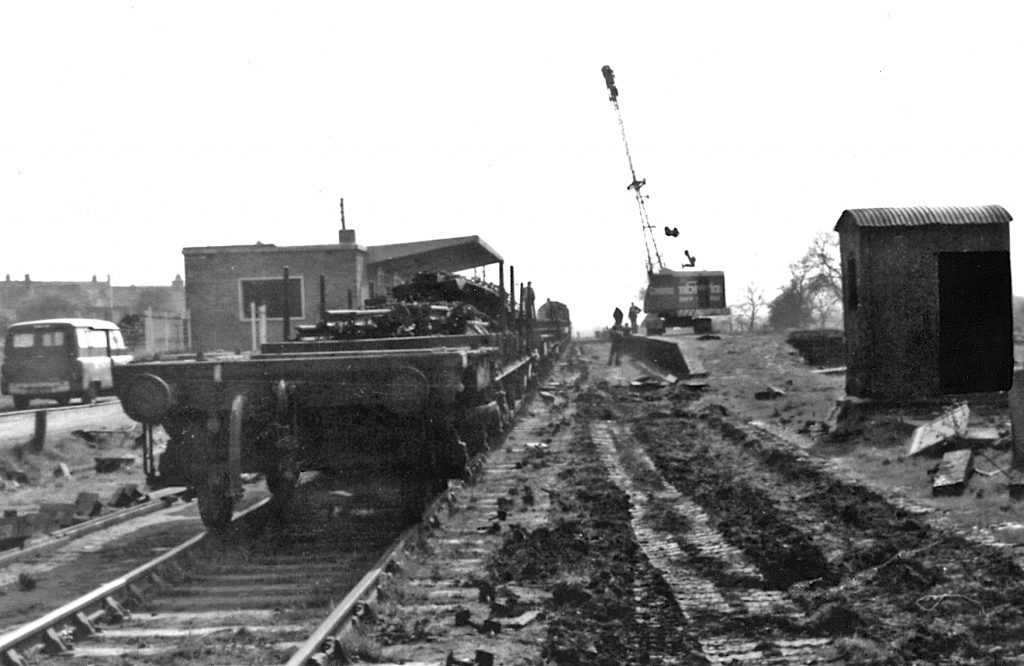
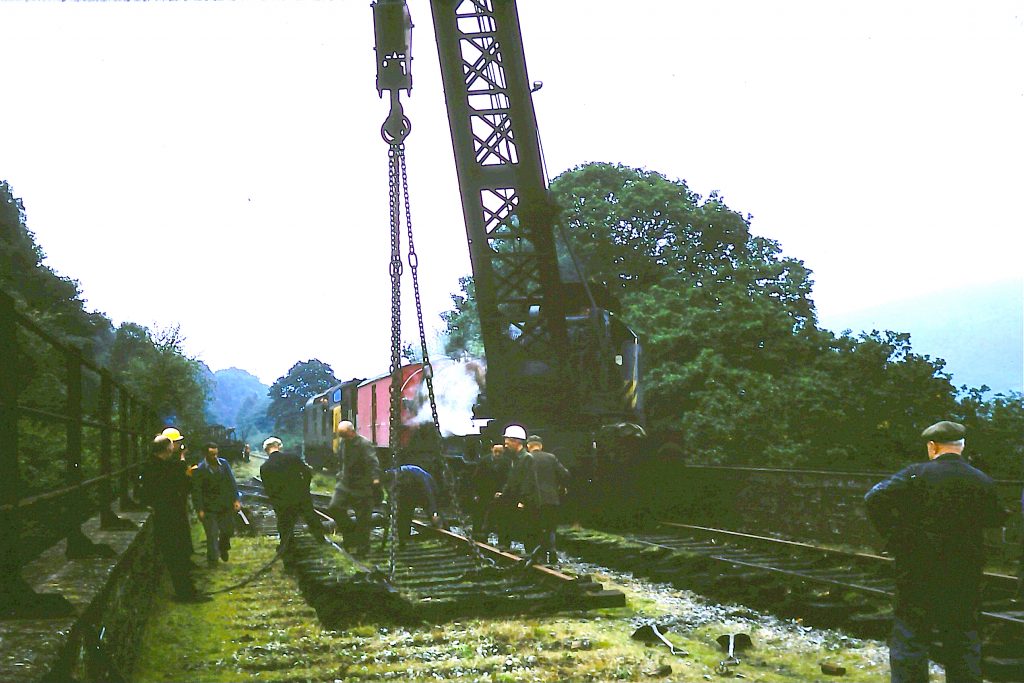
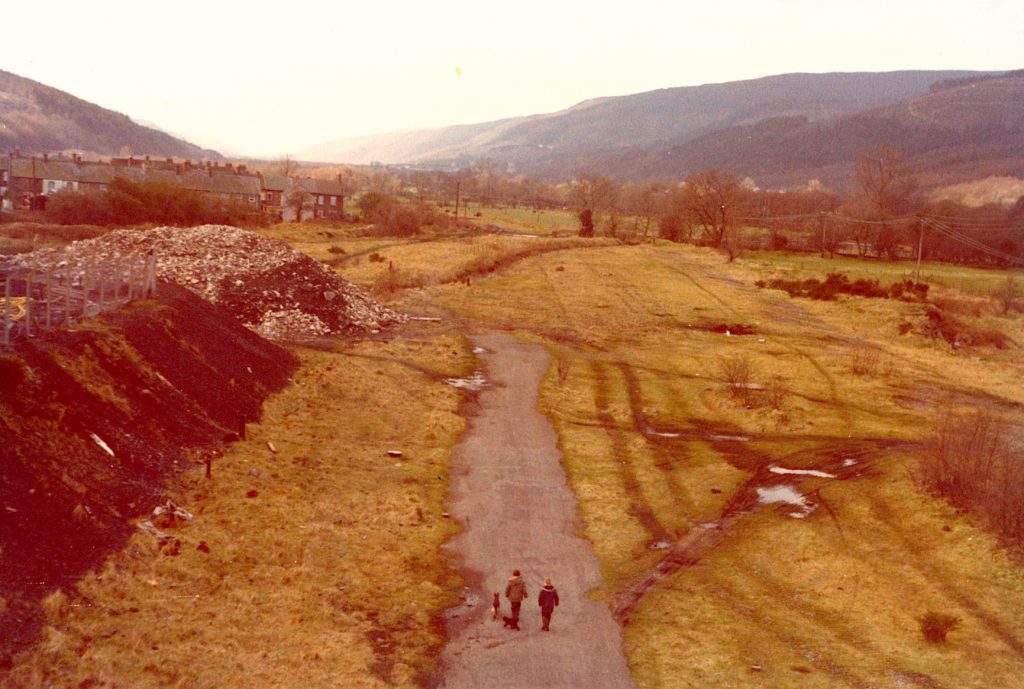
1972: The railway station was eventually demolished and the tracks taken up. (Ed not: Probably the only surviving artefact, a large wooden table probably from the waiting room. `saved` from the station now sits in my fathers shed in Craig Nedd.)
So what is the Epilogue for the VoNR:
The VoNR was to run from 1851 – 1964 a total of 113 years, and in that time went all the way through the age of steam trains and into the diesel train era. In 2026 the last passenger train to travel through the station was sixty two years ago, a lifetime ago.
In its time it:
- Transported 20 million of tons of coal annually. (At the peak of coal production and using amalgamated lines)
- Transported many thousands of people to Neath, Aberdare or Merthyr shopping.
- There were many excursions in the early days of the line to Melincourt waterfall and the watrefalls at Pontneathvaughan.
- School children attending Neath Grammar School were also to use the line.
- Many people travelled to Porthcawl and Barry Island for the miners holiday.
- Transported pigeons throughout Britain for pigeon races up and down the country.
What to the future:
The area were the railway station used to stand now has the dual carriageway running over it and then follows the track of the railway past Glynneath. This means it would be very difficult if not impossible to reopen the line. But that does not stop the line being reopened between Neath and the Unity Mine as the tracks are still in place. So potentially a new Metro line could be opened up to Cwmgwrach with a new railway station possibly being built utilising the land over by McDonalds.
A passenger service would then be possible for the inhabitants of the top end of the Vale of Neath connecting through Neath to railway lines throughout the country.
But of course this is all speculation as there are no plans in place at the moment to do so.
(Ed. note: I wonder if this will ever happen in our life time.)
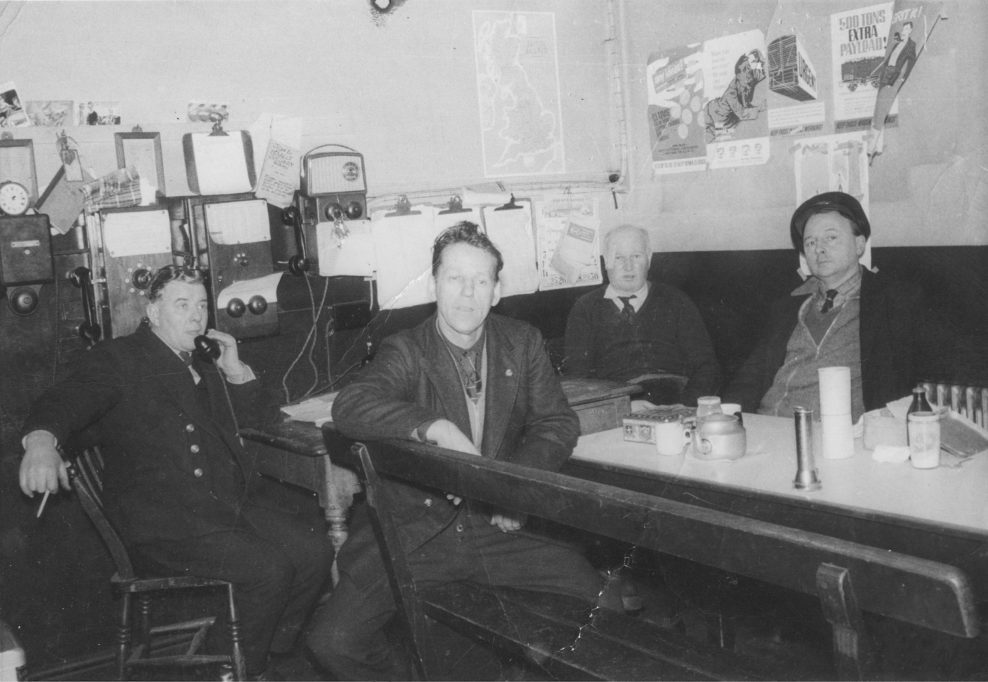
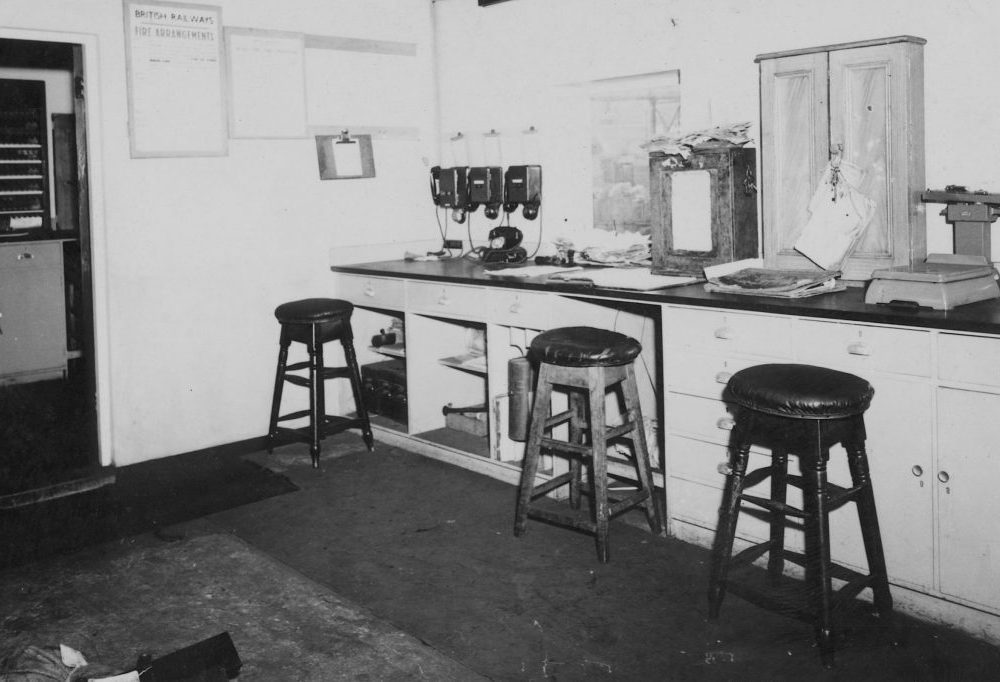
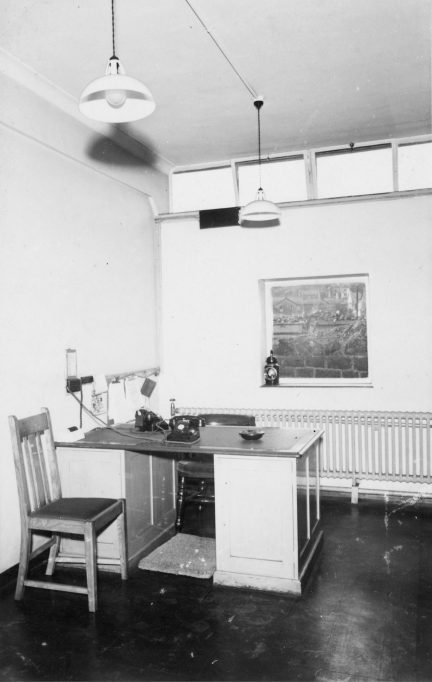
Photographs of the Railway station, Locomotives etc:
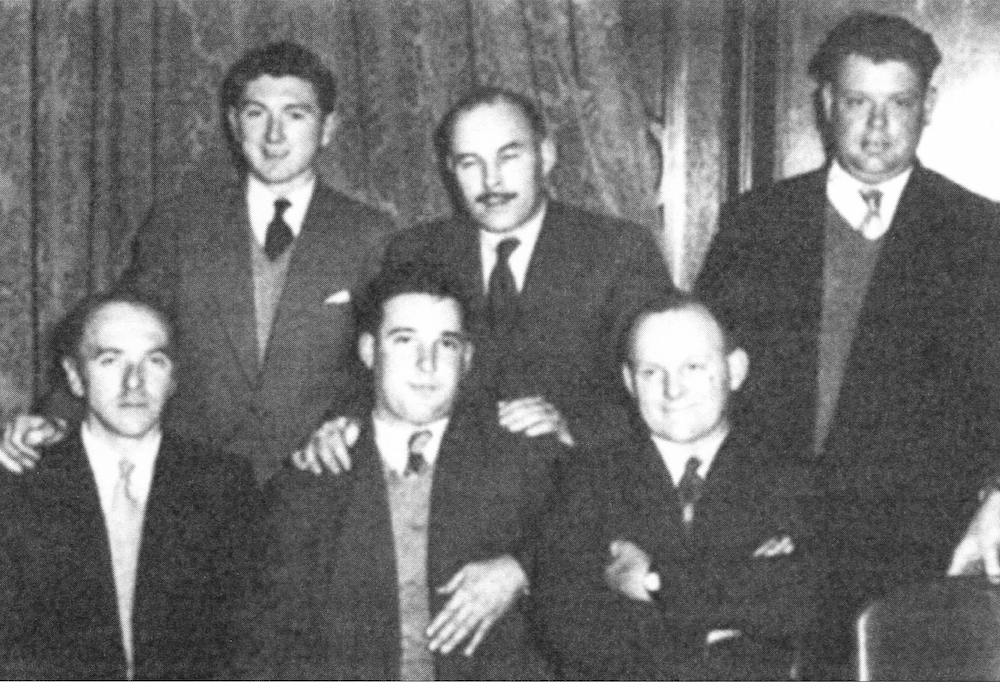
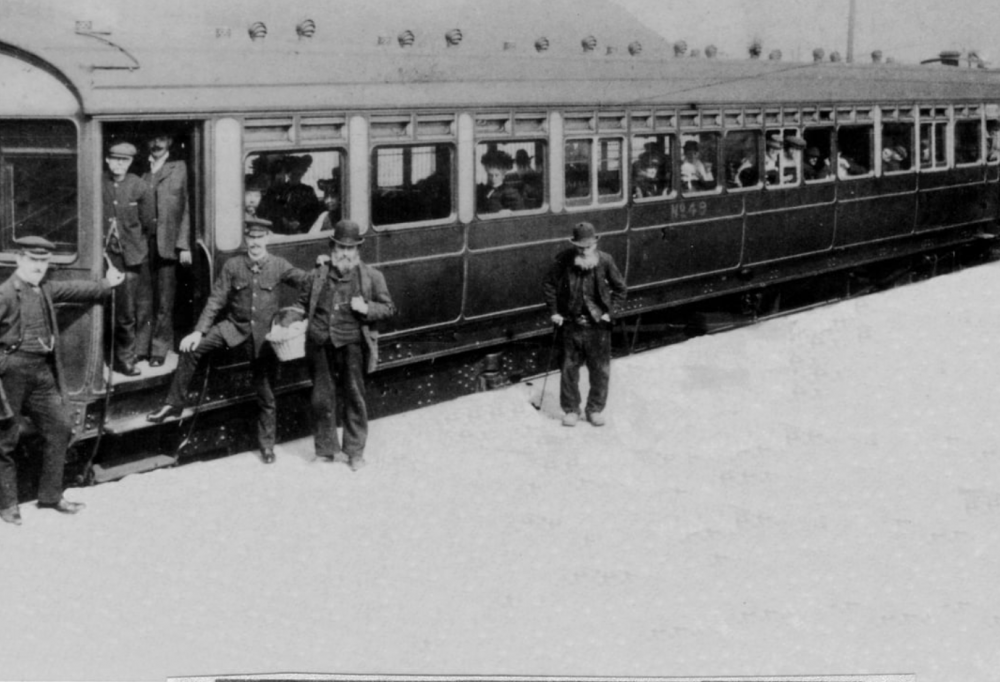
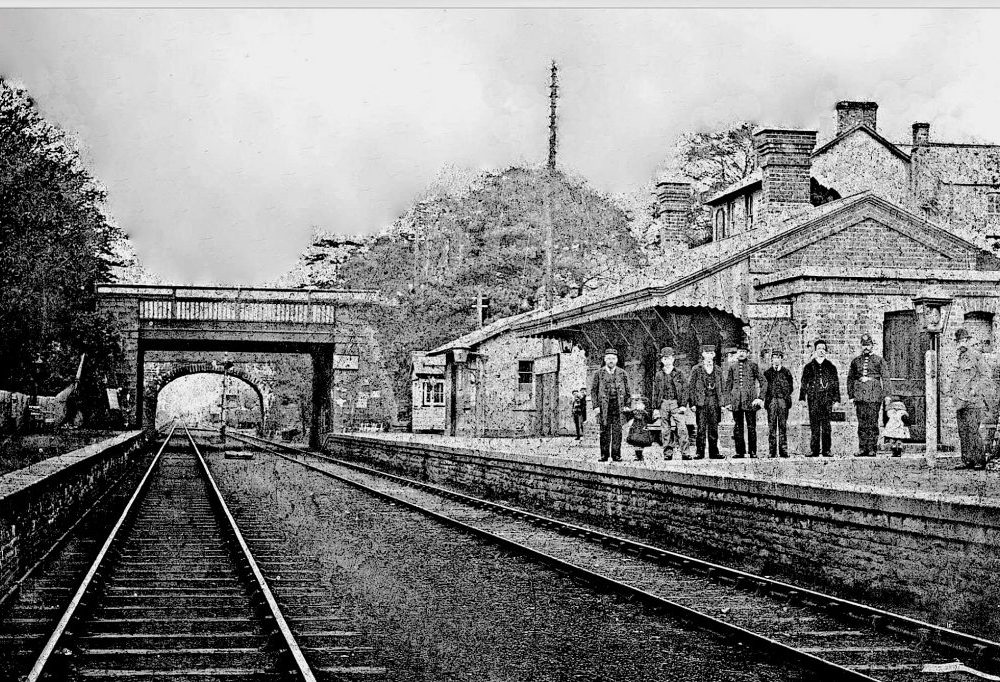
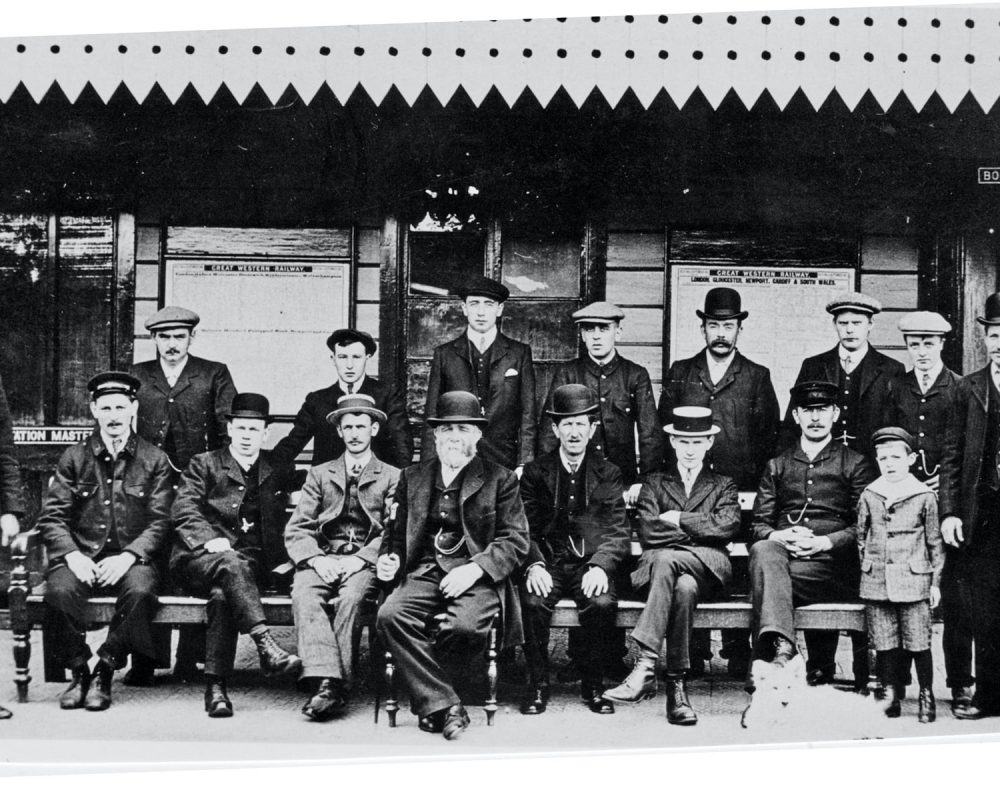 An early photograph taken on the platform of the railway station shows a presentation ceremony on the retirement of the Station Master, Mr. Tanner of Cefn Gelli. He was presented with a silver tipped walking stick as a commemoration of his retirement, the walking stick is still held by the family.
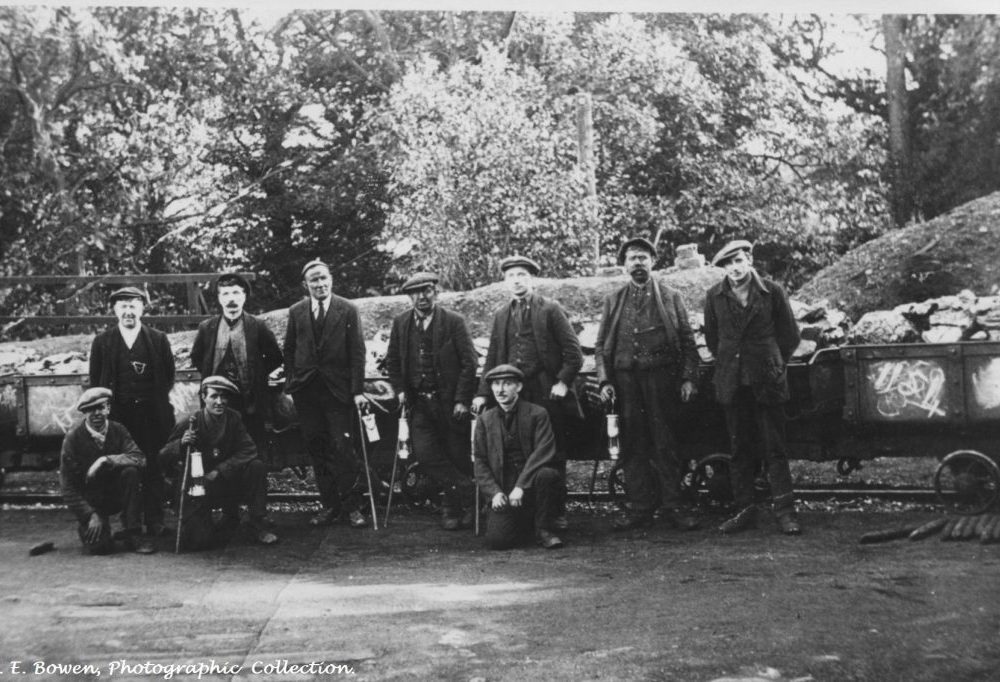
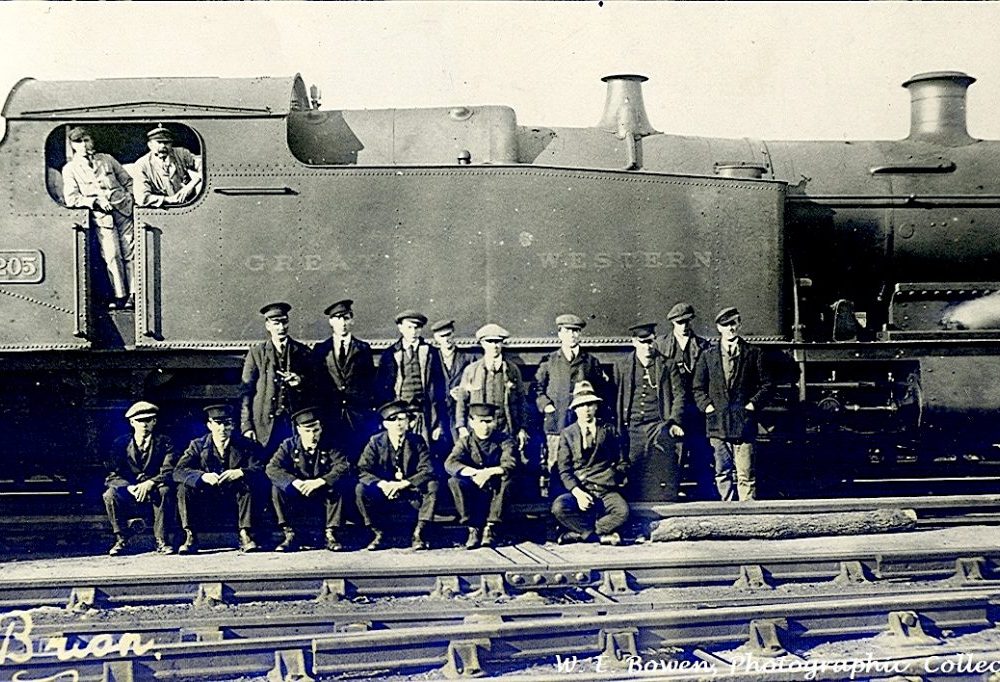
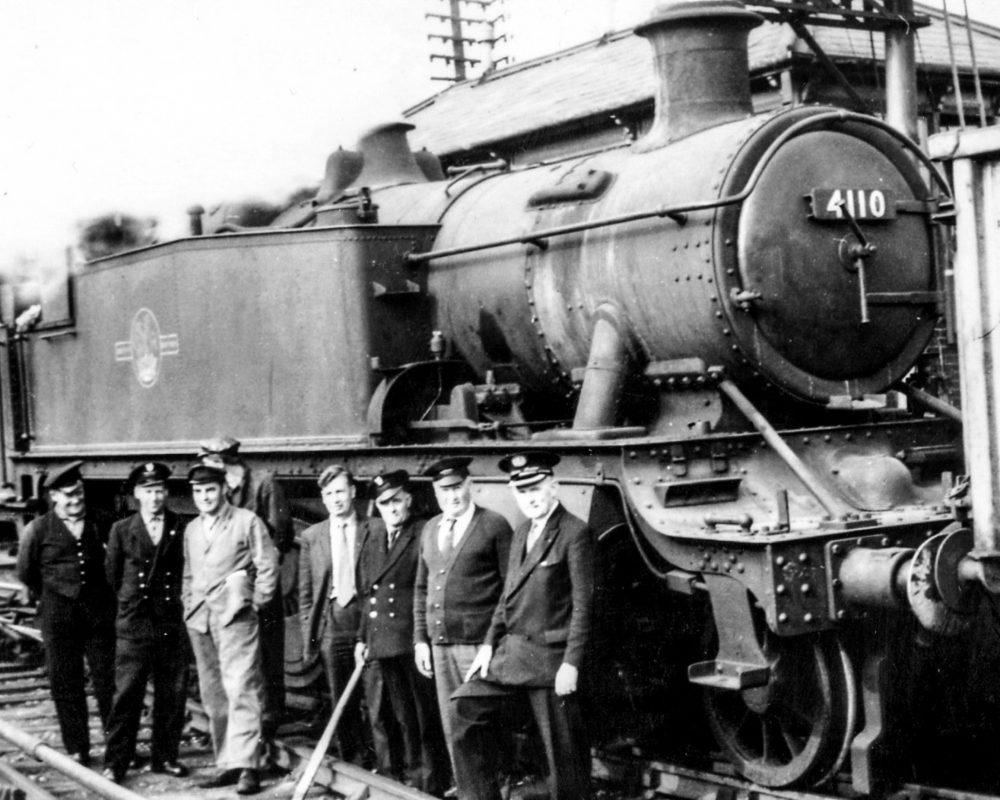
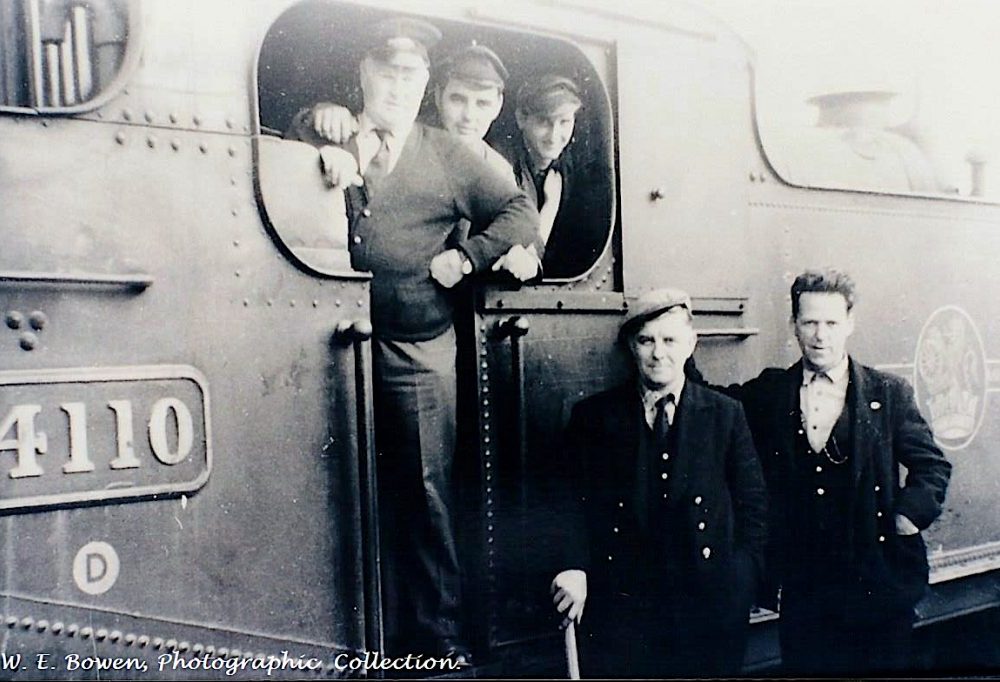
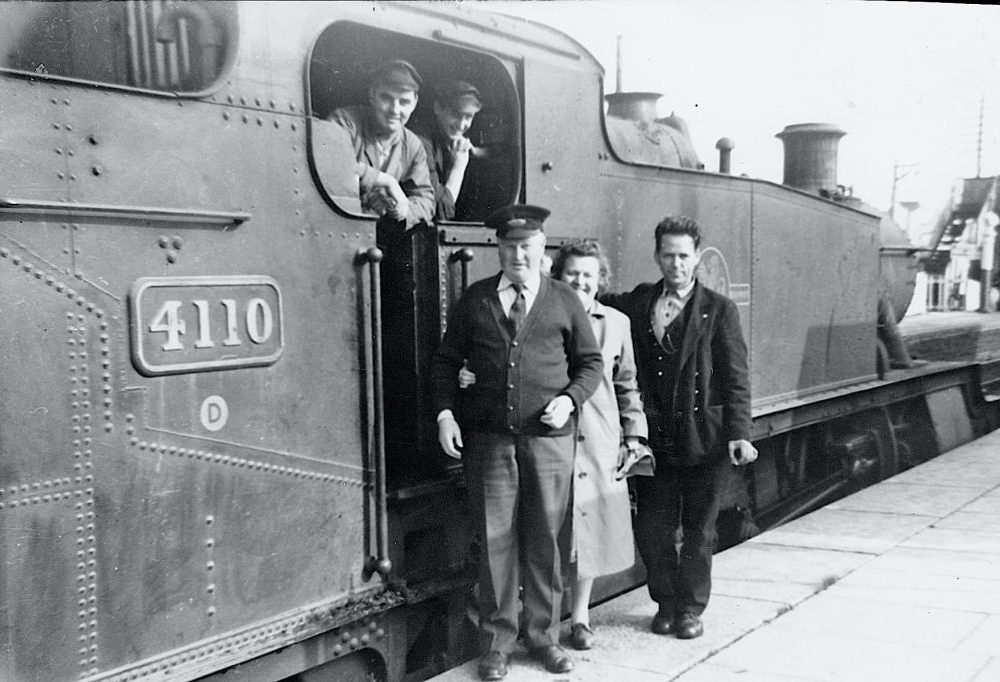
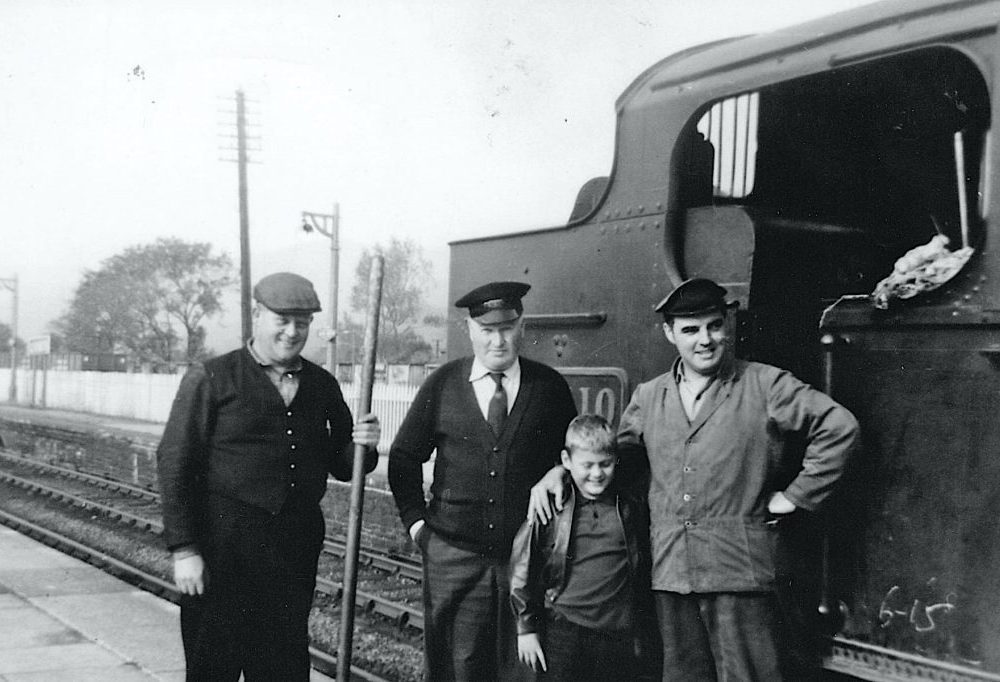
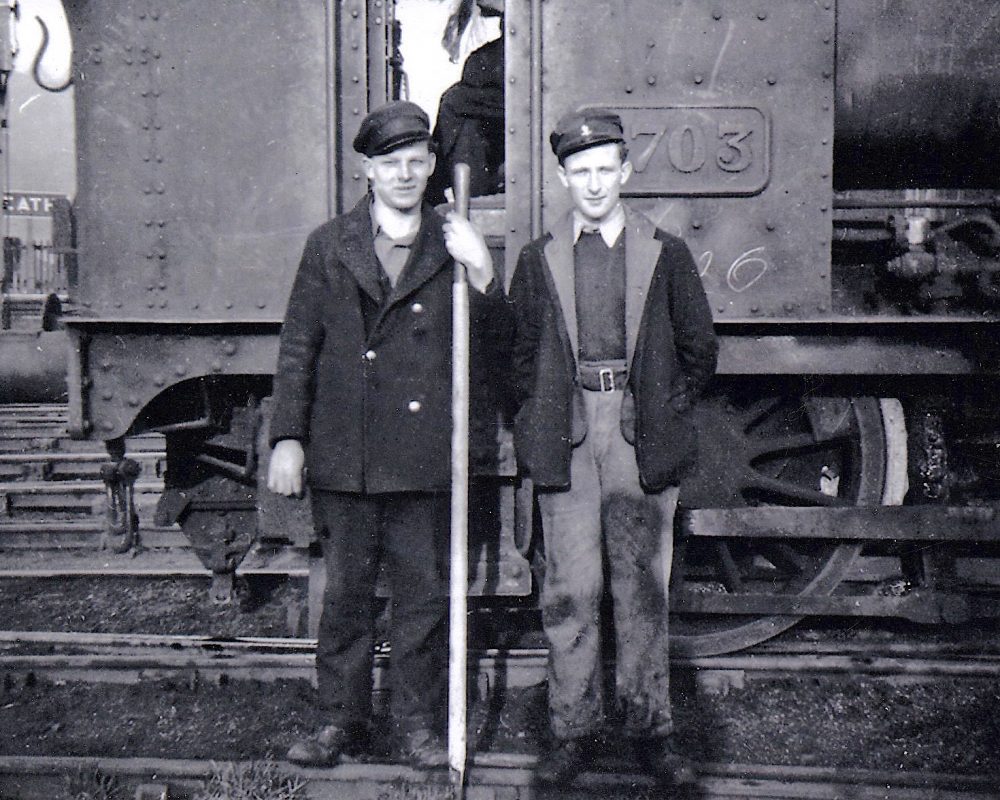
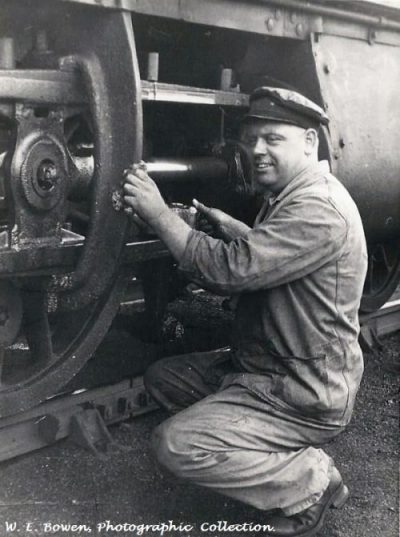
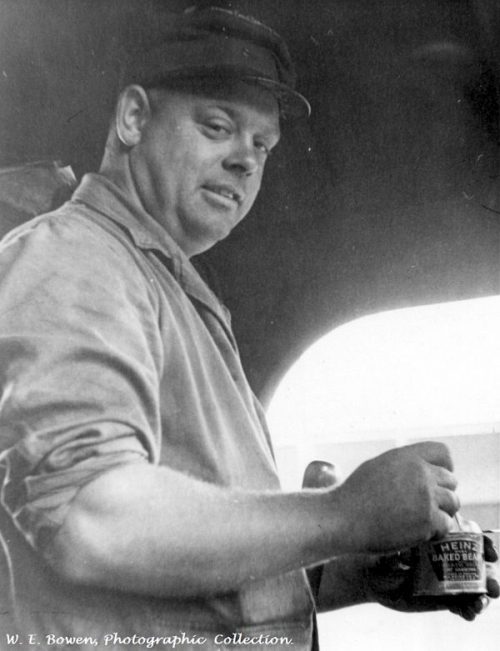
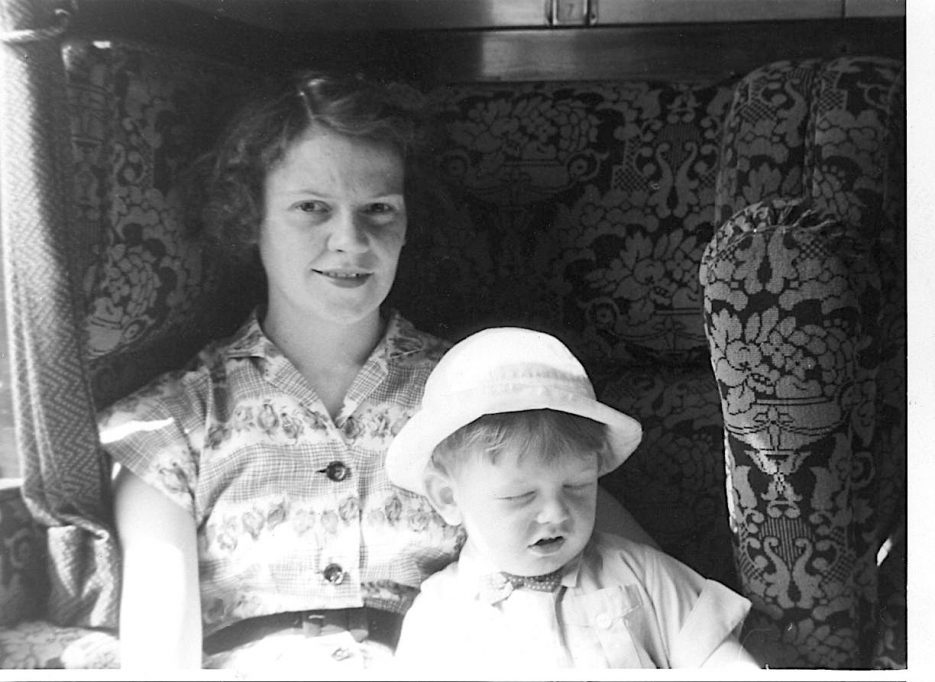
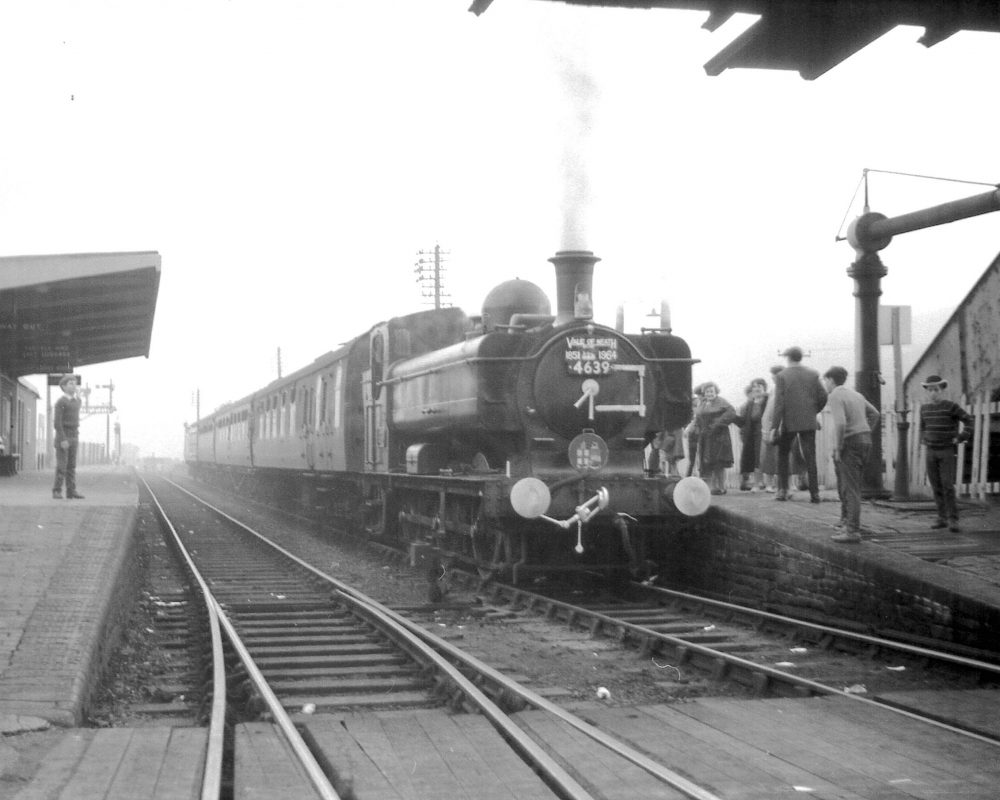
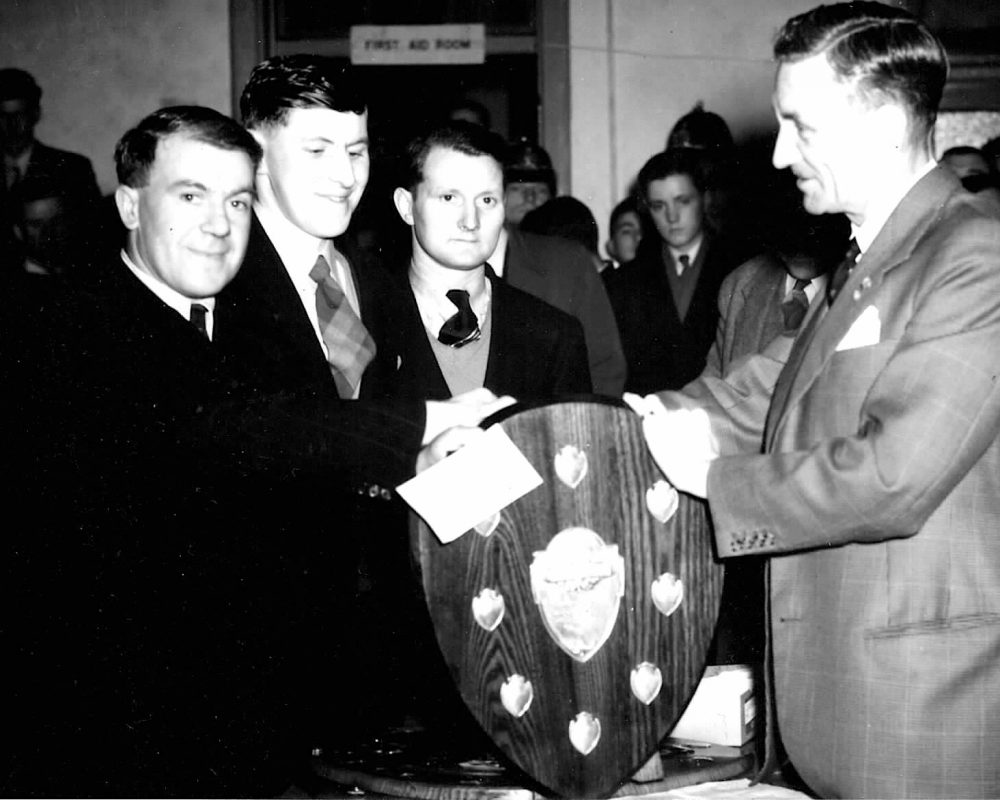
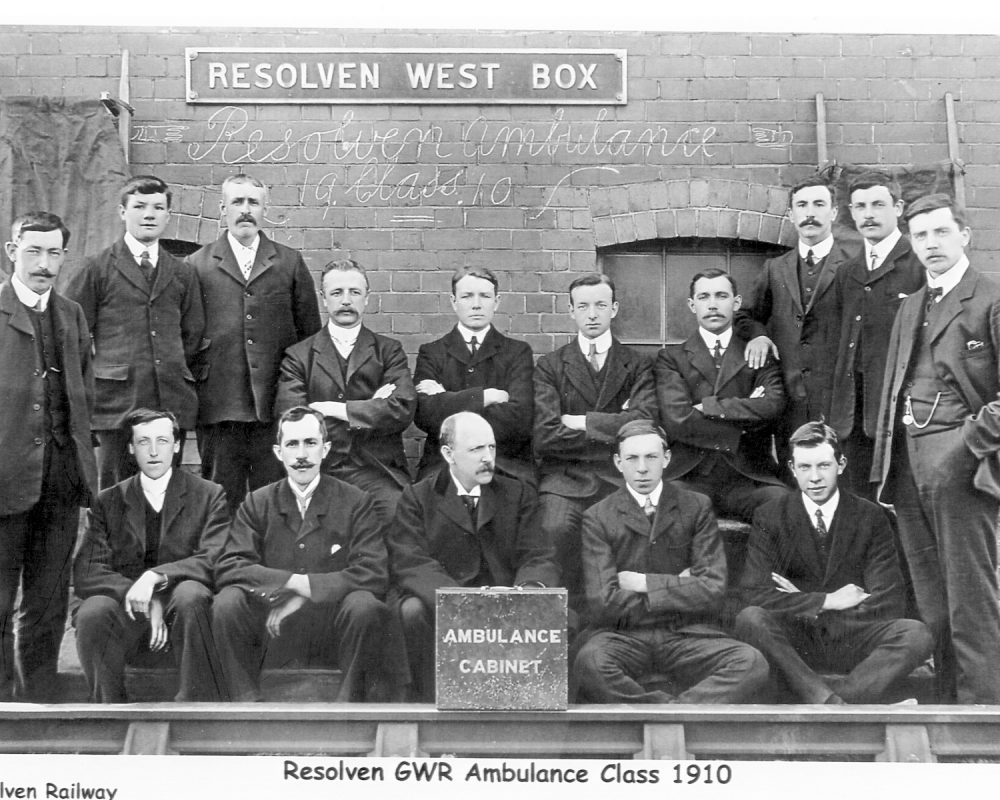
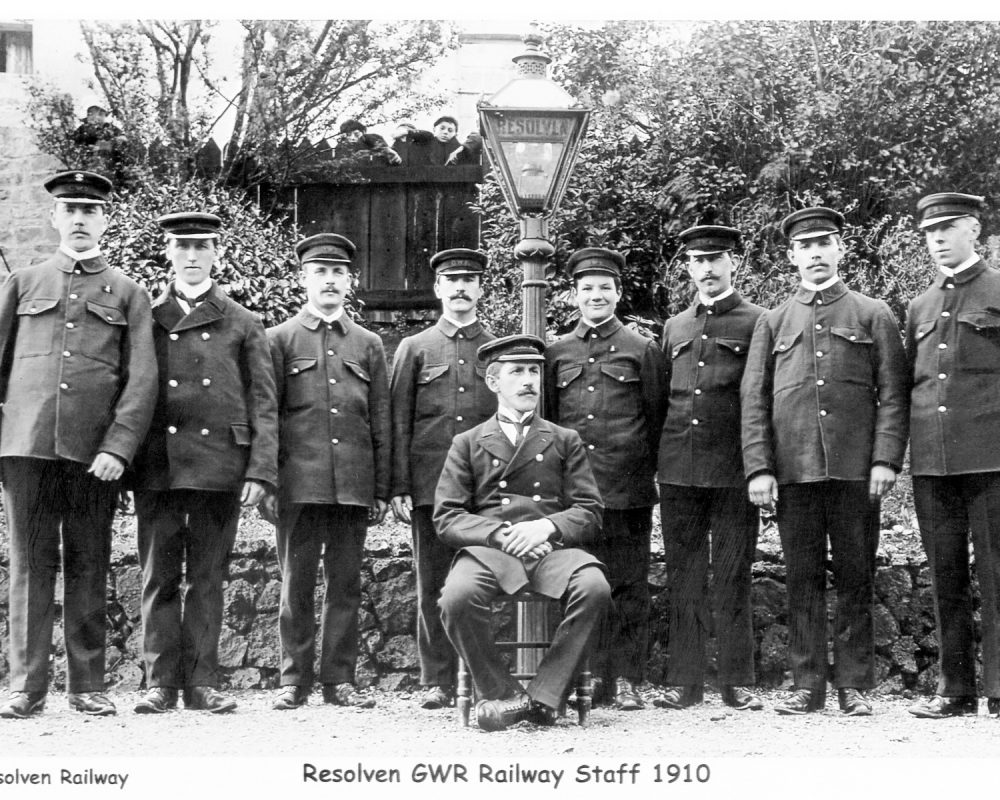
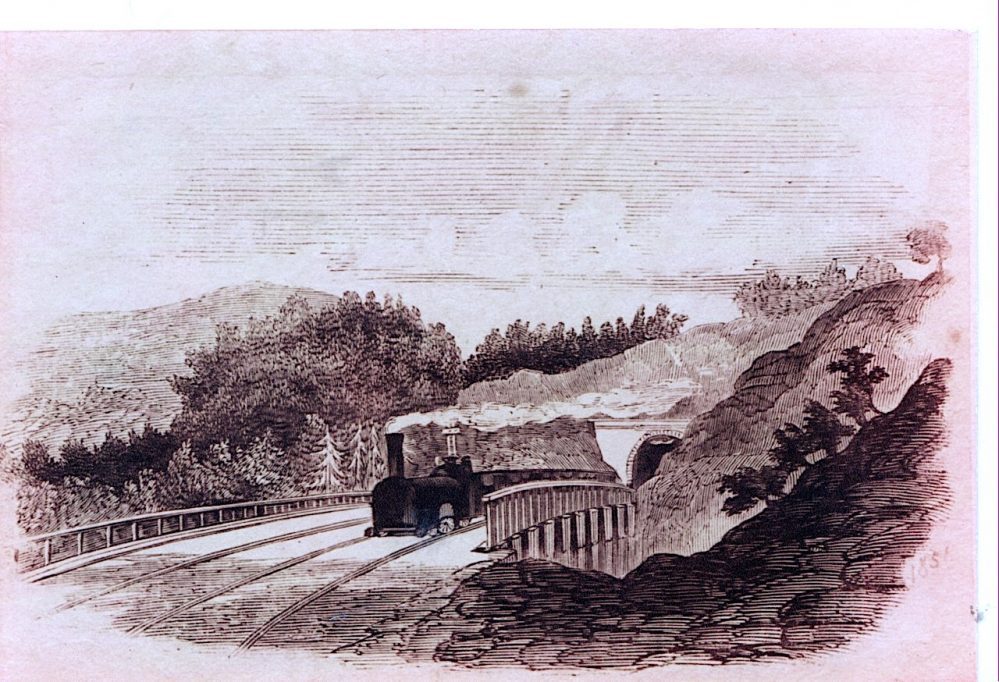 An early drawing C.1851 of a locomotive and carriages exiting Pencaedrain tunnel and crossing over the original Pontwalby wooden viaduct making its way towards Glynneath station.
Resources and References:
[1] The History of the Vale of Neath by D. Rhys Phillips (page 342/3)
[2] https://en.wikipedia.org/wiki/Vale_of_Neath_Railway
[3] https://en.wikipedia.org/wiki/Isambard_Kingdom_Brunel
[4] https://dramaticheart.wales/our-valleys/vale-of-neath/alfred-russel-wallace/alfred-russel-wallace-audio-trail/
[5] The History of the Vale of Neath by D. Rhys Phillips (page 16)
[6] The History of the Vale of Neath by D. Rhys Phillips (page 343)
[7] https://gwrachtimeline.co.uk/the-memories-of-mr-peter-ricketts
[8] Dick Jones memories in the Neath Woremens book.
[9] Lost Lines of Wales, Vale of Neath book by Tom Ferris (page 9)
[10] https://gwrachtimeline.co.uk/last-passenger-train
Photographs from Glyn Davies and Billy Bowen’s collections and the village Facebook page.