
The Big Freeze of 1963 was the most major and severe winter weather events of the 20th century and will be remembered in the shared consciousness of the nation for a very long time. It was one of the coldest and longest lasting winters the UK has ever experienced.
It started on Boxing Day 1962 and carried on until well into March when a rapid thaw saw the snow and ice disappear quite quickly. The rapid thaw led to some flooding in some areas and more misery and disruption in the form of broken water pipes more widely across the country.
If anything the Big Freeze of 1963 will be remembered for the extreme cold rather than the amount of snowfall.
The lead up to the Big Freeze of 1963:
So what led up to this extreme weather event that made it so bad. It started in mid-December when the normal westerly winds weakened which allowed a Siberian anticyclone to bring freezing continental winds from the East.
On December the 22nd 1962 this Siberian anticyclone moved over the UK leading to the establishment of a deep freeze. This was compounded by a new high pressure system near Iceland, which brought with it northerly winds with significant snowfall moving southwards.
Rain turned to snow on the 24th December in Scotland, with Glasgow having its first white Christmas since 1938. On Boxing Day the 26th December is started to snow in Southern England and Wales.
From Boxing Day until the end of the year a clash between trapped cold air and a struggling warm front led to severe blizzards in Southwest England and Wales on the 29-30th December 1962, snow drifted to 20 foot deep (6.1 m) driven by gale force easterly winds, blocking roads and railways, bringing down power lines and stranding many isolated communities.
Then in early January 1963 the cold really kicked in freezing rivers and even the sea in some places. The average temperature for January was -2.1 °C (28.2 °F) making it the coldest month since 1814 in Central England. This cold spell then continued until early March when the temperature started to rise.

The effect of the Big Freeze of 1963:
Extreme blizzards on the 29th and 30th December driven by gale force winds caused massive snowdrifts up to 20 feet (6.1 m) deep in some areas. This in turn blocked many roads and railways with entire villages being cut off in some areas of South Wales.
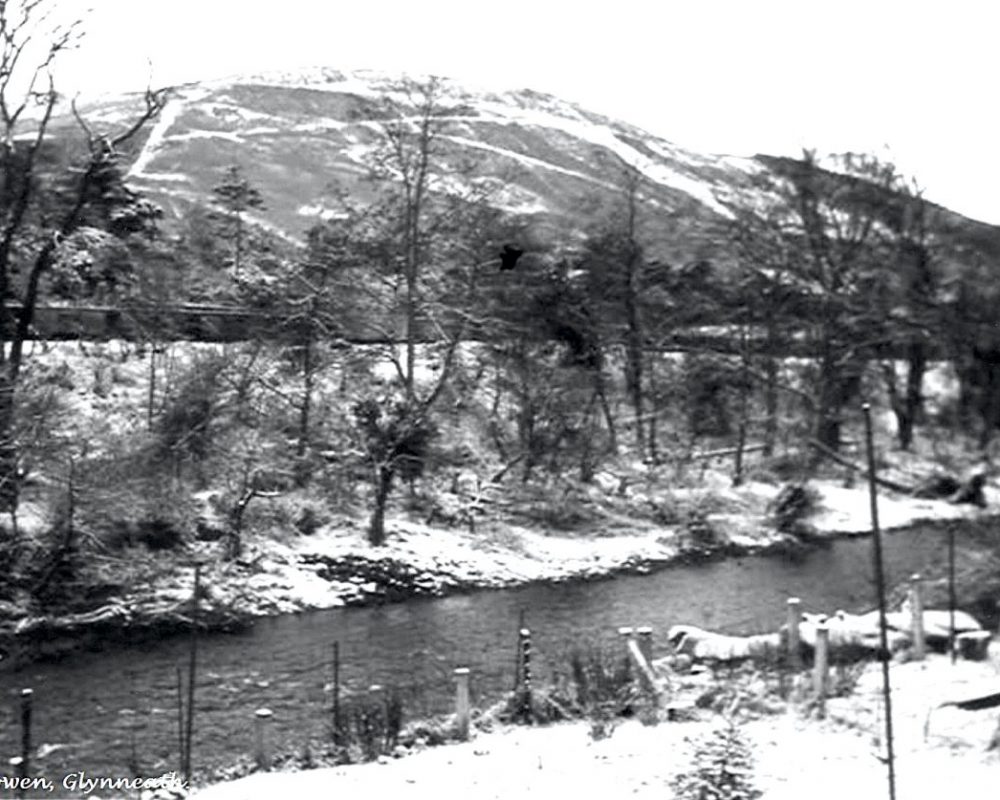
The River Neath and River Taff froze solid, along with other rivers up and down the country. The sea at Penarth froze over along with the River Thames in London with someone actually droving their car across the Thames.
The very cold conditions effected many industries leading to many mines in the Welsh valleys closing as the miners were having difficulty reaching their pits, which then led to a shortage of coal. Everyday articles like milk and bread were frequently delayed or cancelled. Water pipes froze in many houses and communal stand pipes were installed in many areas so people could collect water. On top of this there were power outages and heating shortages, not a pleasant time as you can imagine.
The effect on the farming community was huge with many sheep and cows perishing, either buried under the snow or the farmers not being able to reach them with food and supplies.
As usual the British spirit came to the fore where people helped each other in their hour of need, neighbours helped each other to clear snow from their paths and streets and everyone kept an eye out for the elderly who were severely effected by the cold conditions.
Personnel memories of the Big Freeze of 1963:
Probably the first memory I have was one of being disappointed we didn’t have a white Christmas, as it started snowing on the Boxing Day. It didn’t seem at the time that we were in for a record breaking cold spell, it was just another snowfall which we had quite a lot of back in the 1950’ and 1960’s.
For us it wasn’t the snow that was the problem it was the immense cold. If I remember correctly the night time temperature didn’t go above freezing for weeks on end. It seemed that for three months I didn’t take my balaclava, gloves, two pairs of socks and my coat off.
That wasn’t the only problem as well, as far as I am aware there was no such thing as central heating in 1963, we only had the downstairs open fire to keep us warm. The fire would be backed up at the end of the night when we went to bed and you would be very lucky if it stayed alight all night, nine times out of ten is would go out during the night and in the morning and my father or mother would have to light it again. We also had a fireplace in the parlour and I’m guessing this would have been lit during very cold spells.
Pretty soon most of the water pipes in the village froze and we were left without running water in the house. I seem to remember stand pipes in the street, but this maybe just that I have read over the years that they were being used. I have no actual memory of my mother and father having to collect water from them, but they must have done otherwise we wouldn’t have had water to flush the toilet, wash by or make cups of tea. To wash daily and bath on the Sunday night my parents would have had to boil water in the kettle, or use the large boiler we had which enabled us to boil water, luckily the electric kept going. I remember my sister and I would take turns to bath in the same water on the Sunday night.
Can anyone remember using these stand pipes?
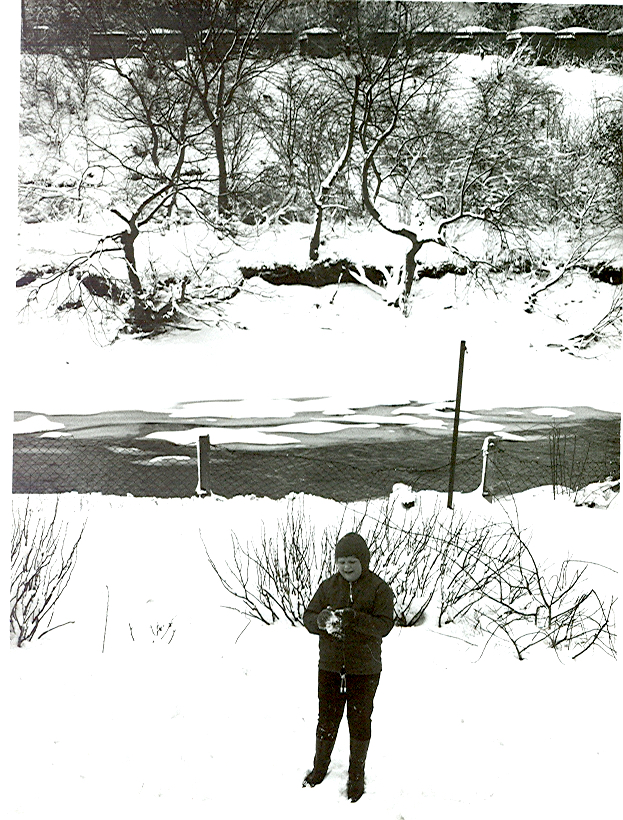
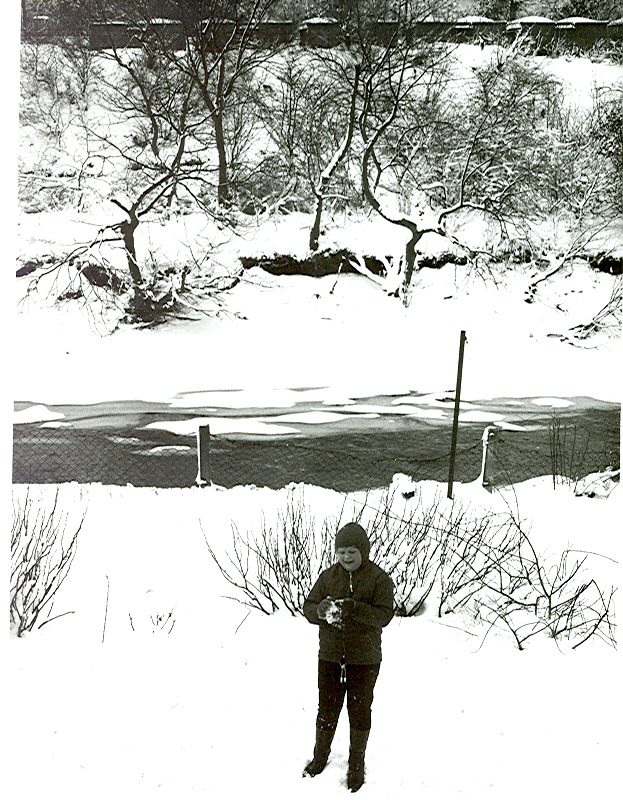
You can see to the left my sister in our garden around the New Year with the snow on the ground and the River Neath starting to freeze over.
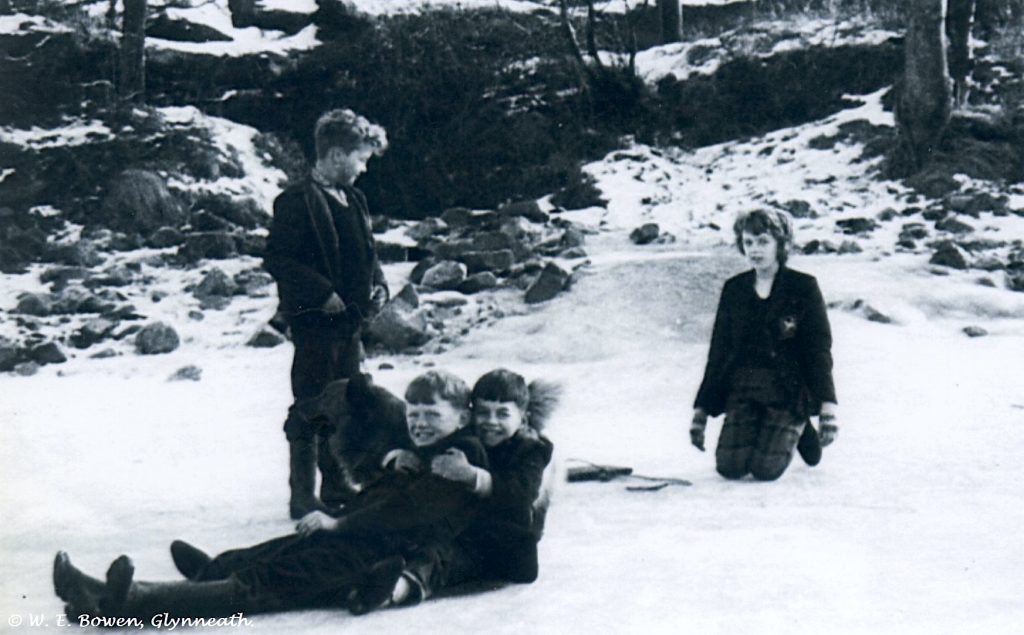
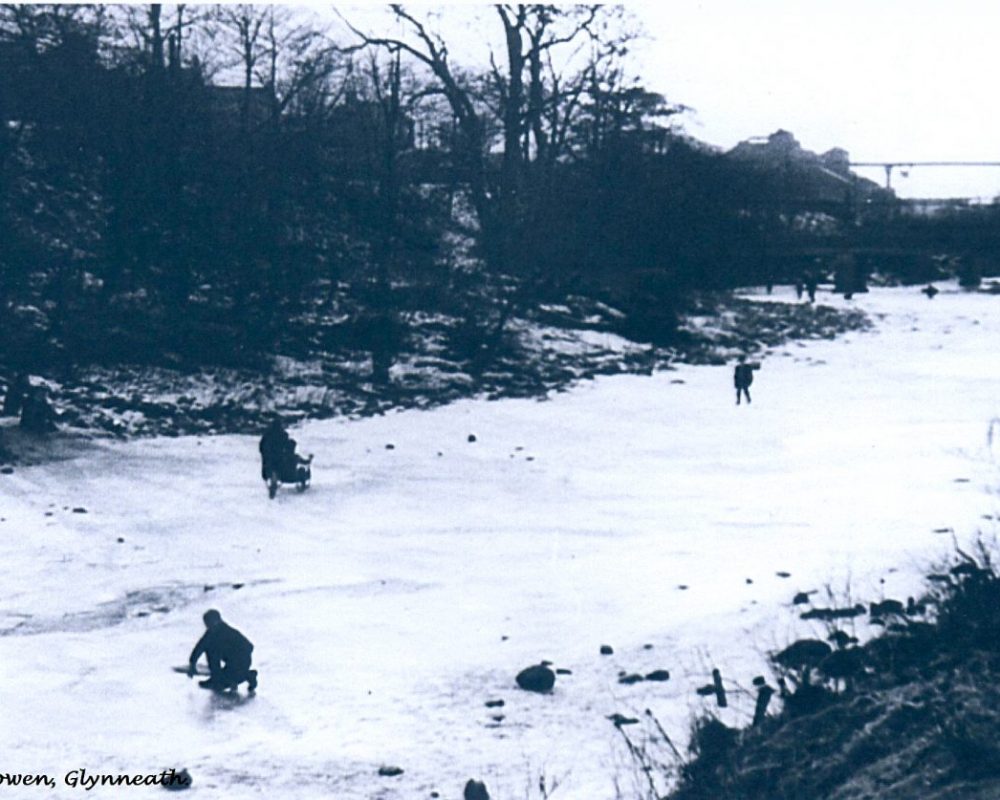
The good news was that the schools in Cwmgwrach were not reopened after the Christmas holiday period as the water pipes in the school had frozen. This meant that us children were left free to play in the snow for weeks on end. Living in Craig Nedd we also had a frozen river to play on and you can see in the photos we took advantage of this opportunity to use hand made sledges and make slides on the ice. We also made slides in the street which we did most winters. We would get a bucket of water and pour it down the street path for a distance of about 20 foot, it didn’t take long to freeze before we had a perfectly good ice slide, hours of fun until we were called in for the night.
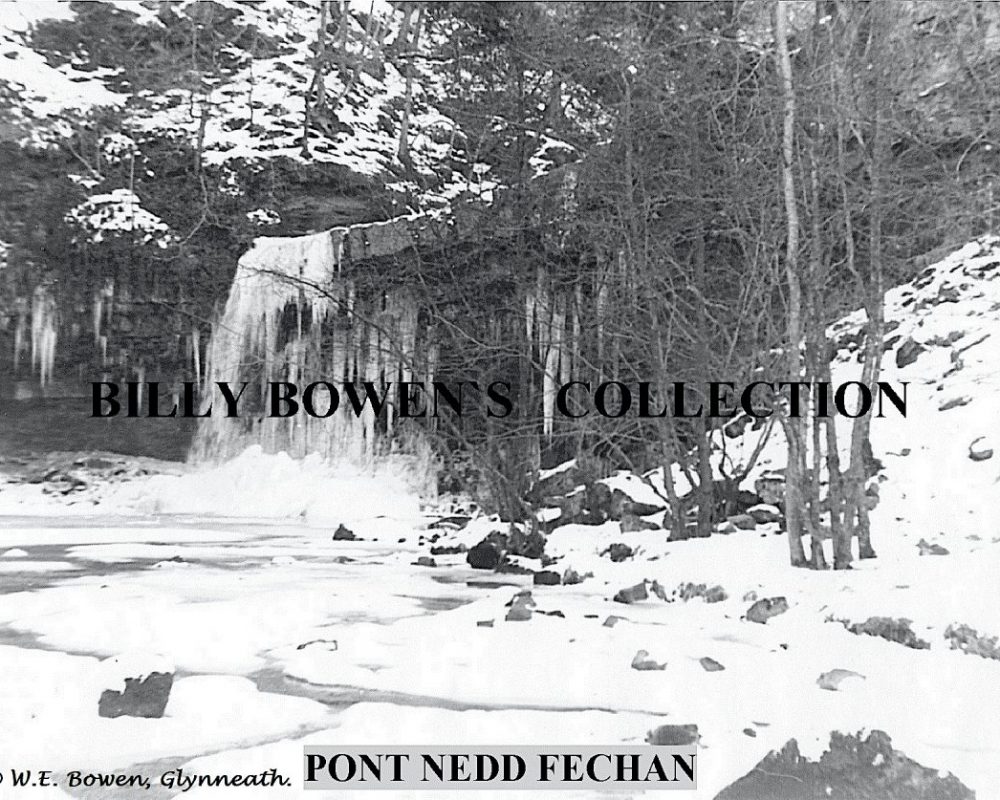
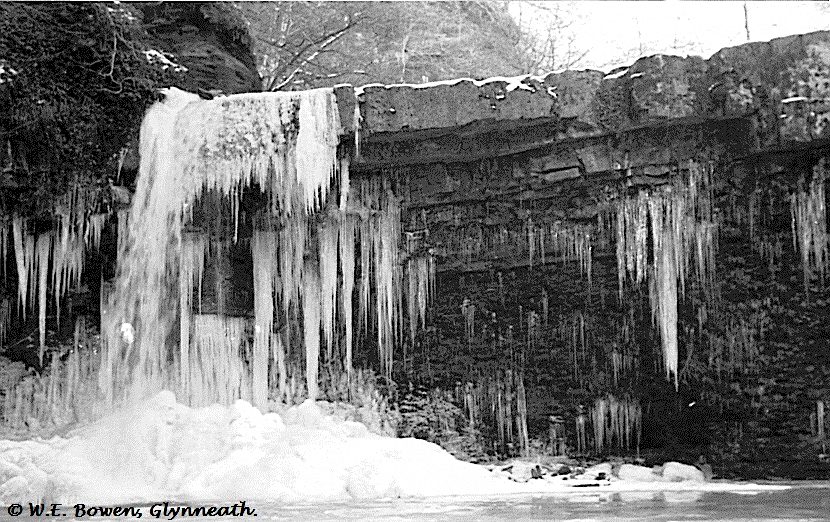
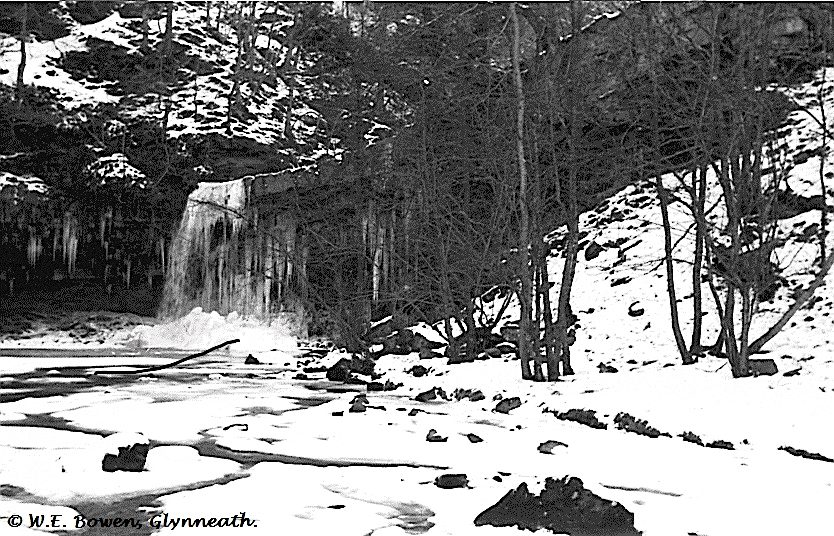
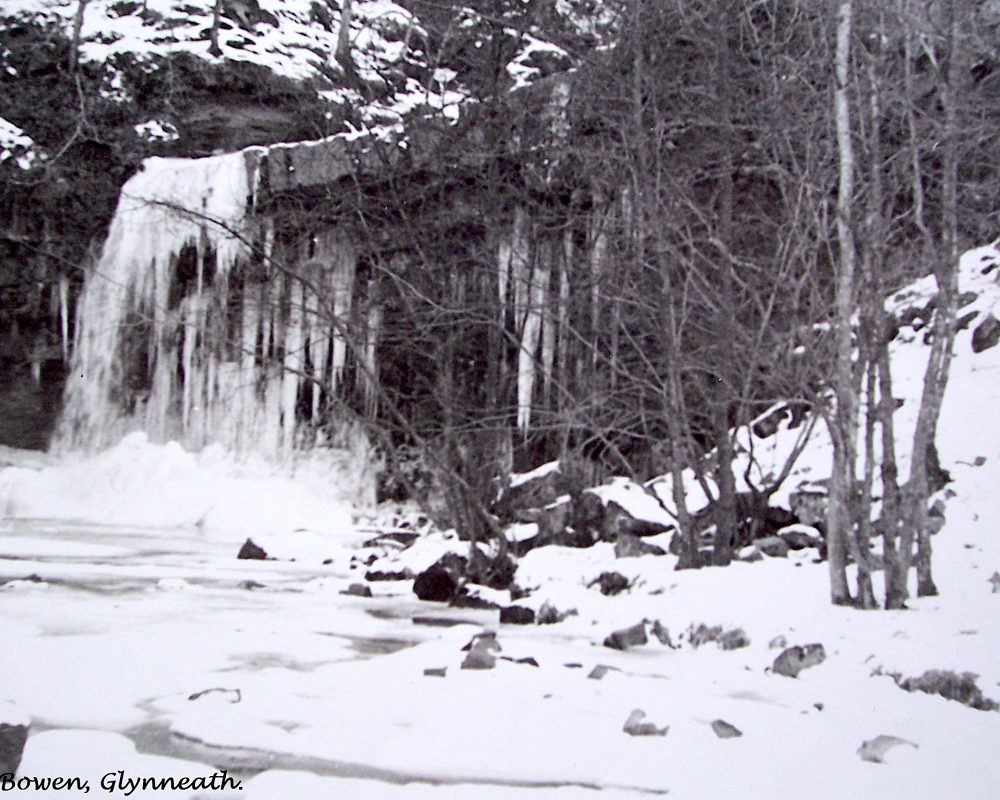
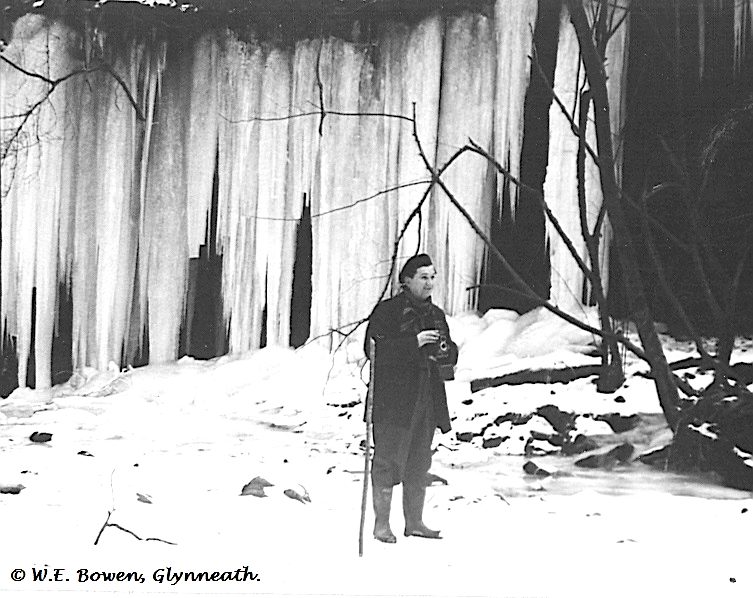
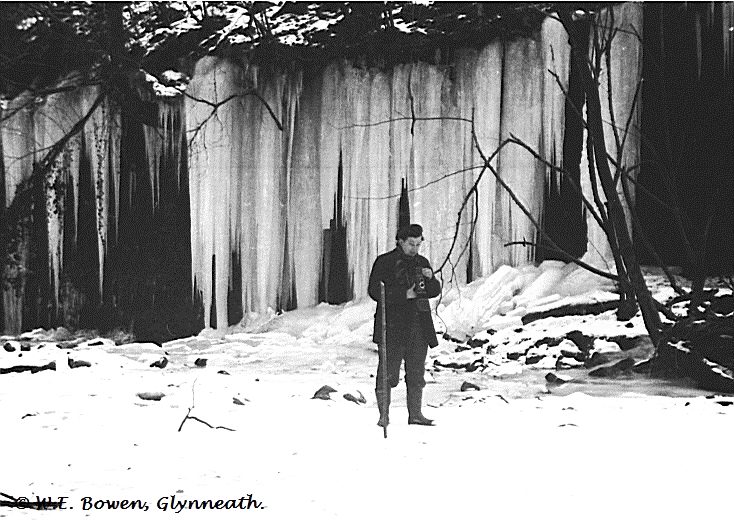
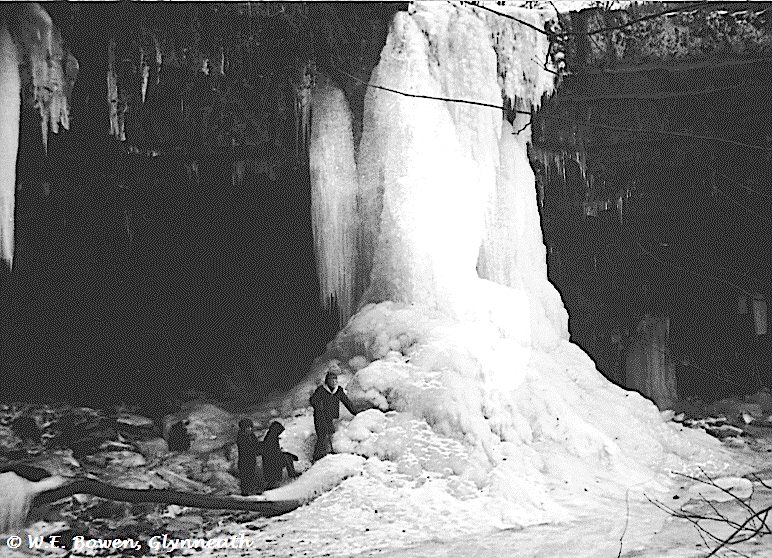
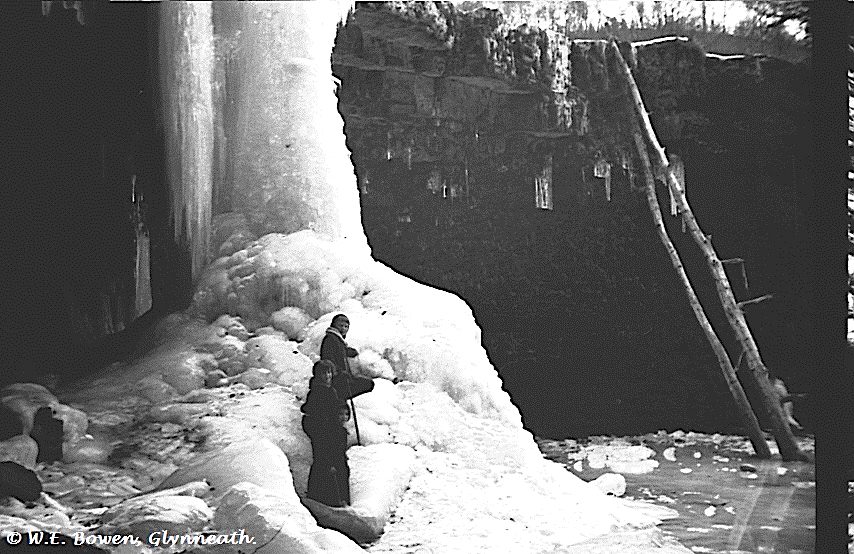
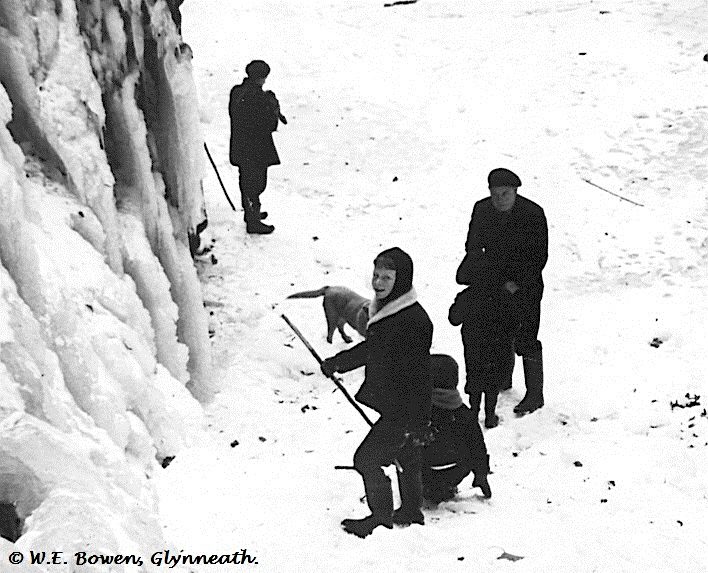
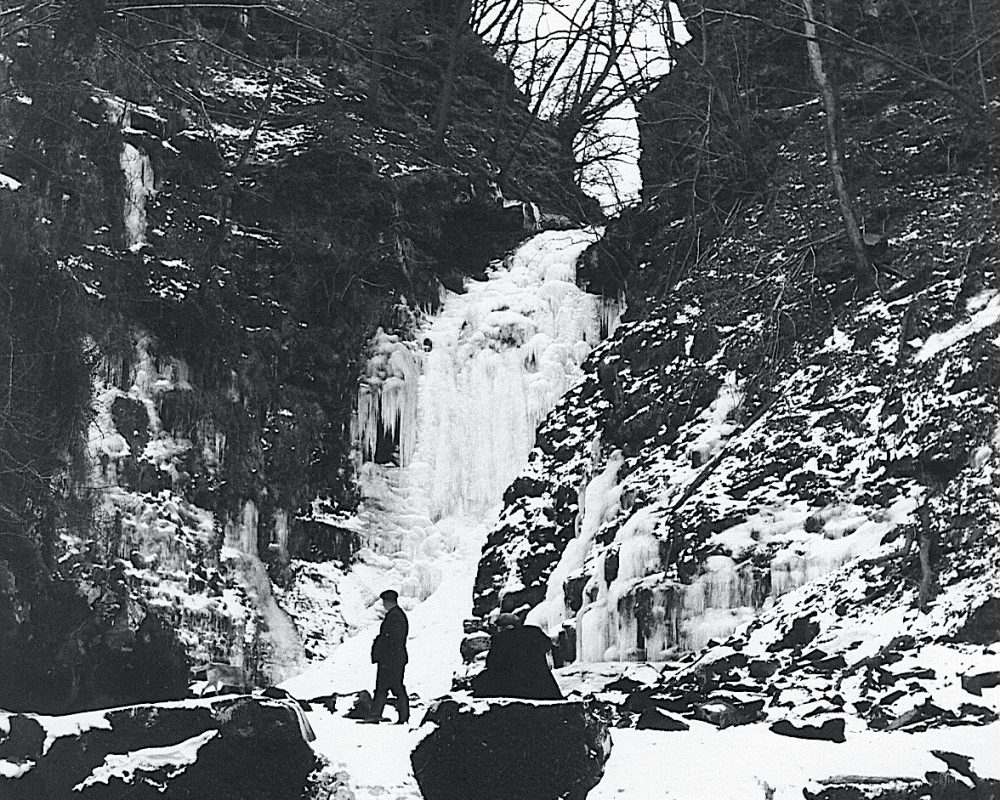
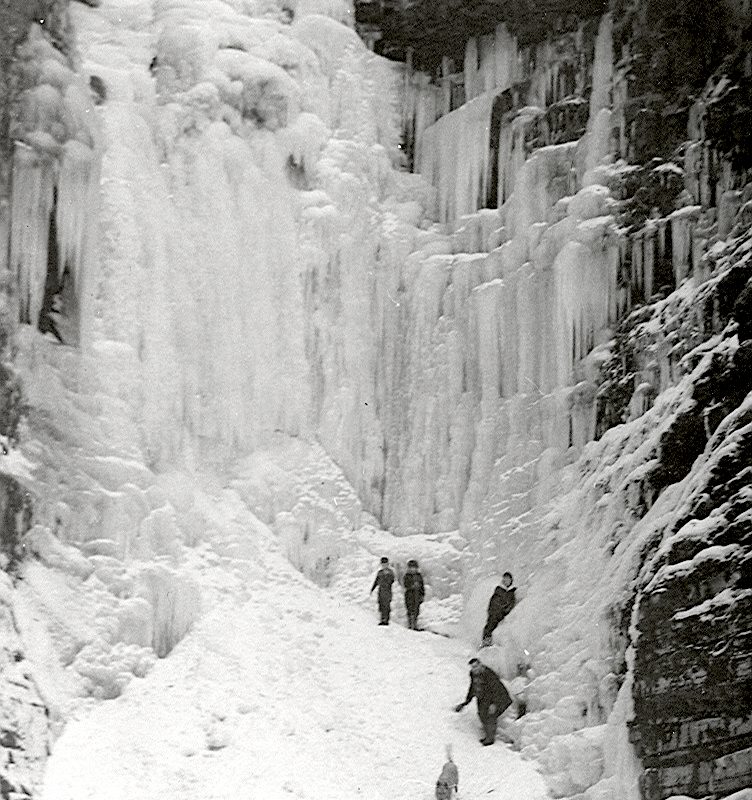
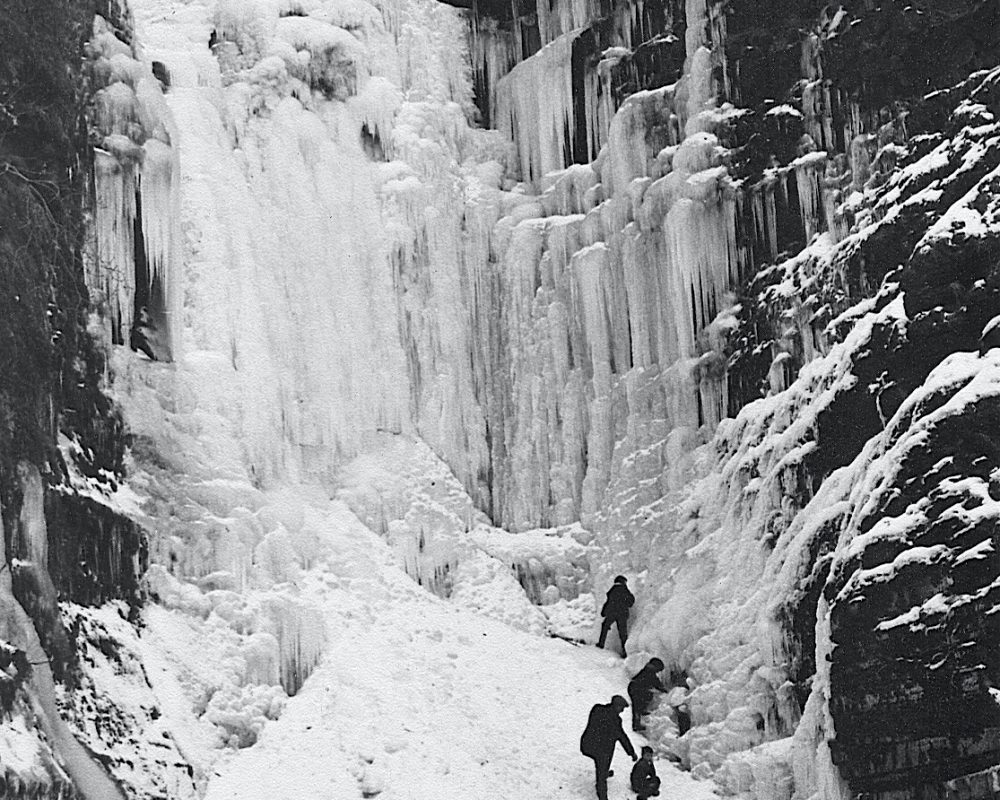
During the freeze my father and Bertie his brother took Linda and Lorna Bowen and myself up to the falls in Pontneathvaughan. We visited Sgwd Glady’s first and as you can see from the photographs in the slideshow the falls were completely frozen over, so we took the opportunity to see how far we could climb up them. We then went on to Sgwd Einon Gam (The falls of the crooked anvil) which you can see in the last few photos in the slideshow.
In early March the ice on the river started to melt, and as more and more water started to flow due to the melting ice the ice started to break up. It broke off in chunks and stared flowing downstream as mini icebergs, quite a sight to see.
It was also good news for the frozen water pipes as well. I can remember someone my father new coming along and running a small electric charge along the frozen pipes. I can’t remember what he used to do this but he connected a connection tab to the cold water pipe in the kitchen and run the charge through this to the stop cock. It wasn’t long before the cold water flow was restored to the Bowen residence. (The connection tab on the cold water pipe is still there to this day, 62 years later.)
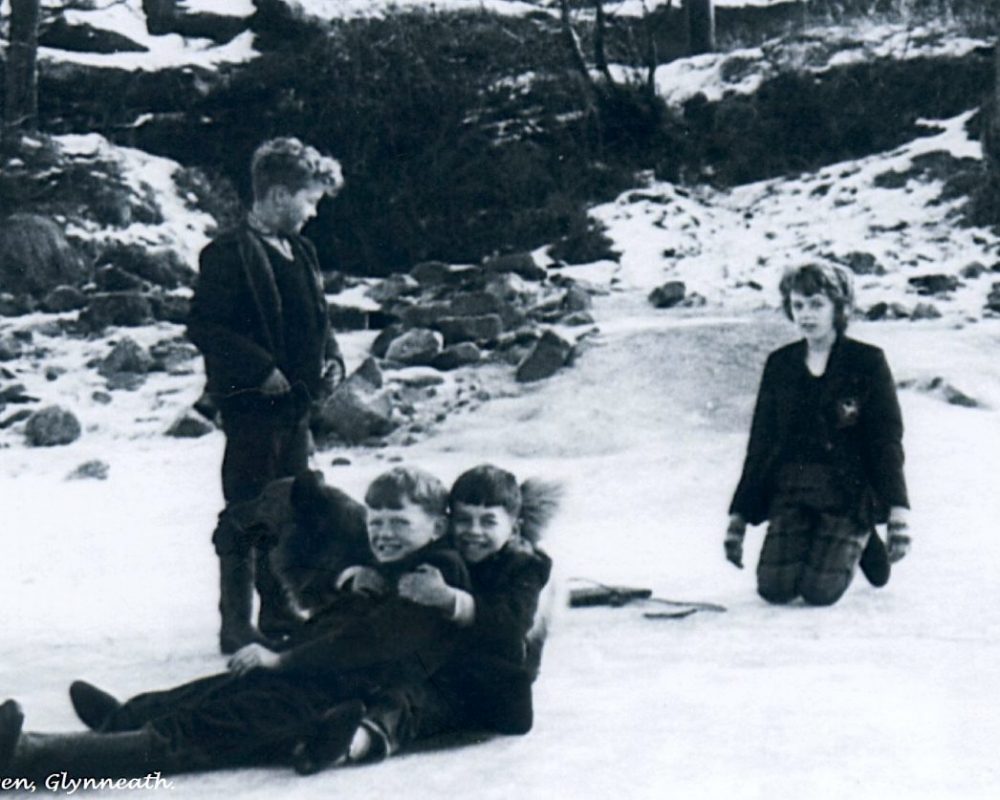 Left to right: Keith Atkins, Roy Bowen, Terry Kelly and Tinker his dog and Alma Biggs.
Video of the events of The Big Freeze in 1963:
If you would like to see the events that took place during the Big Feeze of 1963, then I can highly recommend the You tube video below.
Cliff Michelmore, Derek Hart and Kenneth Allsop present a Tonight Special about the winter of 1962-1963, dubbed “the Big Freeze.” It arrived suddenly on December 22nd 1962, and over the course of seven weeks greatly impacted the daily lives of almost every person in Britain.
Tonight traces the evolution of the Big Freeze from the early delight that white Christmas, through to the widespread chaos caused by severe disruption to essential infrastructure.
How did people cope? What can we learn for the future?
Clip taken from Tonight:
The Big Freeze, originally broadcast on BBC Television, 10 February, 1963.
https://youtu.be/grhcGPYLPYg?t=3
Resources and References:
Photographs by W. E. Bowen
https://en.wikipedia.org/wiki/Winter_of_1962–1963_in_the_United_Kingdom
AI Overview.
The Big Freeze, originally broadcast on BBC Television, 10 February, 1963.