
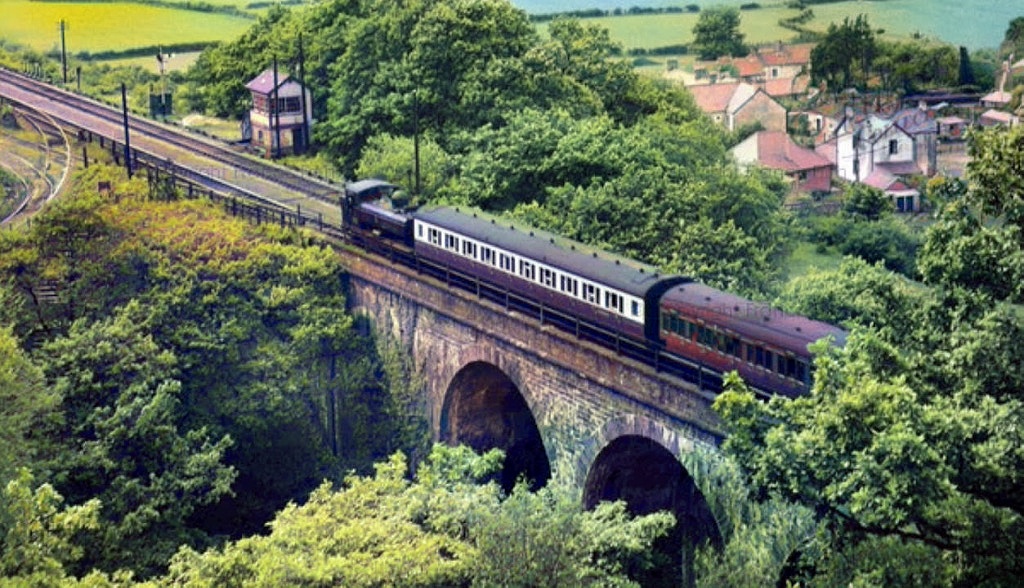
Introduction:
In 2026 the Vale of Neath railway line and station has been closed for nearly140 years, the majority of people now living in the village may not even know it existed or where it was. ( See previous article)
Travelling on a steam train was like riding a living breathing beast, it was quite an intense sensory overload, with every sense utilised, smell, vision, hearing, touch and maybe taste. The memories of these senses would definitely bring back memories of a bygone time.
- From the chuff-chuff-chuff sound as the train picks up speed leaving the station; the clickety-clack as the wheels run over the joints on the rails; the hissing of the steam as it escapes from the valves; and the whistles and shrieks as the train enters the station or a tunnel.
- The smell of the coal smoke; the grease and the oil; the creosote of the railway sleepers; and the over-riding smell of sulphur, it’s like the smell of travelling to hell and back.
- Throw in the motion of the train; the visual spectacle of the train as it billows smoke and steam; the rhythmic movement of the steel rods and pistons; sparks emitting from the funnel, then you have a very iconic sight indeed.
Sounds of the railway:
Memories:
The purpose of this article is to capture peoples memories of using the line, whether it was to go on holiday’s or to go shopping in Neath, Aberdare or Merthyr or even travel to the Grammar school.
A number of people have already commented on their memories of using the line in various articles in the website, I have collated these together and added them to this article.
The Memories of Mrs Mary Ann Aubrey: (Courtesy of Rhodri Evans) [1]
Here you will find the memories of the railway written by Mary Ann Aubrey when she was 83 years young and used at a OAP meeting in Glynneath in 1968.
Mr. Rowlands, the Landlord (of the Crown in Glynneath), I imagine must have been a very busy man as well as a versatile one, for he was also a tailor and an Attendance Officer, besides having the first ‘brakes’ in Glynneath to run to and fro to the railway station to meet the train. This latter service was a boon as far as the village was concerned.
Incidentally, it might be interesting to mention here that when the first train made its epic journey from Glynneath to Merthyr and volunteers were called upon to take the ride, my great-grandfather was one of those who thought he was taking his life in his hands when he boarded-the train for the first time.
(Ed note: This fascinating article written by Mary Ann covers many topics and can to be found here)
The railway memories of Peter Ricketts MBE: [2]
The Ricketts’ family life in Cwmgwrach was of short duration, only 30 years in the history of the village, but in that time Peter had many memories of using the railway line. He lived in The Lodge in Church Crescent which as it happens looks over the Glynneath railway station.
One of the land girls working in the forestry during World War 2, Gwen, lived in Brynmill, Swansea and usually travelled home on weekends, often I would travel home with her and spend explorative weekends in Swansea.
Gwen’s father was an engine driver with the GWR in Swansea. He periodically drove a coal train up the Vale of Neath line, then on to Pontypool and the Midlands. His train would stop with his engine opposite The Lodge at the start of the Glynneath Bank to await the banking engine to help take the train up the Glynneath Bank, he always gave us a special signal on his engines’ whistle to attract our attention.
The banking engine was housed alongside the engine shed at Glynneath Station, watered and steamed up always ready to assist with travel of heavy loads up the Glynneath Bank. Above the engine shed was a large water tank fed from two sources, both from man made ponds. One on the Parish Road near the entrance to the ash tip the other from a small concrete dam on the brook alongside the Ynyslas stables. Two men from the GWR walked up from the station to the two pond locations on a regular basis to clean out stone and mud from around the extraction filters.
Schooling and Railway station fire:
In 1944 Terry Edwards and I passed our matriculation exam for Neath Intermediate School (N.I.S) for boys (some referred to it as Grammar School) and we travelled to Neath each day on the ‘school’ train, along with a number of girls going to the N.I.S. for girls and a number boys to Neath Technical College. It was at this time that I lost my daily connections with Cwmgwrach as a result of leaving for Neath school at 8.30am and not returning home until 5.00pm and having homework to do each evening.
One morning arriving at the station we saw smoke coming from the roof at the rear of the railway station above the outside gent’s toilet. There was some activity by the staff of throwing buckets of water over the roof, our train came and off we went to school. On our return we were met with a burnt out station waiting room, ticket office and damaged goods office. We learned the next day that an engine standing at the rear of the station in the Empire colliery screens sidings, emitted red hot cinders onto the station roof, setting fire to the building’s eaves.
The station master’s office was converted to the ticket office and a temporary passenger shelter erected on the platform. The station office transferred to the up platform waiting room. It took some time for new passenger and staff accommodation to be built to replace the fire damaged buildings.
(Ed note: it is well worth reading Peter’s memories of living in the village as he has a fantastic memory of many events in the history of the village, you can find the article by clicking here.)
Richard (Dick) Jones’s memories: [3]
A snippet from a Neath Great Western Railway ~ retired Staff Club book on the Vale of Neath Line, where there is a chapter written by Richard (Dick) Jones of his time working on the VoNR line.
“On leaving school I was given a choice to work underground or join the railway where my uncle Alwyn Walter worked as a driver at Glynneath. I chose to work for the Great Western Railway Company and my uncle arranged for me to attend an interview at Cwrt Sart District Superintendent’s office. From where I was sent to Swindon for my medical with Doctor Bennett where, on 7th May 1936 I was passed fit, I started my probation as a cleaner Cwrt Sart shed, Neath on 18th May, 1936. I then exchanged places with a Neath lad who at the time was working at Glynneath station. This was the start of a railway career spanning 54 years.”
One of the tales Richard tells is off a train journey to Swansea during World War 2. “One morning in June, my driver, Idwal James and I were working a coal train into Swansea docks when there was an air raid on the docks. A huge number of incendiary bombs were dropped on the area, but we were lucky and retuned to Glynneath without any problems. Looking back in the direction of the oil refinery we could see a large fire glow in the night sky which was the start of the Swansea blitz. (1941)
Richard mentions that at the end of the war men returned to their old jobs and the women who had filled those jobs on the railway during the war were laid off, which also applied to old drivers who had helped out during the war.
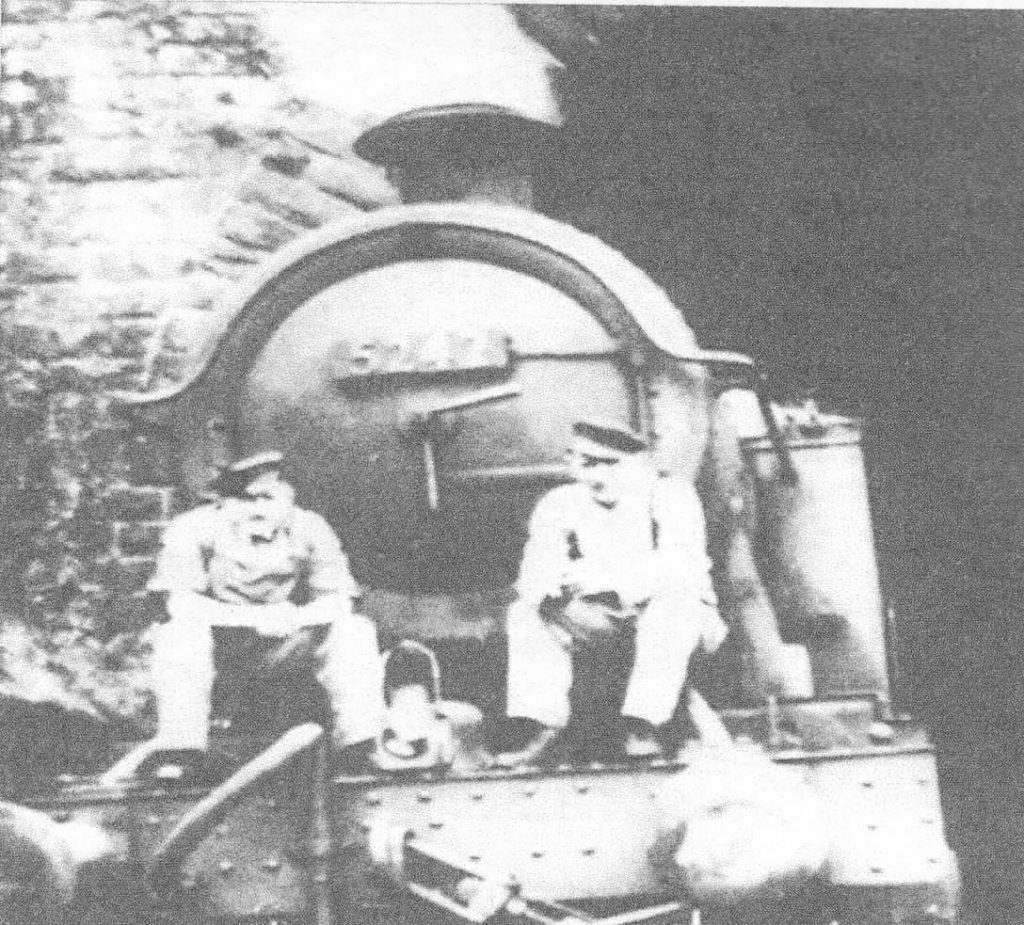
In June 1965 Richard and Fireman Hywel Williams had the honour of taking the last steam train out of the Neath area. The photograph below shows them stopped in front of Pencaedrain tunnel sitting on the front of GWR 5242 engine looking back down the line as one of the lines was being lifted.
One of Richard’s hobbies was a Mutual Improvement Class:
From the time I started on the railway in 1936 I have always been interested in the class we would hold, meeting o a Sunday morning at the Dunraven Arms Cwmgwrach. I took on the duties as an instructor about 1951 and was made captain of the competition team.
Competition final held at Old Oak Common.
Glynneath v Taunton ~ won on 6 / 2 / 1957
Glynneath v Blazey ~ won on 26 / 2 / 1958
Glynneath v Mexborough ~ lost by 5 points in 1959
Glynneath team that competed in the regional finals 1958:
Back row: Lyn Baker (Fireman) Dick Jones (Driver) Bob Barett (Fireman)
Front row: Hywel Williams (Fireman) Bryn James Jack Parry (Driver)
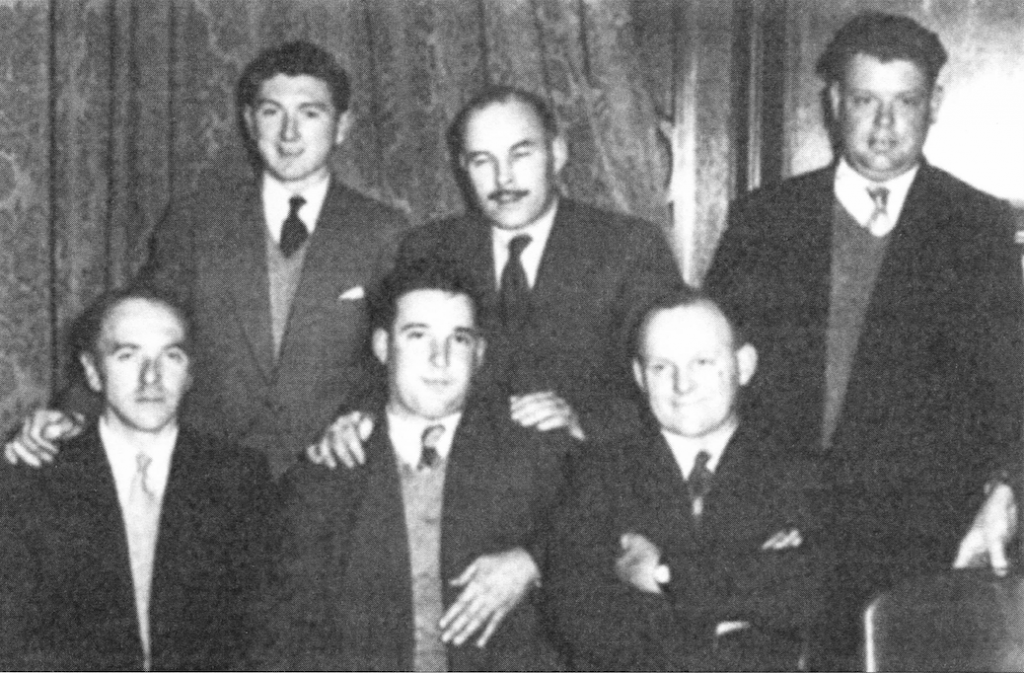
Caption: Won the competition in 1957 & 1958 and finalists in 1959
Sadly Dick Jones passed away in 2017.
Roydon Williams memories: [4]
I found the following story while searching the internet for stories on the railway, it is from a series of stories collected by a South Gloucester History project team. It involves a Royden Williams who lived in the village for a period of time during World War 2 .
I joined the Great Western Railway at Glynneath Locomotive Shed at 15 years of age in 1943, the shed was at Cwmgwrach in the Vale of Neath. I was an engine cleaner. While working a night shift in the early morning of the 12th February 1945, I was standing close to the side of a locomotive. I heard numerous planes way up in the clear sky.
I was amazed when I looked up they all had lights on them, this was very unusual so they could not have been German aircraft. By this time I was approaching 17 years old and thinking what a sight to see. So I started to count them as they flew over the valley mounting from Saren Helen over to Graig-Y-Llyn. I counted, 250 bomber planes flying overhead in formation. Low and behold over came another group, yes, followed by another making a total of 750 all with their lights on. This was extremely unusual. Must be heading for Germany I thought, and wondered as to what type of bomber operation this was to be. Later in life I learned that the squadron came from Lincolnshire on a 12 hour shift heading for Dresden.
(Ed note: You can read Roydon Williams’s memories here.)
Roy Bowen’s memories: [5]
My memories of the Vale of Neath railway coincide with the end of the railway, it starts when I was only 2½ years old, I was too young to remember anything before this, and ends in 1964 when the last passenger train came through the Glynneath station.
My first recollection of the railway was the evening of the night we moved into our new house in Craig Nedd, the date we moved in was the 31st December, 1955, my sister had been born a few weeks prior to this. My parents had let me stay up late to welcome in the New Year as I was probably too excited to go to bed. Then at the stroke of midnight, my father opened the living room windows just as the whistle’s from the trains and the hooters from the colliery sounded, it was quite a cacophony of noise. This annual tradition went on for the next few years, although I was not allowed to stay up late after that first night, and ended when the railway and the colliery closed, but I still remember that magical first night in our new home welcoming in the New Year.
The railway passed our house in Craig Nedd on the other side of the River Neath and the thin slither of woods on the other bank. There were two lines, the main line (up and down lines) which carried passengers and coal and the branch line which took coal from the colliery on the Glynneath side of the river, across the Langy bridge to Glynneath railway station in Cwmgwrach and from there to various destination across the UK and the ports at Swansea and Briton Ferry. From our living room and bedroom windows I was able to see the passenger trains go back and fore and the shunting of the coal wagons on the branch line. I can still remember the wagons buffers `clunking` into each other as they came to a stop.
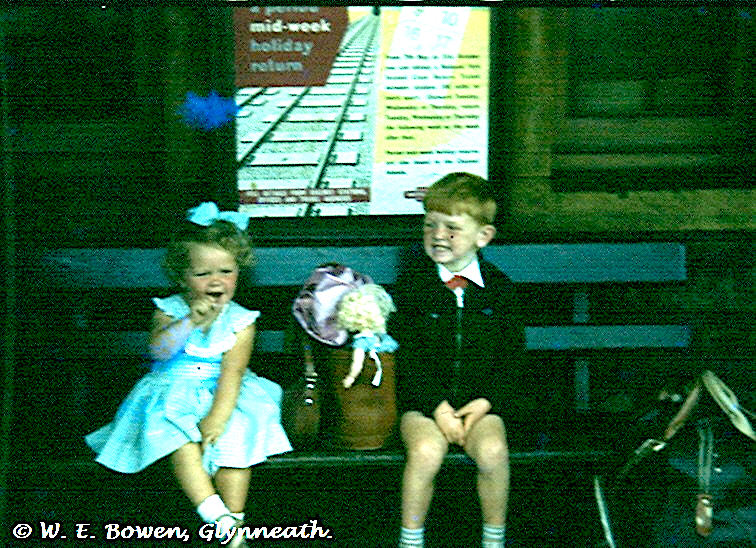
When my sister and myself were quite young we were lucky enough to go on a few caravan holiday’s to Porthcawl during the miners fortnight holiday on the last week of July and the first week of August. Before my father bought his first car we would catch the train at Glynneath station to travel to Porthcawl. I was lucky that my father was a photographer, so I have a few shots of us waiting at the station for the train, you can see the excitement on my sister’s and my faces. See photographs below.
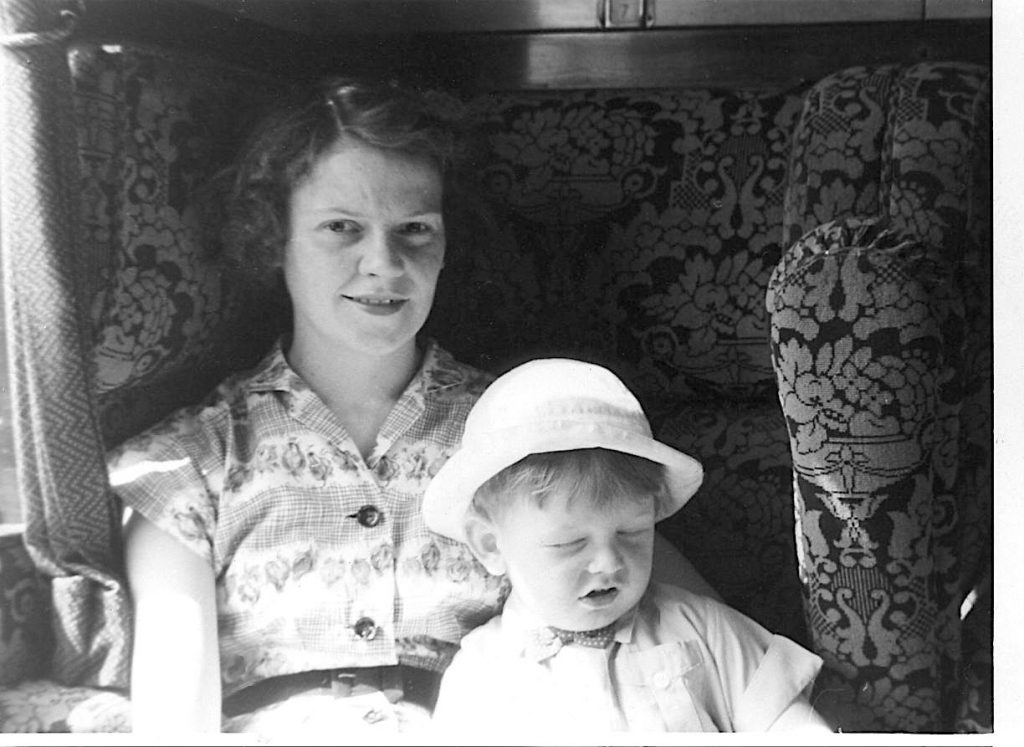
The branch line was my next memory. On the weekend my father would sometimes take us for a walk along the branch line up to the Langy bridge and on one or two occasions we would meet his brother Berty driving the engine and coal wagons back and fore from the colliery and the washery. He would stop to say hello and give us a small ride on the engine footplate. There is a small video of Berty driving wagons over the Langy Bridge to the station attached here.
As youngsters the boys of the street would play cowboys and Indians over the woods and quite often we would find ourselves climbing on board the empty coal wagons, kids eh.
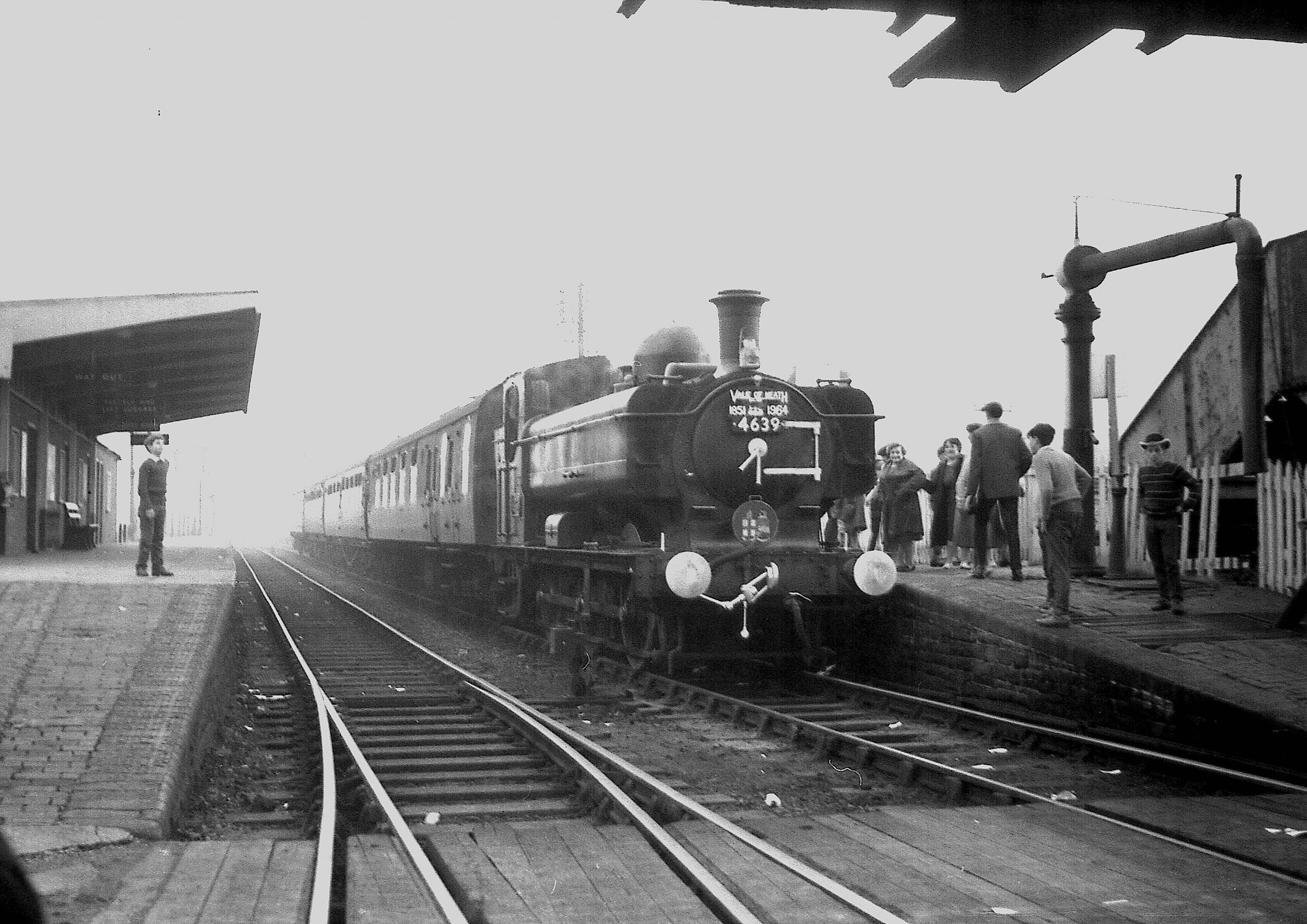
My last and most historical memory of the Vale of Neath Railway line was on the 15th June, 1964, the day the last passenger train came through the station. I was nearly 11years old at the time and didn’t know it was to be the last day of passenger services on the VoNr line, but luckily my next door but one neighbour Lyn Lloyd did. He asked me if I would like to go and see the event with him, I asked my mother if that was OK, and she agreed, as long as I didn’t cross the tracks. We also picked up Mel who lived opposite, it was his birthday if I remember correctly.
The three of us walked to the station and saw the train stop at the station, where a photograph was taken showing the three of us looking on, see photograph below. I looked out for this photo for a few weeks to see if it would appear in one of the local papers, but with no luck. Then 50 years later I bought a photograph on Ebay and it turned out to be the actual photo taken on the day, what was the chances of that I wonder. I’m the one on the left of the photograph.
(Ed note: to read the article on the Last Passenger Train to pass through Glynneath station click here.) [5]
Navvy gravestone at Ebenezer Chapel Pontneathvaughan: [6]
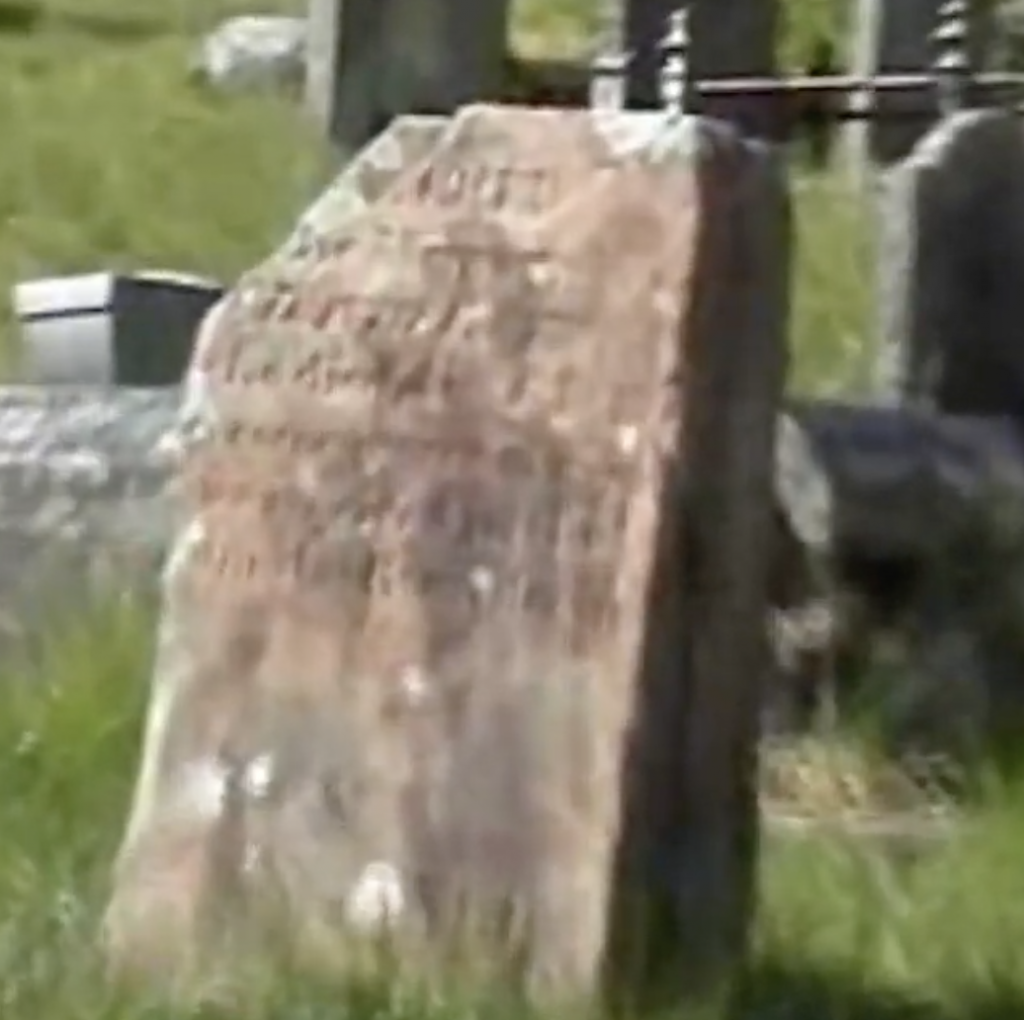
In the Ebenezer chapel in Pontneathvaughan there is a gravestone to a Navvy who was killed by a fallen rock while excavating the Pencaedrain tunnel. They used the rock that killed him as his grave stone (See photo on the left) and you can see the headstone to this day in the graveyard, unfortunately the stone is weather beaten and his name is illegible.
(Ed note: You can view the video by clicking on the link here.) ~ the piece about the death of the Navvy start at 5 minutes in.
Memories shared on Facebook:
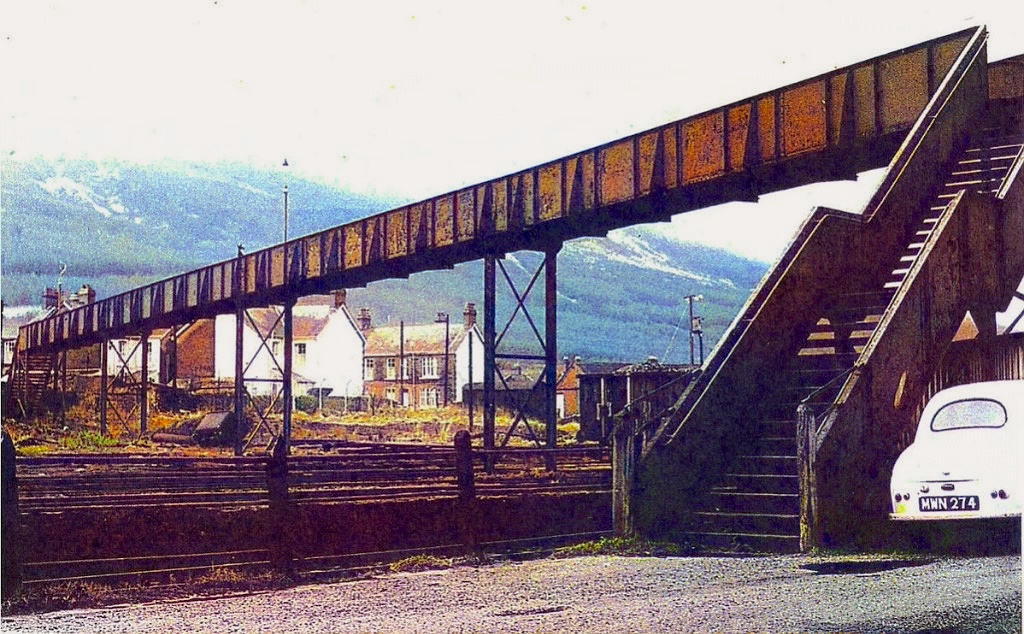
Comments on the bridge from the village to the railway station:
Linda Hobbs
Your dad’s car?
Reply
Roy Bowen Yes, his first car, it was an Austin A30, registration number MWN 274. I remember playing in the street and looking down the street and seeing him driving up to our house, there weren’t many cars in the street back in those day’s.
Carey Lewis
Used to use that every day going to school in Neath Grammar. However if I was running late I would go through the white gate at the bottom of Cefn Gelli to get onto the railway tracks and get up to the railway platform that way. No ELF and safety in those days, but would get told off by station staff if caught.
Gareth Jenkins
I remember the bridge well and going to neath on the train shame its not still there.
Mike Thomas
I remember going across the bridge on a Friday to watch the racing pigeons being loaded onto the train.
Roy Thomas
Good old days.
Mal Brake
As a young child the walk across that bridge seemed never-ending, but i loved the train journeys.
As a young child the walk across that bridge seemed never-ending, but i loved the train journeys.
Olive Gareth Pritchard
Ga said he and Alun “Nick” Thomas, Dewi Winter used to jump off that bridge into the coal trucks every week during the Summer Holidays. The Good Old Days.
General comments on using the line:
Ainsleigh Owen
Iwas a fireman on that line , coal trains to kings dock in Swansea, I think that’s where the premier inn is on the water front ,if only running today,
Gwyn James
I caught the train to Neath grammar school in 1950 packed with boys and girls, first pick up was Pontwalby Halt then Cwmgwrach, namely Glynneath station then stopping at Resolven, Melincourt, Clyne and Aberdulais, ending the journey at Neath low level station, only 5 minutes from the boy’s and girl’s grammar schools now Dwr -y -Felin Neath college. The journey took 20 minutes, then a short walk to the school, happy days having rubber sling shot fights with the Resolven boys, hiding satchels etc. plenty of boyhood fun and games.
Mike Thomas
Well written Roy a lot of interesting facts. Two million tons of coal hard to believe. When the pits closed it affected cwmgwrach village with the closure of shops chemist. It was a very busy high street when we were kids.
Ainsleigh Owen
I left. Glynneath railway sheds in 1956 with three others , to work on the railway in Wolverhampton, Alan Shaw, Malcolm Williams Raymond Jones. Then. followed two more Gwyne Whitrow and Lynne Baker, if that line had been left we would have been able to return, on the railway sheds.
Jennifer Bulman
Brian worked there until it closed. He did his National Service then returned to the railways. He had to do spells in Old Oak and Cardiff but always came back to Glynneath. Gwyne Whitrow and Lyn Baker also returned. The shifts were really odd, one started at 4.30pm. I can vaguely remember that one engine ran away and was eventually stopped by the Venallt bridge. Most of the work after the passenger trains finished was transporting coal from the Pergwm to Aberthaw power station.
References and Resources:
[1] Mary Ann Aubury’s memories in the Gwrach Timeline website.
https://gwrachtimeline.co.uk/the-memories-of-mrs-mary-ann-aubrey
[2] Peter Ricketts’s M.B.E. memories in the Gwrach Timeline website.
https://gwrachtimeline.co.uk/the-memories-of-mr-peter-ricketts
[3] Neath Great Western Railway ~ Retiored Staff Club book.
[4] Roydon Williams’s memories in the Gwrach Timeline website.
https://gwrachtimeline.co.uk/railway-memories-from-ww2
[5] Roy Bowen’s memories on the Last Passenger Train.
https://gwrachtimeline.co.uk/last-passenger-train
[6] Youtube video on Pontneathvaughan.
https://www.youtube.com/watch?v=6lKGvw9sfTU
[7] Various posts on the village and Gwrach Timeline Project Facebook pages.